





The information, obtained by African Perceptions, chimes with an International Crisis Group call for the Sahel’s juntas to open talks with the group
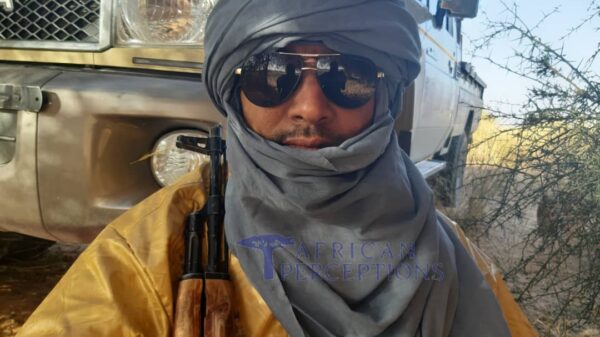
Jama’at Nusrat al-Islam wal-Muslimin (JNIM) began a strategy this year that suggests it is seeking to put forward a political project open to agreement with states, according to well-informed private sources inside Mali with knowledge of armed-group circles, speaking to African Perceptions.
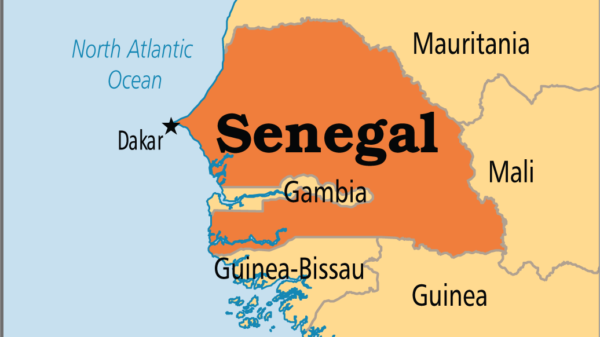
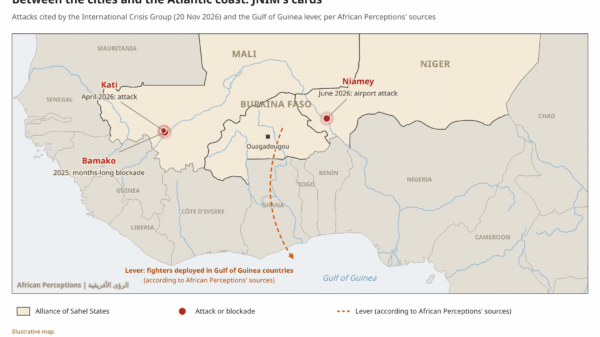
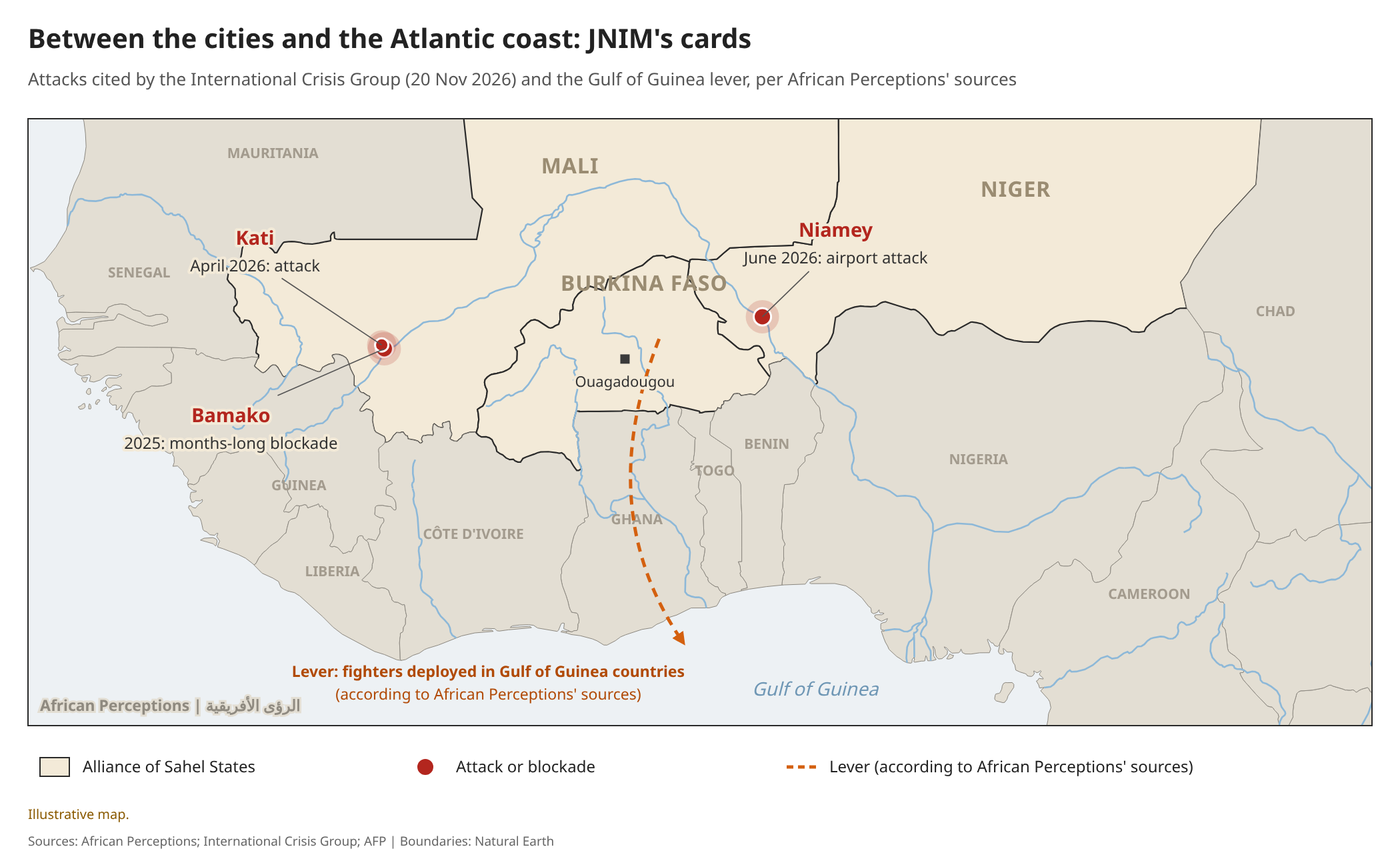
The same sources say the group has prepared bargaining chips by deploying groups of fighters in Gulf of Guinea countries. It may use them to pressure Western states into accepting its Islamic political project within the Sahel states, in exchange for abandoning all its jihadist projects in the Gulf of Guinea.
Crisis Group: dialogue “the least harmful option”
The information chimes with a call by the International Crisis Group for the military governments of Mali, Niger and Burkina Faso to open political dialogue with JNIM, al-Qaeda’s main affiliate in the Sahel led by Iyad Ag Ghaly, which it describes as “the least harmful option” after more than a decade of conflict.
The call came in a briefing published on 20 November 2026 (Africa Briefing N°213) titled “Handling JNIM’s Threat to the Sahel’s Urban Heartlands”.
In an earlier report on JNIM’s expansion beyond the Sahel, published in February 2026, Crisis Group said the group’s leaders had so far viewed coastal countries as secondary to their stronghold in the Sahel.
From the countryside to the cities
Crisis Group says JNIM has shifted from guerrilla warfare in rural and border areas to targeting major cities and blockading supply and fuel routes. It cites the blockade of Bamako in 2025, the attack on the town of Kati in April 2026 and the attack on Niamey airport in June 2026, as well as the group’s calls for the overthrow of the ruling military regimes.
Jean-Hervé Jezequel, the group’s Sahel project director, and his deputy Ibrahim Yahaya Ibrahim say JNIM’s strategy has moved from controlling the periphery to striking economic and political centres of gravity, to show that the juntas cannot protect the big cities. In their view, that calls for a political approach alongside military action.
Talks, with the guns still drawn
The briefing concludes that complete military victory is out of reach and that continuing to pursue it will come at a heavy human cost. It recommends:
- Negotiation: opening channels of political dialogue between the military authorities of the three Alliance of Sahel States countries and JNIM.
- Military pressure: maintaining it in parallel with talks, to strengthen the three states’ hand at the table and stop the group imposing its terms by force.
- Internal unity: ending divisions between the military authorities and the civilian political opposition, and building workable domestic consensus.
- Outside support: urging regional and international powers to back these efforts rather than obstruct them.
According to AFP’s account of the report, Crisis Group also says JNIM must in turn be ready to make concessions, notably cutting its ties with al-Qaeda’s international network.
Sahel capitals: victory by force
The Alliance of Sahel States governments have not yet responded officially to the report. But the juntas in Bamako, Niamey and Ouagadougou have adopted official rhetoric rejecting talks with armed groups, focused on “restoring full sovereignty by force” and mobilising armed civilian auxiliaries such as Burkina Faso’s Volunteers for the Defence of the Homeland (VDP). The report itself acknowledges that the military leaders “have shown very little appetite” for exploring dialogue with the group.
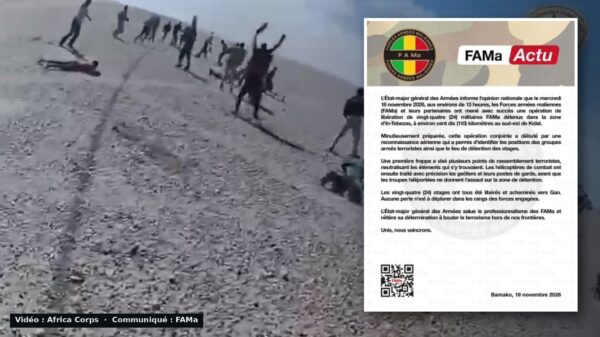
Mali’s stance has not always been fixed. The civilian government of the late president Ibrahim Boubacar Keïta in 2020, and the transitional government in 2021, showed cautious openness to dialogue on the basis of recommendations from the “inclusive national dialogue”, and JNIM at the time declared itself ready on condition that French forces withdraw. But Mali’s current junta returned to an all-out military approach after its security alliance with Russia, through the Africa Corps (formerly Wagner), and the founding of the Alliance of Sahel States.
Any outside call for talks is made more sensitive by Sahel leaders’ accusations that foreign actors, France in particular, support and finance armed groups to destabilise the alliance, as in remarks by Niger’s junta leader Abdourahamane Tiani in July 2026.
The West urged to rethink
France and many Western capitals have long opposed negotiating with al-Qaeda’s leaders in the Sahel, fearing it would grant them political legitimacy or turn the region into a safe haven on the Taliban model in Afghanistan. That is why Crisis Group, in its latest recommendation, calls on international powers to change course and support a negotiated path.
Source: African Perceptions; International Crisis Group; AFP