





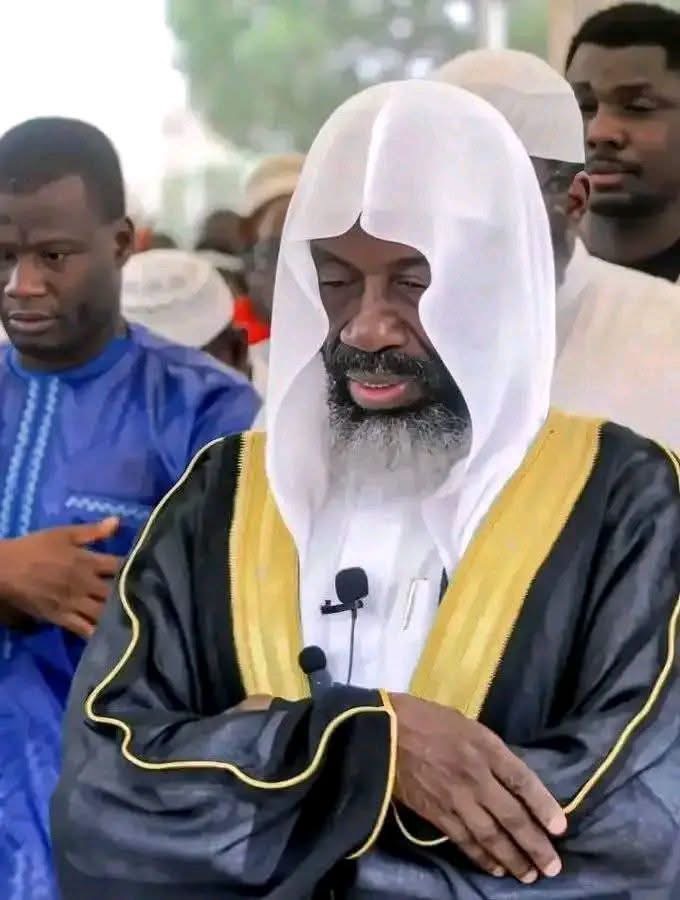
Released after more than five months, the cleric is barred from visitors and public statements, while his followers spent four months in a training camp
Burkina Faso’s military authorities have released Imam Mohamed Ishaq Kindo after more than five months in detention, but his freedom comes with strings attached. Religious sources quoted by Radio France Internationale (RFI) say he is being held in isolation, with visits, filming and public statements all prohibited.
Kindo is one of the most prominent leaders of the country’s Sunni movement, serving as deputy head of the Salafi movement and counted among Burkina Faso’s leading Sunni scholars. He once backed the military government led by Ibrahim Traoré before falling out with it.
A speech, then a raid
The imam was arrested in Ouagadougou on 26 May 2026, two days after he publicly criticised a draft law to regulate religious practice and freedoms. Kindo and several other religious leaders had opposed the bill, warning against restrictions on prayer in public spaces and against the nationalisation of the pulpit.
Security agents and masked forces took him from his home in the capital to an unknown location.
Tear gas and a shuttered mosque
His arrest sparked protests and clashes between his supporters and worshippers on one side and the security forces on the other. Police dispersed the crowds with tear gas and detained around 100 people that same day as they demanded his release. The main Sunni mosque in the capital was closed and, according to the latest reports, remains shut.
Shaved heads and drills
The detained protesters were sent to a training camp, where they appeared with shaved heads and in military-style clothing while carrying out drills. The authorities presented this as “citizenship and civic awareness training”, even though the men were being held for demanding their imam’s release.
About 80 of them were freed on 4 October, according to RFI, after more than four months. What is established is that they were detained and put through training; they were not sent to the front lines.
A familiar playbook
The case unfolds against a deepening political and religious crisis in Burkina Faso under its transitional military authorities. The junta has repeatedly used so-called “national training and civic and citizenship rehabilitation” to deal with opponents, activists and critical voices, forcibly conscripting them into popular defence forces or sending them to the front.
The move fits the junta’s wider effort to control public discourse, ban protests and sideline any popular religious or social force with influence on the street.
The Federation of Islamic Associations of Burkina Faso (FAIB), for its part, has issued statements calling for calm and solidarity, and for quiet dialogue aimed at solutions that preserve civil peace and stability.