






Mali wants its partnership with Russia to move beyond the battlefield into cybersecurity, energy and mineral processing, while Putin’s public remarks stick to trade and scholarships
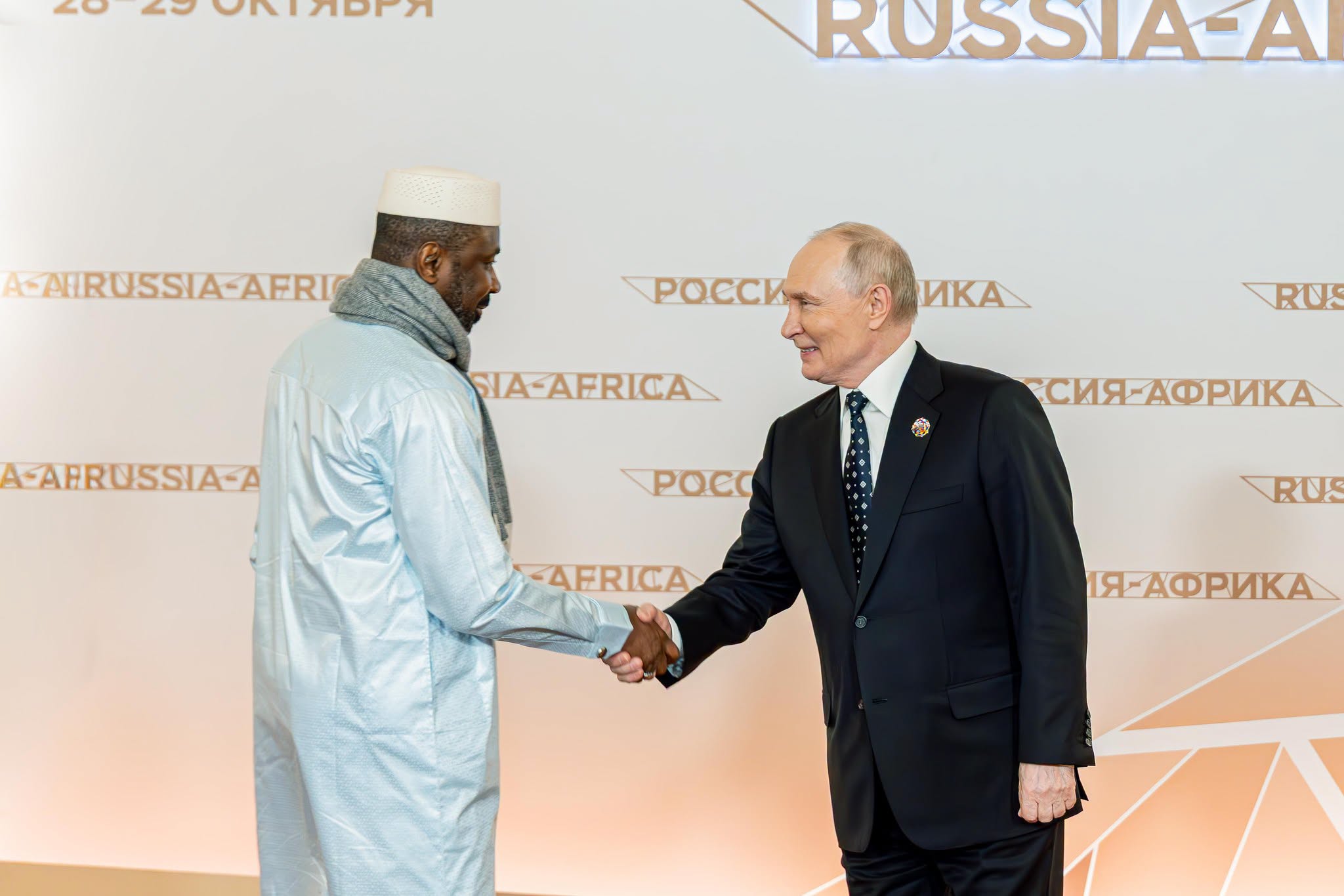
Mali’s transitional president, Assimi Goïta, went to the Kremlin with a wish list that reaches well beyond the existing military cooperation with Russia. Meeting President Vladimir Putin on the sidelines of the third Russia–Africa Summit, he called for the partnership to expand into intelligence, cybersecurity, energy and local processing of minerals.
According to a statement from Mali’s presidency, Goïta’s proposals fall into three tracks.
Security and intelligence
Bamako wants military ties extended to intelligence, cybersecurity and land-surveillance equipment. The Beninese newspaper La Nouvelle Tribune reported that Mali specifically asked to share intelligence with Moscow.
Minerals and energy
Goïta put local processing of mineral resources at the top of his priorities and sought Russian expertise in civilian nuclear power, solar energy, hybrid solutions and electricity grids.
Building local capacity
He insisted that these projects be accompanied by a “gradual transfer of skills”, including the training of technicians and financial specialists.
Two arguments for going further
Goïta made his case on two fronts. Externally, he said current geopolitical shifts make closer ties between Bamako and Moscow “urgent”. Internally, he pointed to the record of military cooperation, praising the Russian forces “fighting alongside us for our territorial integrity” and saying the partnership had allowed Mali to “gradually regain its full sovereignty”.
On that basis, he urged cooperation to move beyond its “traditional areas” and pledged to personally clear every obstacle on the Malian side to unblock stalled projects.
Built on the 2025 agreements
Bamako’s requests rest on a series of bilateral agreements and understandings built up in recent years. During Goïta’s official visit to Moscow in June 2025, the two countries signed three agreements, according to the Kremlin:
- an agreement on the foundations of bilateral relations;
- an agreement establishing an intergovernmental commission on trade, economic, scientific and technical cooperation;
- an agreement on cooperation in the peaceful use of nuclear energy.
Putin identified promising areas of cooperation at the time, including geological exploration, natural-resource development, energy and logistics.
At the latest meeting, Putin announced that a “basic agreement on the principles of relations” had entered into force last May, and that the intergovernmental commission began work last year. Goïta’s non-security proposals centre on energy and economic and technical cooperation, the subjects of two of the three 2025 agreements.
Goïta also cited existing Russian support: shipments of wheat, food and fuel; a memorandum on the supply of seeds and fertiliser; the 200-megawatt Sanankoroba solar plant, whose construction began in May 2024 with a Russian company belonging to Rosatom; and an agreement on mutual recognition of university degrees.
Moscow talks trade
In his public remarks, as published by the Kremlin, Putin focused on the economy and education. “Trade and economic cooperation is gaining momentum. Although trade volume remains modest, we are confident that with the help of the intergovernmental commission (…) we will be able to make further progress,” he said.
He noted that the quota for Malian students had been raised to 300 scholarships for the 2026–2027 academic year, and thanked Bamako for its “steadfast support for Russian initiatives at the United Nations and other international forums”.
The text published on the Kremlin website made no mention of the intelligence and cybersecurity requests. At the start of the meeting, Goïta had asked for closed-door talks after the expanded session. According to the Kremlin, the Russian side included the deputy defence minister and the head of the Main Directorate of the General Staff, along with the energy minister and the director of the state atomic energy corporation Rosatom.
No new deal yet
No new agreement has been announced so far. According to the Ivorian website Abidjan TV, statements issued after the meeting set out the areas of cooperation discussed and Mali’s proposals “without announcing the signing of a new bilateral agreement”.
Source: Al Jazeera Net