








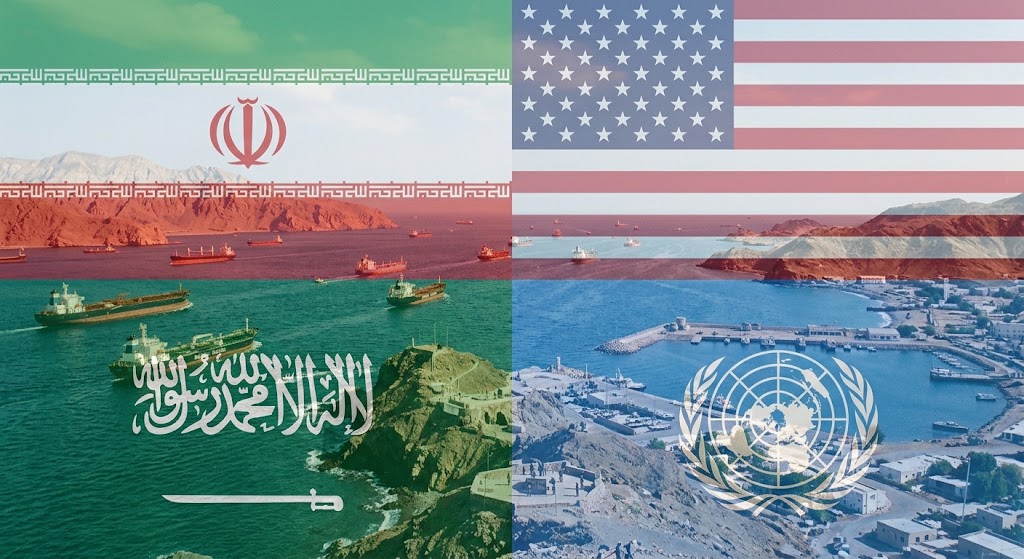
After efforts to turn the memorandum of understanding signed between Washington and Tehran into a full settlement — one that would end the war and reopen the Strait of Hormuz to normal shipping — stalled, the US-Iran confrontation has entered a new phase centered on economic strangulation rather than direct combat alone.
Sixty-nine days after the memorandum was signed, and 178 days into the war, the US administration announced the launch of an operation named “Economic Pariah,” which goes beyond imposing additional sanctions on Tehran to target any company, ship, or financial intermediary that helps Iran export oil or access the international financial system. In doing so, Washington is trying to shift the center of gravity of the confrontation from direct military engagement to a cross-border financial siege, while keeping military force in reserve as an option should the economic pressure fail.
A “zero-leakage” policy
US Treasury Secretary Scott Bessent said the new campaign aims to close off every revenue stream the Iranian government and the Revolutionary Guard rely on, describing his approach as a “zero-leakage” policy meant to prevent Tehran from using shipping networks, trade, digital currencies, and front companies to evade sanctions.
In its opening move, the Office of Foreign Assets Control sanctioned a network of roughly 60 individuals, companies, and vessels, including Singapore-registered Wellbred Capital and affiliated firms in the UAE and Switzerland. The Treasury Department says the company is linked to Mohammad Hossein Shamkhani, described by Washington as one of the key figures overseeing Iranian oil shipping and trading networks; Wellbred is active in the oil, naphtha, petrochemical, and LPG trade.
The campaign’s strength lies not only in freezing company assets within the United States, but in secondary sanctions that force foreign governments, banks, and companies to choose between trading with Iran or retaining access to the dollar-based financial system. Its effectiveness, however, will hinge on the stance of Iran’s key partners — chiefly China and Russia — and on Washington’s ability to genuinely police the so-called “shadow fleet,” flag-switching, and ship-to-ship transfers.
Is economic pressure paving the way for a military option?
Axios reported, citing unnamed US officials, that sanctions could serve as a pressure track against Iran over the coming months, until after congressional elections and once political conditions are ripe for a possible return to military action. Since this information is attributed to unnamed sources, it cannot be treated as a final war decision — but it takes on added weight given the US Secretary of War’s confirmation that he does not rule out using force in the Strait of Hormuz or elsewhere.
This suggests Washington is pursuing a two-track strategy: an immediate economic siege that raises the cost of continued confrontation for Tehran, and a deferred military threat meant to prevent Iran from interpreting the shift to sanctions as an American retreat from the option of force.
Iran’s cards in response
Iran has nearly five decades of experience navigating sanctions, during which it built a complex network for marketing oil through intermediaries, front companies, and non-dollar settlements. Iran’s economy minister downplayed Washington’s ability to “cut the arteries” of his country’s economy, insisting programs are already in place to counter the sanctions. Yet the new campaign appears broader than conventional sanctions, since it simultaneously targets the buyer, the carrier, the insurer, the bank, and the intermediary.
Tehran holds three broad categories of response: expanding trade in local currencies through financial channels outside the Western system, relying on China, Russia, and neighboring states; tightening field control over the Strait of Hormuz by imposing special transit rules on ships, raising insurance and shipping costs; and signaling that if Iran is blocked from exporting its oil, it will respond by disrupting other countries’ exports.
That last card is especially dangerous: any targeting of American vessels or seizure of commercial tankers could give Washington justification to return to broader military operations, and could put Iran in direct confrontation with Gulf states whose exports transit the strait. In a sign that raises the stakes further, Iranian authorities have placed dozens of tankers on a blacklist over alleged violations of transit rules, threatening fines or the seizure of ships and their cargo — a move suggesting Tehran is gradually shifting from political threats to building an actual system of control over shipping traffic.
Hormuz: from shipping lane to chokepoint
Ship-tracking data show that only one cargo vessel passed through the strait on Monday — the lowest level since May 7 — compared with six vessels of various types the day before. These figures suggest the problem is no longer just higher insurance premiums or limited shipping delays, but an actual chokepoint in one of the world’s most important trade and energy arteries.
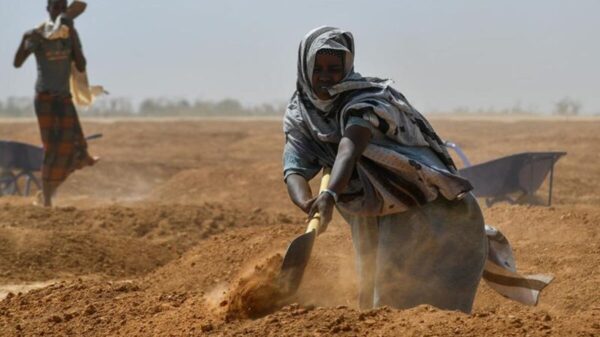
Even as Brent crude held near $92.16 a barrel and US crude around $85.02, stable prices don’t mean the risk has passed — the stability followed profit-taking and markets pricing in the scale of the sanctions, while shipping traffic remains far below normal levels. The most sensitive fallout may emerge outside the oil market altogether: disruption to fertilizer and raw material shipments could raise farming and food costs in countries far from the war zone, turning the standoff in Hormuz from a regional security crisis into direct pressure on the dinner tables of millions of families.
A narrow UN opening
In an effort to limit this fallout, UN Secretary-General António Guterres offered to have the organization act as a “neutral facilitator” for vessels carrying fertilizer and related products, registering ships and verifying their cargo without the UN issuing transit permits or altering states’ legal rights and obligations.
The mechanism’s success, however, depends on the agreement of all parties involved — a condition that will be hard to meet unless Washington and Tehran agree to separate humanitarian and agricultural shipments from their mutual pressure tactics. Even so, the proposal carries significance as a limited confidence-building test: if it succeeds in securing fertilizer shipments, it could later pave the way for dedicated corridors for medicine and food, and eventually a broader agreement on shipping.
Pakistan searches for a way out
Alongside the UN’s move, Pakistan has again emerged as a potential mediator. The Pakistani military said talks held by its chief of army staff in Tehran focused on preventing further escalation and resolving disputes through negotiation. Pakistan’s interior minister announced “significant progress,” pointing to discussions on reactivating Islamabad’s memorandum of understanding with Iran, and said the meeting with the Iranian president ended on “a very positive note.”
Iranian President Masoud Pezeshkian appears to be using the Pakistani delegation’s visit to send two messages: first, that Tehran does not want isolation and is open to economic and security cooperation with neighboring states; second, that the alternative to American pressure is not surrender, but building a regional network that softens the impact of the siege. Pakistani mediation, however, will remain limited in effect unless it succeeds in narrowing the gap on three core issues: lifting the blockade and sanctions, the future of transit rules in Hormuz, and security guarantees against a resumption of strikes.
Shared Saudi-French concern
Joint Saudi-French emphasis on the need for shipping in the Strait of Hormuz to return to normal reflects concerns that go beyond energy security. Saudi Arabia and Gulf states need a stable corridor free of mutual threats or shifting permits, while France and Europe view the strait as an artery for energy, trade, and fertilizer — any prolonged disruption there would ripple through prices and supply chains.
At the same time, regional states have no wish to become a direct party to America’s economic war, nor for Iran to interpret their cooperation with Washington as a hostile act. This is why these countries are trying to uphold freedom of navigation while keeping channels of dialogue with Tehran open.
Where is the confrontation headed?
“Economic Pariah” does not mean the military war has ended — rather, it shifts the confrontation to a much wider arena encompassing banks, ports, insurance companies, shipping fleets, and any country doing business with Iran. Washington is betting that tightening the financial noose will push Tehran to accept a deal on less favorable terms. Iran, in turn, is betting that its ability to disrupt shipping and drive up energy prices will make the cost of isolating it greater than the cost of negotiating with it.
Between these two bets, the Strait of Hormuz remains the most dangerous test point. If mediation efforts succeed in establishing safe corridors and restoring a measure of trust, that could open the door to a gradual settlement. But if Tehran moves from threats to actually seizing ships, or if American sanctions harden into a full blockade, the current economic confrontation could turn out to be just a brief stop before a far wider military round.