


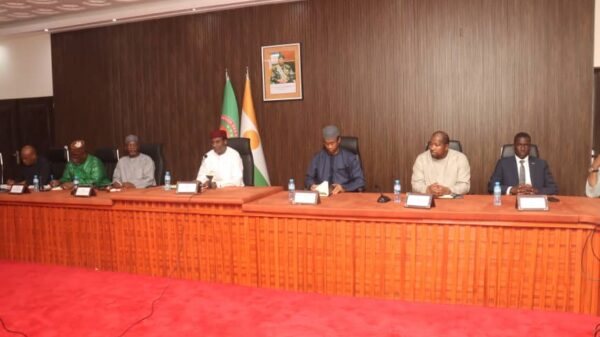





Tripoli – Libya’s three main political institutions—the House of Representatives, the High Council of State, and the Presidential Council—have announced a political roadmap aimed at ending the country’s transitional period, paving the way for presidential and parliamentary elections, and unifying key state institutions.
According to the document, the three bodies agreed during a meeting held on 16 June 2026 to uphold the Constitutional Declaration, the Libyan Political Agreement, and the outcomes of previous Cairo talks, while introducing constitutional and legal amendments to reflect current political developments.
The roadmap sets 17 February 2027 as the date for simultaneous presidential and parliamentary elections. It also calls for amendments to electoral legislation in line with the Thirteenth Constitutional Amendment and requires the elected president to launch a broad national dialogue to finalize a permanent constitution.
The agreement provides for the creation of a high-level supervisory body for the electoral process, including the Governor of the Central Bank of Libya, the Chairman of the High National Elections Commission, representatives of the Joint Military Commission (5+5), and security officials responsible for securing the vote.
The roadmap also proposes establishing two new sovereign institutions: the National Oil Corporation and the Libyan Foreign Investment Authority, with the objective of strengthening their independence and safeguarding Libya’s strategic assets and national resources.
On the economic front, the signatories rejected any arrangements affecting Libya’s sovereignty or allowing the disposal of frozen state assets. They also agreed to establish a new legal framework to enhance oversight of the oil, gas, water, and mining sectors while improving transparency in the management of public resources.
The document further calls for the formation of a joint technical committee to prepare a unified constitutional budget for 2027, which will be submitted to the House of Representatives for approval.
The roadmap was signed by House of Representatives Speaker Aguila Saleh, Presidential Council President Mohamed Al-Menfi, and High Council of State President Mohamed Takala.