













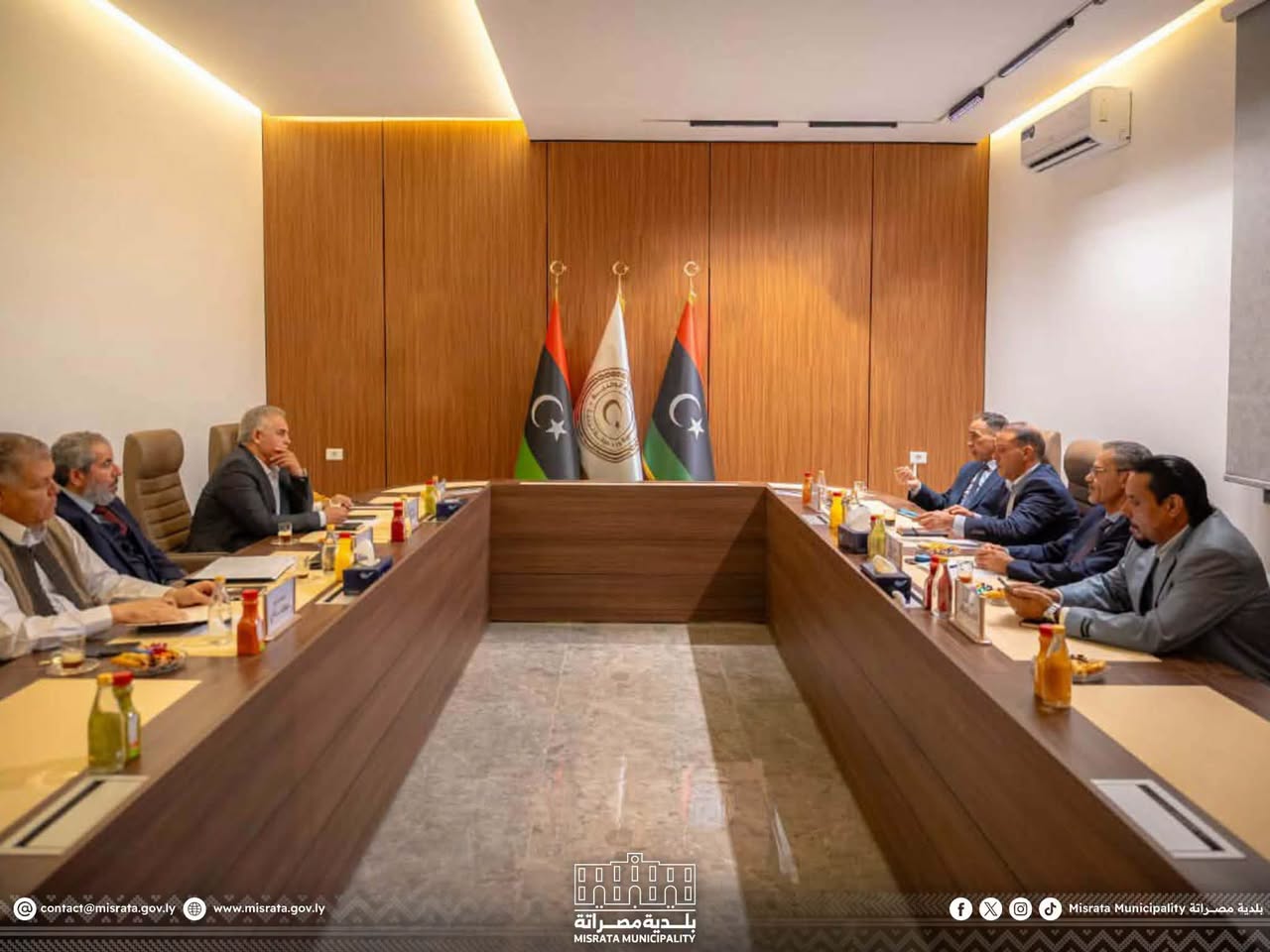
The announcement of the creation of Libya’s “Central Region” has sparked widespread debate among political, legal, and social circles after a group of municipalities located between the country’s eastern and western regions unveiled a new coordination framework bringing together major cities including Misrata, Zliten, Al Khums, Tarhuna, and Bani Walid, alongside several neighboring municipalities.
While the initiative’s proponents present it as a platform for development coordination, improved public services, and enhanced local governance, critics argue that the move raises broader political and legal questions that could influence the future of local administration and regional balances of power in Libya.
A New Framework for Inter-Municipal Cooperation
According to statements issued by participating municipalities, the “Central Region” aims to strengthen cooperation among neighboring cities, coordinate development projects, improve institutional performance, and enhance service delivery.
Supporters insist that the initiative does not constitute a new political entity or an attempt to establish a formal administrative region. Rather, they describe it as a practical mechanism for municipalities to coordinate efforts in addressing common economic and service-related challenges.
They further argue that the initiative aligns with broader calls for decentralization and the empowerment of local authorities in planning and development.
Legal Questions Over Authority and Mandate
Despite its stated developmental objectives, the initiative has raised legal concerns regarding its compatibility with Libya’s existing local governance framework.
Current Libyan legislation does not explicitly provide for the establishment of supra-municipal regions or administrative entities above the municipal level. Nor does it grant municipal leaders the authority to create new regional structures with formal administrative status.
Legal experts therefore contend that the absence of a clear legislative basis may limit the initiative’s practical authority, leaving it largely as a voluntary coordination platform rather than a legally recognized administrative body.
Supporters, however, maintain that cooperation among municipalities does not require the creation of a formal governmental structure and falls within the scope of permissible local coordination mechanisms.
Local Opposition and Social Reservations
The most immediate opposition emerged from Bani Walid, where the Social Council of the Warfalla tribes and several youth and community organizations rejected the city’s inclusion in the initiative.
These groups emphasized their commitment to maintaining the city’s administrative and geographical independence, arguing that any regional arrangement should be based on broad public consensus.
Observers note that historical sensitivities and the lingering effects of years of political division and conflict make any regional integration project dependent on confidence-building measures and genuine social dialogue.
Political Dimensions Beyond Development
The timing of the announcement has also prompted questions about whether the initiative is purely developmental or whether it carries broader political implications linked to the future of local governance in Libya.
As United Nations-sponsored discussions continue on decentralization and institutional reform, some analysts believe that regional blocs could strengthen the negotiating position of participating municipalities in future debates over resource allocation and political representation.
Others warn that similar initiatives elsewhere could encourage the emergence of de facto regional entities outside constitutional frameworks, potentially deepening rather than resolving Libya’s existing divisions.
The Absence of Sirte
One of the most debated aspects of the initiative has been the absence of Sirte.
Historically and geographically, Sirte has often been regarded as a central component of Libya’s central region. Its exclusion has therefore raised questions regarding the criteria used to define the new grouping and its territorial scope.
Critics argue that the omission reinforces perceptions that the initiative may be driven more by political alignments and local interests than by a comprehensive geographical or developmental vision.
Between Decentralization and Fears of Fragmentation
The “Central Region” initiative reflects Libya’s broader debate over the future of local governance and the relationship between central authority and regional actors.
Supporters view the project as a practical step toward more effective local development and municipal cooperation. Opponents, however, see it as a legally ambiguous initiative that could open the door to new regional power structures outside established constitutional mechanisms.
Ultimately, the future of the initiative will depend on its ability to demonstrate tangible developmental benefits while securing broader legal and social legitimacy. Whether it remains a coordination platform or evolves into a new model of regional governance may become an important indicator of Libya’s evolving political landscape.