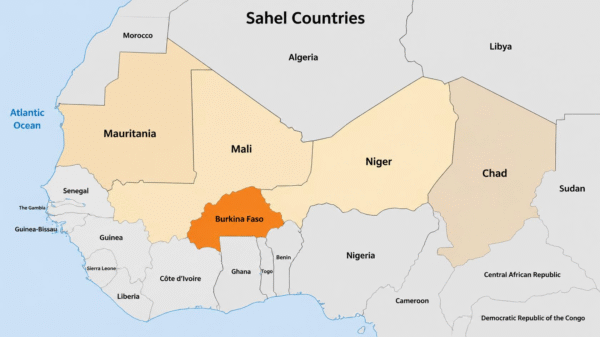








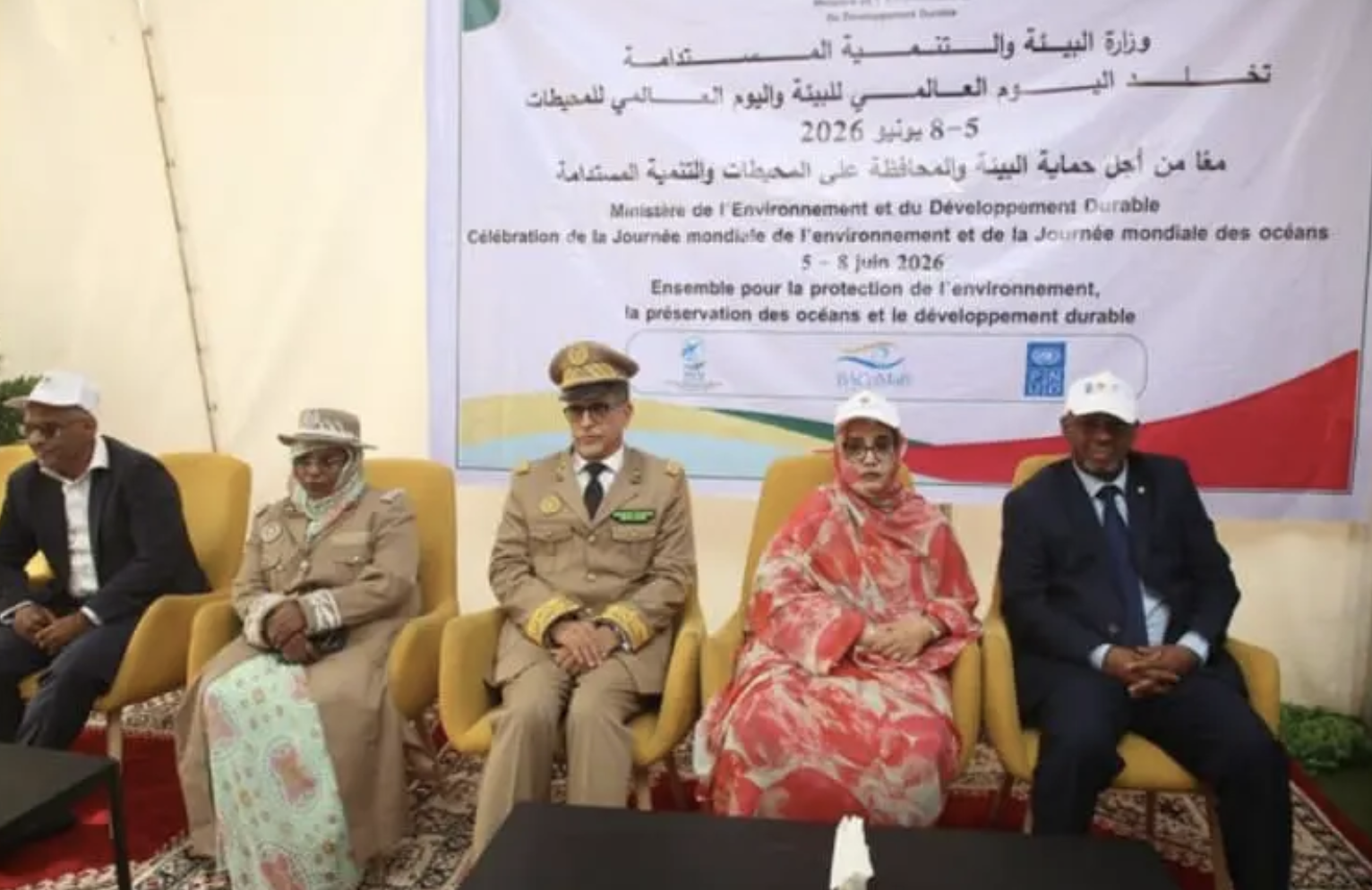
Recent remarks by Mauritania’s Minister of Environment and Sustainable Development, Massouda Baham Mohamed Laghdaf, have highlighted one of the country’s most pressing strategic challenges at a time when climate and environmental pressures are intensifying across the Sahel.
With desertification affecting more than 84 percent of the national territory, the issue extends far beyond environmental concerns. It has become directly linked to food security, economic stability, natural resource management and the long-term prospects for development in a country situated between the Sahara Desert and the Atlantic Ocean.
A Country on the Front Line of Climate Change
Mauritania is among the countries most exposed to desertification due to its geographical location, with the Sahara covering the vast majority of its territory, which stretches across more than one million square kilometers.
Over recent decades, declining rainfall, recurring droughts and rising temperatures have accelerated land degradation, particularly in southern and eastern regions where agriculture and livestock breeding remain the primary sources of livelihood for millions of people.
Climate experts classify Mauritania as part of the Sahel’s “climate vulnerability belt,” a region warming faster than the global average and increasingly exposed to drought, desertification and sandstorms.
Growing Pressure on Food Security
The consequences of desertification extend directly to food security.
As vegetation cover declines and grazing lands shrink, livestock production—one of the pillars of Mauritania’s economy—faces mounting pressure.
International estimates indicate that more than half of Mauritania’s population depends directly or indirectly on agriculture and pastoral activities, making environmental degradation a major driver of poverty, seasonal displacement and internal migration.
Reduced agricultural productivity also increases dependence on imported food, exposing the country to fluctuations in global commodity markets and rising food prices.
The Atlantic Coastline Under Threat
Alongside desertification, Mauritania faces another environmental challenge: the vulnerability of its Atlantic coastline, which stretches for approximately 750 kilometers.
Environmental studies warn that sea-level rise and coastal erosion threaten key population centers and economic infrastructure, particularly in Nouakchott, where large sections of the capital lie at or below sea level.
Climate change also poses risks to marine ecosystems that support the fishing industry, one of the country’s most important sources of revenue and foreign exchange earnings.
Mauritanian waters rank among the richest fishing zones in Africa, yet environmental pressures, overfishing and climate-related changes increasingly challenge the sustainability of these resources.
Biodiversity Between Protection and Risk
Mauritania possesses unique environmental assets, including internationally recognized wetlands and protected areas, most notably the Banc d’Arguin National Park, a UNESCO World Heritage Site.
The park hosts millions of migratory birds and numerous rare marine species, making it one of the most significant ecological sites in West Africa.
However, climate pressures, population growth and unsustainable resource exploitation increasingly threaten this biodiversity, which represents a strategic national asset.
Betting on the Green Economy
To address these challenges, Mauritania is expanding efforts aimed at climate adaptation, combating desertification and restoring degraded land.
Authorities are also seeking to promote sectors linked to the green economy, including renewable energy, sustainable resource management and environmental projects capable of generating new employment opportunities.
Mauritania has attracted growing international interest because of its exceptional solar and wind energy potential, as well as ambitious green hydrogen projects that could position the country as a key player in the global energy transition over the coming decades.
Beyond an Environmental Challenge
Many analysts argue that Mauritania’s environmental crisis can no longer be treated as a sector-specific issue confined to environmental policy.
Desertification, drought and natural resource degradation increasingly affect livelihoods, migration patterns and poverty levels, while placing additional burdens on public services related to food, water and health.
As climate change continues to reshape the Sahel, Mauritania faces a race against time to strengthen resilience and protect its natural resources. The challenge is particularly urgent given forecasts that the Sahel will remain one of the regions most severely affected by climate change in the decades ahead.