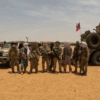







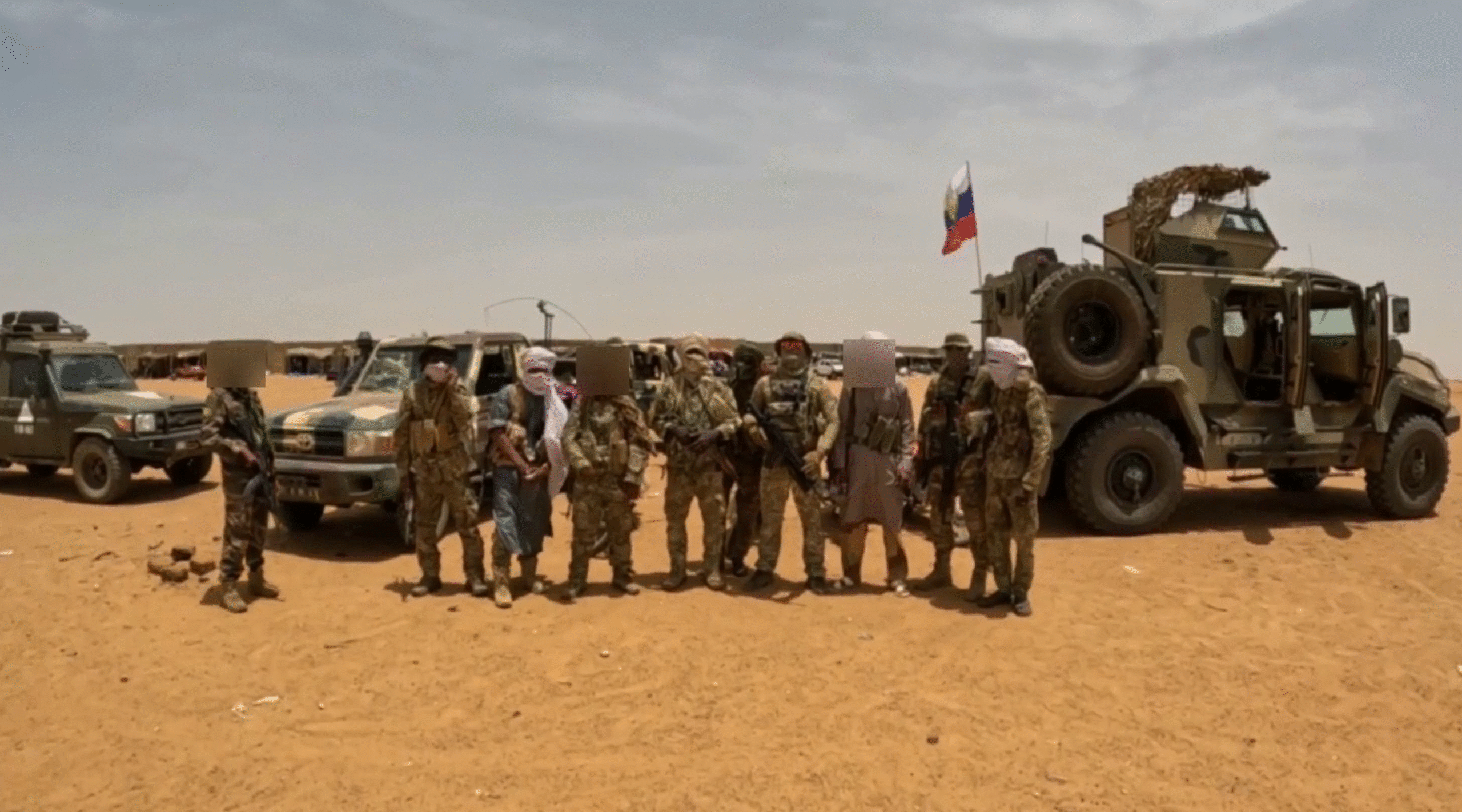
One year after the formal establishment of Russia’s military presence in Mali under the banner of the Africa Corps, a force operating under the Russian Ministry of Defense and succeeding the Wagner Group following the death of its founder Yevgeny Prigozhin, the mission remains the subject of intense international scrutiny.
While Malian authorities portray the partnership with Moscow as part of a broader effort to restore national sovereignty and strengthen the country’s fight against armed groups, international human rights organizations and UN experts continue to raise concerns over alleged abuses committed during joint operations involving Russian personnel and Malian forces. At the same time, questions persist over the financial foundations of Russia’s growing presence and its expanding role in Mali’s lucrative gold sector.
From Wagner to the Africa Corps
The transition from the Wagner Group to the Africa Corps marked an effort by Moscow to institutionalize and formalize its military footprint in Africa after the restructuring that followed Prigozhin’s failed mutiny and subsequent death in 2023.
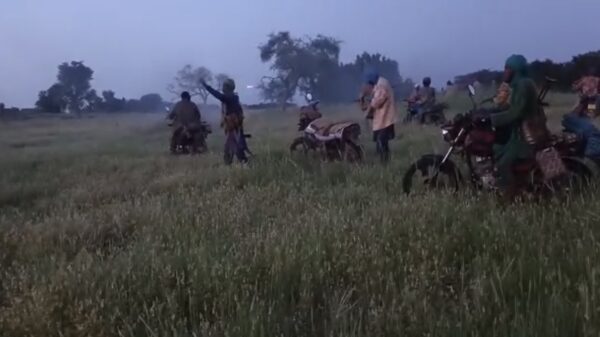
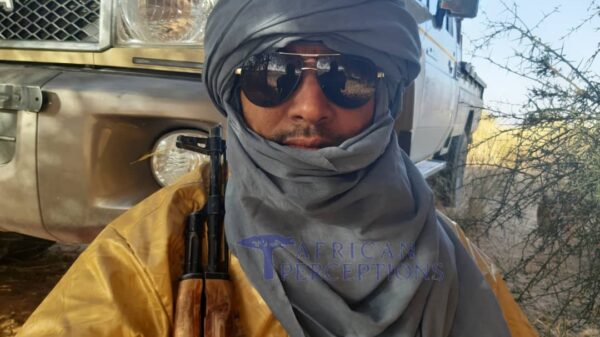
In Mali, however, the transformation brought little visible change to operational activities. Russian personnel continued to participate alongside the Malian Armed Forces in military campaigns targeting insurgent and jihadist groups operating across northern and central Mali.
Analysts argue that the restructuring enabled Russia to preserve and consolidate its influence in the Sahel while reducing dependence on the informal networks that had previously characterized Wagner’s operations.
A Controversial Human Rights Record
International organizations including Human Rights Watch, Amnesty International and United Nations experts have repeatedly accused Malian and Russian forces of committing serious violations during counterinsurgency operations.
The events in Moura in March 2022 remain the most controversial case. UN investigations alleged that hundreds of civilians were killed during a large-scale military operation involving Malian troops and Russian personnel. Malian authorities have consistently rejected these allegations, maintaining that the operation targeted extremist fighters.
Human rights reports have also documented incidents in regions including Ségou, Mopti and Timbuktu, citing allegations of extrajudicial killings, arbitrary arrests and enforced disappearances during security operations.
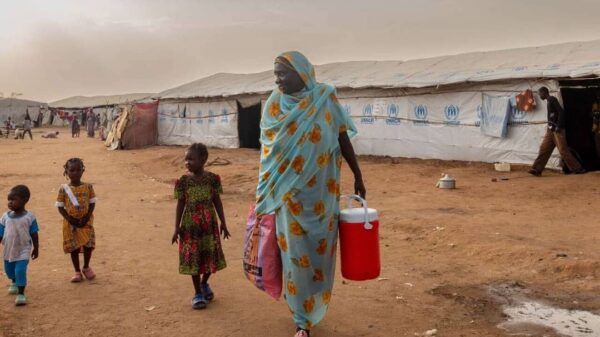
In recent years, concerns have also grown over allegations that members of certain ethnic communities, particularly Fulani populations, have been disproportionately targeted under suspicions of collaboration with Jama’at Nusrat al-Islam wal-Muslimin (JNIM), the Al-Qaeda-linked insurgent coalition active across the Sahel.
Drones and Growing Concerns
Following the withdrawal of the United Nations stabilization mission in Mali (MINUSMA), military operations increasingly relied on drone warfare and aerial surveillance capabilities.
Human rights organizations claim that some strikes have resulted in civilian casualties or targeted civilian gatherings, while Malian authorities insist that all operations are conducted within the framework of counterterrorism efforts and in accordance with military engagement rules.
Security experts note that the departure of international monitoring mechanisms has made independent verification of incidents significantly more difficult.
Gold for Security
Beyond the military dimension, attention has increasingly focused on the economic foundations of the Russian-Malian partnership.
According to reports by Western research institutions and international monitoring bodies, Russian-linked companies have obtained growing access to mining concessions, particularly in Mali’s gold sector, one of the country’s most strategic sources of revenue.
These reports suggest that Russia’s model in Africa increasingly combines security assistance with long-term economic privileges, allowing part of its regional operations to be sustained through access to local resources.
Several studies estimate that revenues generated from gold operations in Mali and other African countries have become an increasingly important source of income for networks linked to Russian interests across the continent.
Allegations of War Financing Through Gold
Some Western research centers go further, alleging that commercial networks and intermediary companies are used to move gold from extraction sites to international markets before integrating it into global supply chains.
According to these reports, such mechanisms help generate hard-currency revenues and mitigate the impact of Western sanctions imposed on Russia.
Russia and Malian authorities reject these accusations, arguing that all economic cooperation is conducted through legal agreements between sovereign states.
Strategic Influence Beyond Mali
The significance of Russia’s presence extends well beyond Mali’s borders.
Through access to strategic air bases and airports in Bamako, Timbuktu, Gao and other locations, Moscow has secured an important platform for expanding its military and political footprint across West Africa.
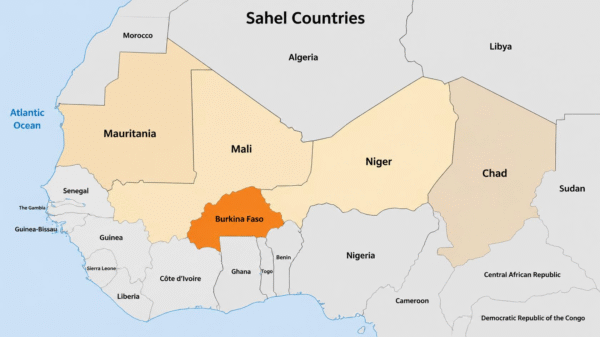
Analysts increasingly view Mali as a cornerstone of Russia’s emerging Sahel strategy, which also includes deepening military cooperation with Burkina Faso and Niger while reshaping regional power dynamics in an area historically dominated by French and Western influence.
Conclusion
One year after the launch of the Africa Corps, two competing narratives continue to define the debate.
The first presents the Russian presence as a security partnership that has helped Mali recover elements of its sovereignty and strengthen its fight against insurgent groups. The second views it as a new model of military influence closely tied to natural resources and allegations of human rights abuses.
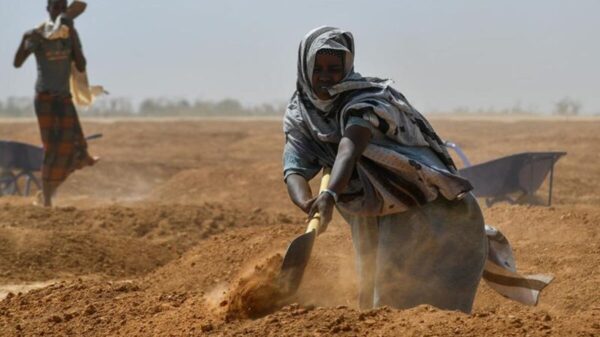
Between these competing interpretations, northern and central Mali remain at the center of a complex conflict where security, politics and economics intersect, while local communities continue to bear the human cost of one of Africa’s most enduring crises.