



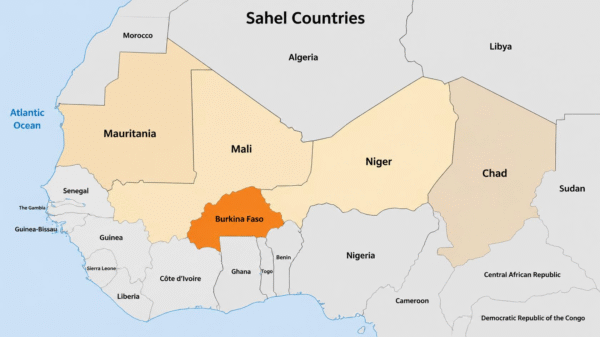








Mali’s authorities have announced substantial financial rewards for information leading to the location and capture of several of the country’s most prominent armed group and jihadist leaders, marking a new phase in the confrontation between Bamako and insurgent networks operating across northern and central Mali.
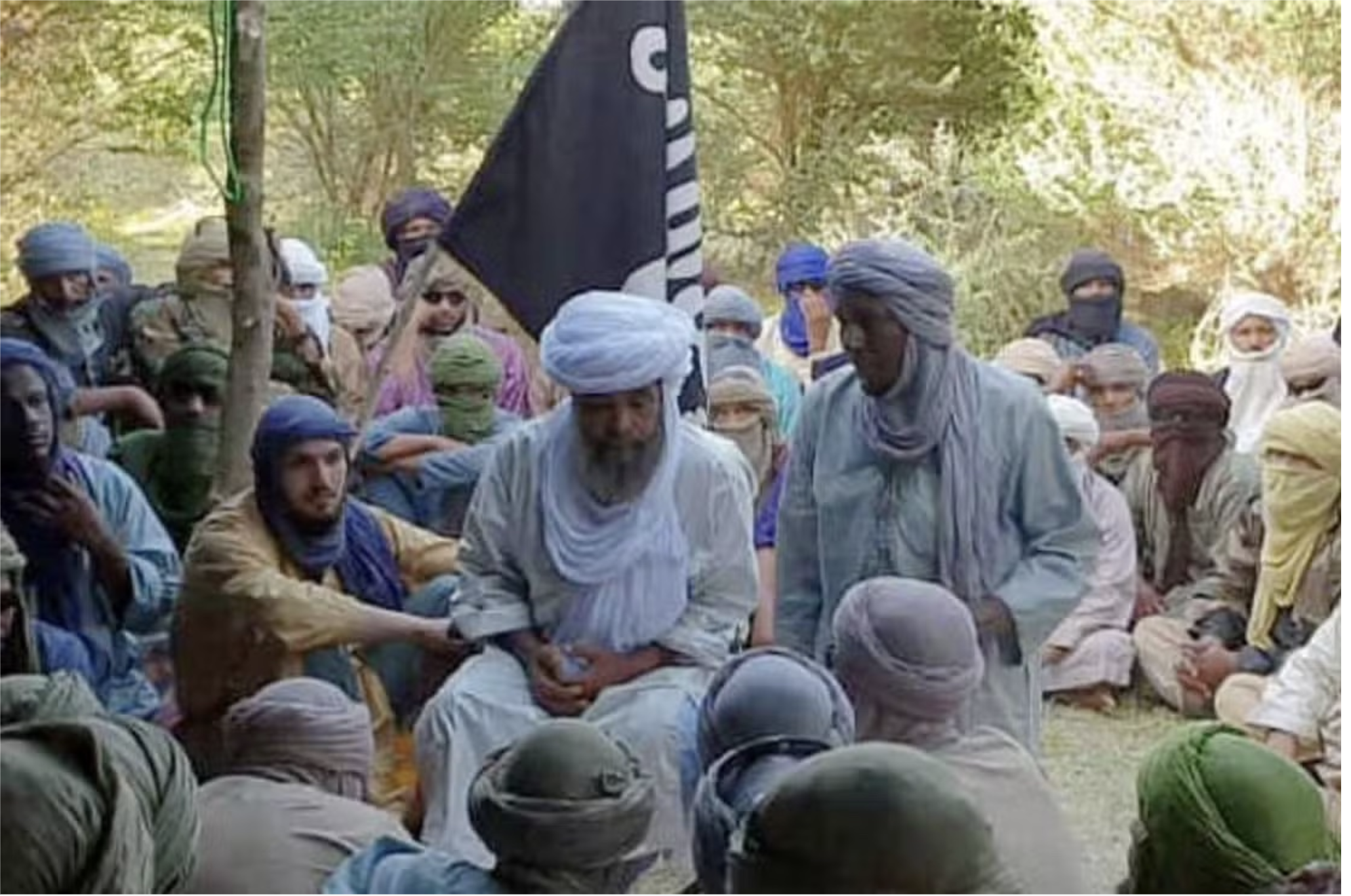
According to a statement issued by the Ministry of Security and Civil Protection, the government has allocated a total of 7.5 billion CFA francs (approximately $12.3 million) in rewards for seven high-profile figures linked to jihadist and armed movements. The list includes Iyad Ag Ghali, leader of the Al-Qaeda-linked Group for the Support of Islam and Muslims (JNIM), Amadou Koufa, leader of the Macina Liberation Front, and several senior figures associated with armed movements active in northern Mali.
The announcement comes weeks after coordinated attacks carried out on April 25 against military and security positions across multiple regions of Mali, attacks that highlighted the growing ability of armed groups to coordinate operations across several fronts simultaneously.
An Unprecedented Reward Program
The Malian authorities have offered two billion CFA francs for information leading to the capture of Iyad Ag Ghali, one of the most influential jihadist leaders in the Sahel and the head of JNIM.
A reward of 1.5 billion CFA francs has been placed on Amadou Koufa, the founder and leader of the Macina Liberation Front, a key component of JNIM’s network in central Mali.
The list also includes several other senior figures from armed and separatist movements, with rewards ranging between 500 million and one billion CFA francs per individual.
The scale of the rewards reflects Bamako’s growing reliance on intelligence tools and financial incentives as part of its broader security strategy, particularly as military operations alone have struggled to produce decisive results.
From Military Confrontation to Intelligence Warfare
The decision cannot be separated from the broader military landscape.
Over the past year, Mali has witnessed an intensification of fighting between government forces and their allies on one side, and JNIM along with various armed groups operating in northern Mali on the other.
Developments following the Battle of Tinzaouatene and subsequent coordinated attacks suggest that the conflict is no longer confined to remote northern regions but increasingly threatens strategic areas in central Mali and the wider national security environment.
Within this context, the reward program appears designed to open a new front in the conflict by encouraging intelligence-sharing, fostering distrust within militant networks and potentially generating defections from within their ranks.
However, the effectiveness of such a strategy will depend largely on the government’s ability to protect informants and on whether local communities are willing to cooperate despite fears of retaliation from armed groups.
A Local Version of an International Model
Financial reward programs are not new to the Sahel.
For years, the United States has relied on its Rewards for Justice program to offer financial incentives for information leading to the capture of senior Al-Qaeda and Islamic State figures, including rewards linked to Iyad Ag Ghali.
What distinguishes the Malian initiative is that it represents a nationally led effort, backed by official government authority and accompanied by specific names and reward amounts.
Beyond its operational objectives, the initiative serves a political purpose by signaling that Bamako intends to move beyond purely defensive military measures toward a more proactive intelligence-driven strategy.
The announcement also coincides with broader international pressure on militant leaders. In 2024, the International Criminal Court publicly disclosed an arrest warrant for Iyad Ag Ghali related to alleged war crimes and crimes against humanity committed in northern Mali, particularly in Timbuktu during 2012.
Political Implications Beyond Security
The announcement carries significant political implications.
Since abandoning the Algiers Peace Agreement framework, Mali has faced an increasingly complex security landscape marked by growing operational coordination between JNIM and certain Azawad armed movements.
For Bamako, this evolving relationship represents one of the most serious threats to state authority and territorial integrity, particularly if battlefield coordination develops into a broader strategic alliance.
The reward program can therefore be interpreted as an attempt to disrupt these networks by placing pressure on senior leaders, creating uncertainty within their circles and limiting their operational freedom.
At the same time, there is a risk that armed groups could use the announcement as propaganda, portraying it as evidence that the government has been unable to achieve decisive military victories.
Between Symbolism and Effectiveness
The initiative raises a fundamental question about whether financial incentives can significantly alter the balance of power in a conflict as complex as Mali’s.
Symbolically, the reward list allows the government to demonstrate determination and project an image of offensive action against high-profile militant leaders.
Operationally, however, success will depend on access to reliable local intelligence networks capable of penetrating highly secretive environments shaped by tribal, familial and geographic loyalties.
Across the Sahel, financial incentives alone rarely determine behavior. Community ties, fear of reprisals and limited trust in state institutions often reduce the effectiveness of such measures.
Nevertheless, the announcement suggests that Bamako is seeking new tools after years of military campaigns that have failed to eliminate insurgent threats.
Conclusion
Mali’s latest reward program illustrates how the country’s conflict has entered a more complex phase in which battles are fought not only on the battlefield but also through intelligence networks, social loyalties and local influence structures.
The initiative is more than a security measure targeting seven individuals. It is a political signal to both adversaries and allies that the Malian state intends to increase pressure through intelligence and psychological operations.
Whether these rewards translate into meaningful operational breakthroughs remains uncertain. In a conflict shaped by deep-rooted grievances, governance challenges, underdevelopment and competing armed actors, financial incentives may become an important tool, but they are unlikely to provide a decisive solution on their own.