





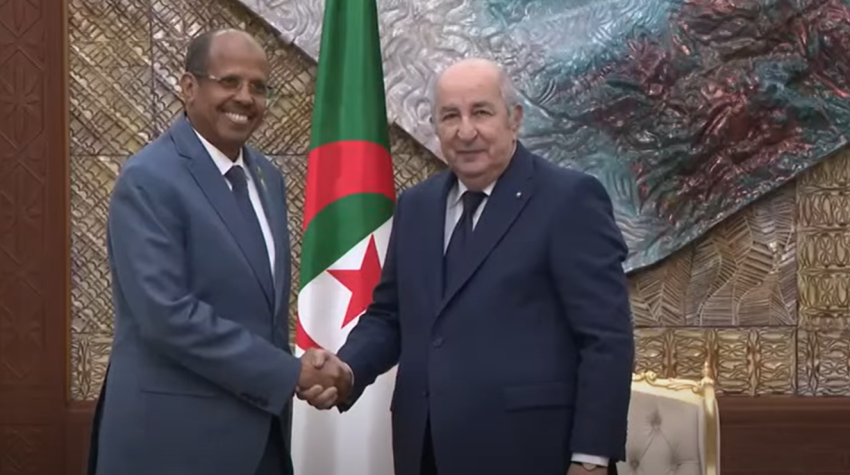
The visit of newly elected African Union Commission Chairperson Mahmoud Ali Youssouf of Djibouti to Algeria carries significance that goes far beyond routine diplomatic protocol. It comes at a time when Africa is facing mounting security, economic and development challenges, while the African Union is redefining its priorities and consolidating its new leadership team.
The discussions held by the African official and his high-level delegation with senior Algerian leaders reflect the growing recognition within the African Union of Algeria’s role as one of the continent’s leading political, financial and security actors. They also highlight ongoing efforts by African institutions to strengthen continental decision-making autonomy and reduce dependence on external funding sources.
Algeria at the Heart of the African Union’s Executive Leadership
The visit follows elections that reshaped the leadership structure of the African Union, during which Algeria secured an important diplomatic achievement with the election of Algerian diplomat Selma Malika Haddadi as Deputy Chairperson of the African Union Commission.
This development places Algeria at the center of the continental organization’s executive machinery, giving it direct involvement in overseeing and implementing policies related to Africa’s political, developmental and security priorities.
Observers view the appointment as part of a broader strategy pursued by Algeria in recent years to strengthen its presence within African institutions and redirect a significant portion of its diplomatic weight toward the African continent after decades of focus on regional and Mediterranean affairs.
Financing as a Tool of Influence and Independence
Algeria’s role within the African Union extends beyond political and diplomatic engagement to include financial contributions, which have become one of the most important sources of influence within continental institutions.
Algeria is among the largest contributors to the African Union’s regular budget, making it one of the key supporters of the organization’s operational capacity and institutional continuity.
These contributions carry particular significance amid ongoing debates within the Union regarding the need to strengthen financial self-reliance and reduce dependence on external partners and international donors. Algeria has consistently advocated for this approach, arguing that financial autonomy is essential to safeguarding independent African decision-making.
Algeria is also a major contributor to the African Peace Fund, the continent’s principal mechanism for financing peace support operations, mediation initiatives, conflict resolution efforts and counterterrorism programs in areas affected by instability.
Linking Security and Development
In recent years, Algeria has adopted an approach that views security and development as inseparable components of long-term stability, particularly in the Sahel and Sahara regions, where economic fragility and security challenges continue to reinforce one another.
As part of this strategy, Algeria allocated one billion dollars to the Algerian Agency for International Cooperation for Solidarity and Development to finance development projects across Africa. These initiatives include infrastructure development, regional connectivity and the expansion of basic services in border regions and underserved communities.
The initiative reflects a broader vision that lasting security cannot be achieved through military measures alone, but requires sustained investment in economic development, public services and job creation.
In the same spirit, Algeria launched a second one-billion-dollar initiative aimed at supporting African startups, innovation and entrepreneurship. The objective is to strengthen the continent’s digital economy, encourage youth-led enterprises and foster employment opportunities through technological development.
This approach marks a significant evolution in Algeria’s engagement with Africa, moving beyond traditional mediation and security cooperation toward a broader model centered on development, investment and digital transformation.
A Legacy of Solidarity and Security Leadership
Algeria’s continental standing is rooted in a long history of political and economic support for African countries, dating back to the era of national liberation movements and continuing through a range of solidarity initiatives.
Among the most notable examples is Algeria’s decision to cancel debts owed by more than fourteen African countries, amounting to over 3.5 billion dollars, in an effort to ease financial burdens and support economic stability across the continent.
On the security front, Algeria continues to play a key role in issues affecting the Sahel and North Africa, drawing on its geographic position and extensive experience in counterterrorism and conflict mediation.
The annual Oran Peace and Security Conference has become an important platform for strategic dialogue on Africa’s security challenges, while Algeria remains one of the leading advocates of reforming the United Nations system and the Security Council to ensure fair and permanent African representation.
Toward a Deeper Partnership with the African Union’s New Leadership
Mahmoud Ali Youssouf’s visit to Algeria reflects a shared recognition of the importance of close coordination between the African Union Commission and Algeria in addressing the continent’s evolving challenges, including food security, climate change, armed conflicts and institutional reform.
For Algeria, the visit offers an opportunity to consolidate its position as one of the principal supporters of the African integration project, not only through financial contributions but also through its expanding political, security and development role.
For the African Union’s new leadership, Algeria appears increasingly indispensable as a strategic partner capable of supporting many of the continent’s priorities in the years ahead.
As a result, the visit may mark the beginning of a new phase of strategic coordination between Algeria and the African Union at a time when African-led solutions to African challenges are becoming more urgent than ever.