












The Middle East conflict has entered a volatile new phase after direct strikes on Gulf energy infrastructure triggered sharp turbulence across global oil and gas markets, raising fears of supply disruptions and potential risks to the Strait of Hormuz.
According to official statements issued as of March 2, 2026 by defence ministries and state energy companies, coordinated attacks targeted key facilities in Qatar and Saudi Arabia, marking a significant expansion of the conflict to critical energy assets.
Qatar Halts LNG Production After Drone Attacks
QatarEnergy announced a full suspension of Liquefied Natural Gas production at its Ras Laffan and Mesaieed facilities, one of the most significant shutdowns in the global energy sector in recent years.
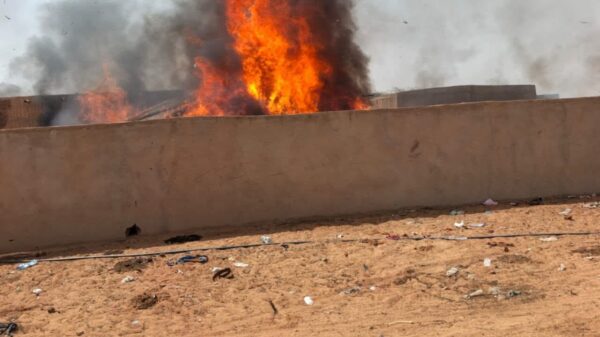
Qatari defence officials said two Iranian drones targeted the sites. One struck a power plant water tank in Mesaieed, while the other hit a facility in Ras Laffan. Authorities confirmed there were no casualties.
As the world’s largest LNG exporter, Qatar’s shutdown immediately affected markets. European benchmark gas prices (Dutch TTF) surged nearly 50 percent, while Asian LNG benchmarks rose by 39 percent within hours.
Analysts warned that even a short disruption could place severe pressure on European supply chains, given the continent’s reliance on Qatari LNG shipments.
Saudi Arabia’s Ras Tanura Refinery Targeted
Saudi Arabia’s Ministry of Defence confirmed that the Ras Tanura refinery — one of the world’s largest oil processing facilities — was targeted by two drones early Monday.
Officials described the damage as limited, with intercepted debris causing a small fire inside the facility. Some operations were temporarily halted as a precaution, though domestic supplies were reported unaffected.
Markets reacted immediately. Brent crude rose 13 percent intraday, climbing above $82 per barrel, as traders priced in the growing risk of further attacks and potential disruption around the Strait of Hormuz, through which roughly one-fifth of global oil trade passes.
Regional Military Incidents Increase Uncertainty
Additional military incidents across the Gulf further heightened tensions.
Kuwait
The Kuwaiti government reported that several U.S. military aircraft crashed on Monday. All crew members survived, and investigations are ongoing to determine whether the cause was mechanical failure or hostile action.
UAE and Bahrain
Explosions were reported in industrial areas near Doha and Manama as Iranian retaliatory operations against U.S. military assets continued.
These developments have reinforced concerns that energy infrastructure could remain a primary target if the conflict continues to expand.
Market Impact at a Glance
LNG (Gas)
Facility: Ras Laffan / Mesaieed, Qatar
Action: Full production halt
Price impact: +50% (European benchmarks)
Crude Oil
Facility: Ras Tanura, Saudi Arabia
Action: Partial precautionary suspension
Price impact: +13% (Above $82 per barrel)
Diplomatic Response and Strategic Implications
A joint statement by the United States, Bahrain, Jordan, Kuwait, Qatar, Saudi Arabia, and the United Arab Emirates condemned the attacks and reaffirmed their “collective right to self-defence.”
Despite the unified diplomatic response, energy analysts warned that prolonged production disruptions — particularly in Qatar — could intensify economic pressure on global markets.
If outages extend beyond several days, the resulting price surge could influence strategic decision-making in Washington and other allied capitals.
A Critical Moment for Global Markets
With markets reacting sharply, the coming days will be crucial in determining whether the attacks represent isolated escalation or the beginning of a sustained campaign targeting Gulf energy infrastructure.