
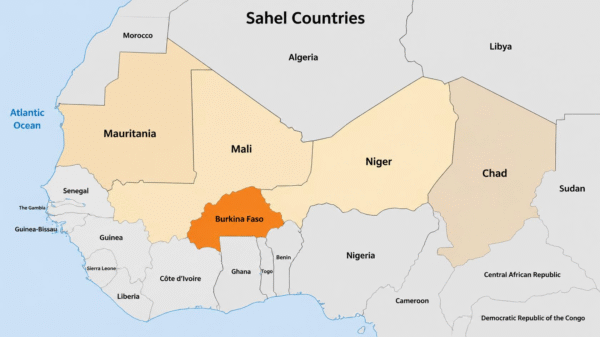
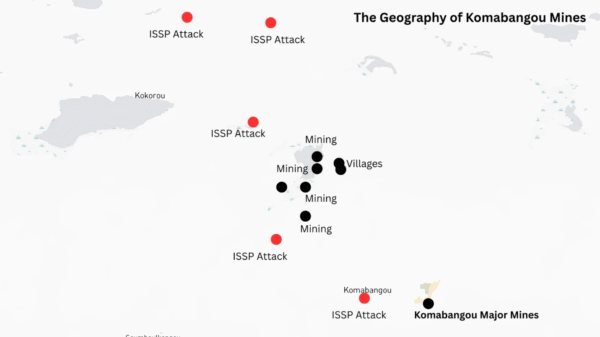










Jama’at Nusrat al-Islam wal-Muslimin (JNIM), al-Qaeda’s affiliate in the Sahel, has reinforced concerns that it is evolving into a de facto governing force across large parts of Mali following its capture of military positions in the town of Fana and its continuing daily attacks against Malian forces and the Russian Africa Corps.
The significance of the latest developments extends far beyond Fana itself. Security analysts say the group’s growing influence across much of northern and central Mali, combined with its ability to choke supply routes leading to Bamako and other major cities, represents a fundamental shift in the country’s security landscape.
Over recent months, JNIM has intensified attacks on military bases, checkpoints, logistics convoys and fuel tankers as part of a broader strategy aimed at exhausting state institutions and paralysing government mobility rather than simply capturing urban centres.
Local sources say Malian forces and the Russian Africa Corps are increasingly operating in a defensive posture, concentrating on protecting the capital, senior military commanders and key installations while struggling to secure fuel and logistical supplies into Bamako.
Sources familiar with the situation also indicate that the Malian authorities have been seeking ways for weeks to resolve the crisis of dozens of fuel tankers stranded near the Senegalese border. Local reports suggest efforts have been made to establish communication channels that would allow the convoys to proceed, although neither the government nor JNIM has officially confirmed those reports.
US warning
The battlefield developments coincide with a warning from AFRICOM Commander General Dagvin Anderson, who said JNIM is approaching the point of possessing the characteristics of a state-like entity.
According to Anderson, the group has moved beyond conducting insurgent attacks and is now demonstrating an increasing ability to control strategic territory, disrupt fuel and supply routes, and isolate major population centres. He warned that if this trend continues, the organisation could establish a secure territorial base capable of supporting operations well beyond the Sahel.
From insurgency to governance
Security specialists increasingly argue that JNIM has shifted from classic guerrilla warfare toward a long-term strategy of competing with the state for territorial control and governance.
In areas under its influence, the group operates Sharia courts, collects zakat, regulates movement along certain roads and administers local affairs, taking advantage of weak state institutions and persistent security vacuums.
Western and African security officials warn that the greatest threat facing Mali is no longer the possible fall of a single town, but JNIM’s growing ability to administer vast rural territories while placing major cities under sustained siege, effectively forcing government forces into a defensive role focused on protecting Bamako and a handful of strategic locations. This, they argue, represents one of the most significant strategic shifts witnessed in the Sahel conflict in recent years.