








The fragile ceasefire in Gaza has entered a decisive and uncertain phase, as international efforts to define a post-war order collide with continued violence on the ground and mounting political controversy over a new U.S.-backed diplomatic framework.
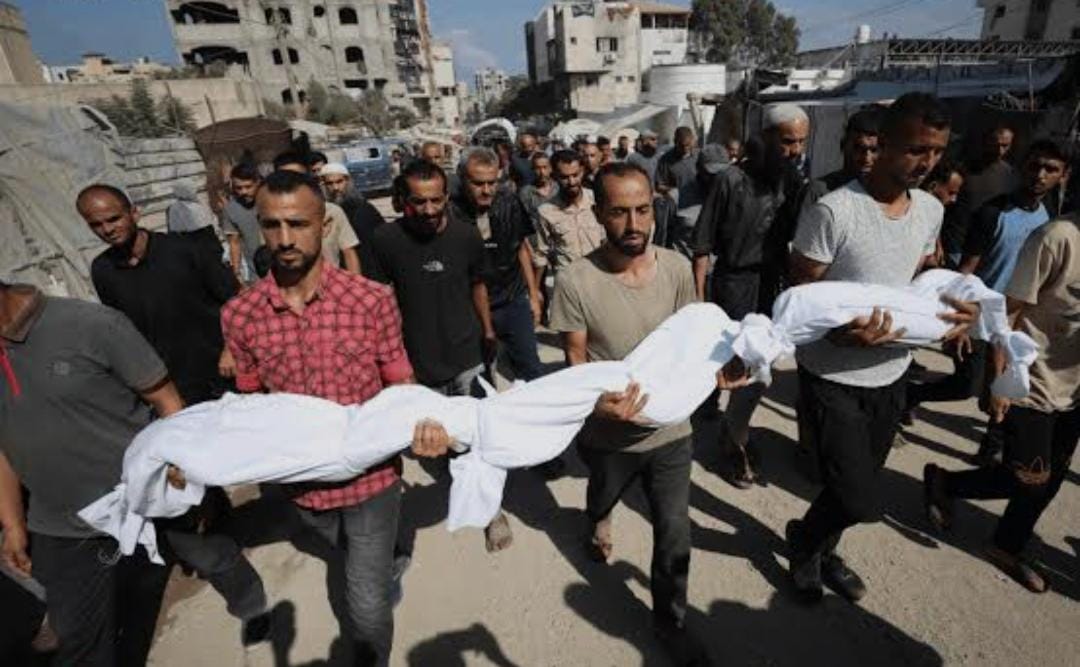
As of February 10, 2026, the conflict has shifted into what analysts describe as a “war by other means,” with hostilities continuing despite a ceasefire agreement reached in October 2025. Since the deal took effect, more than 580 Palestinians have been killed, pushing the total death toll since October 2023 beyond 72,000.
The ‘Board of Peace’ and a New Diplomatic Architecture
At the center of the debate is the Board of Peace (BoP), an international body launched by U.S. President Donald Trump on January 22, 2026, on the sidelines of the World Economic Forum in Davos. Authorized under UN Security Council Resolution 2803, the BoP is mandated to oversee Gaza’s reconstruction, security arrangements, and interim governance.
U.S. officials have framed the initiative as a pragmatic mechanism to stabilize Gaza and prevent a return to large-scale war. The board, however, has quickly become a focal point of criticism.
Several European leaders and political bodies, including Pakistan’s Khyber Pakhtunkhwa (KPK) provincial assembly, have warned that the BoP risks undermining traditional UN oversight and Palestinian sovereignty. Reports that permanent membership may require contributions of up to $1 billion per seat have fueled accusations that the body operates on a “pay-to-play” basis, favoring wealthy states over affected populations.
Pakistan’s Balancing Act
Pakistan has emerged as a key case study in the tensions surrounding the BoP. Prime Minister Shehbaz Sharif’s government formally joined the board in January 2026, portraying the move as necessary to support a permanent ceasefire and advance Palestinian self-determination through international engagement.
Domestically, the decision has drawn skepticism. A recent Gallup Pakistan survey found that 73% of respondents support contributing troops to an international peacekeeping force, while only 34% expressed satisfaction with the Board of Peace itself. Critics warn that any Pakistani military deployment could be perceived as serving U.S. or Israeli strategic interests rather than protecting Palestinian civilians.
Continued Violence and the West Bank Dimension
While Gaza remains the focus of stabilization efforts, the report highlights growing alarm over developments in the occupied West Bank. Israel is accused of expanding control through intensified military operations and settlement activity, drawing condemnation from the UN Secretary-General as well as regional powers including Türkiye and Saudi Arabia.
Humanitarian agencies caution that an exclusive focus on Gaza risks entrenching a fragmented approach to the Palestinian territories, undermining prospects for a comprehensive political settlement.
International Stabilization Force Faces Uncertainty
Alongside the BoP, plans are advancing for an International Stabilization Force (ISF), expected to be led by U.S. Major General Jasper Jeffers. Several Muslim-majority countries have signaled willingness to contribute troops, but key aspects of the force’s mandate remain undefined.
Security analysts warn that vague rules of engagement could place peacekeepers in direct confrontation with local armed groups, including Hamas, potentially destabilizing an already volatile environment.
Mounting Humanitarian Costs
The humanitarian toll continues to rise. As of February 10, 2026:
- Total Palestinians killed since October 2023: 72,032
- Total wounded: 171,661
- UNRWA 2026 funding appeal: $1.26 billion
Aid agencies warn that without sustained access, adequate funding, and political clarity, reconstruction efforts risk faltering before they begin.
A Precarious Path Forward
As diplomatic initiatives multiply, the gap between international planning and realities on the ground remains stark. The Gaza ceasefire, while preventing full-scale war, has failed to halt daily violence, raising doubts about whether new governance structures can succeed without a durable political settlement.
With trust in international mechanisms fragile and regional tensions deepening, the coming months are likely to determine whether the current ceasefire evolves into lasting peace—or collapses under the weight of unresolved conflict.