






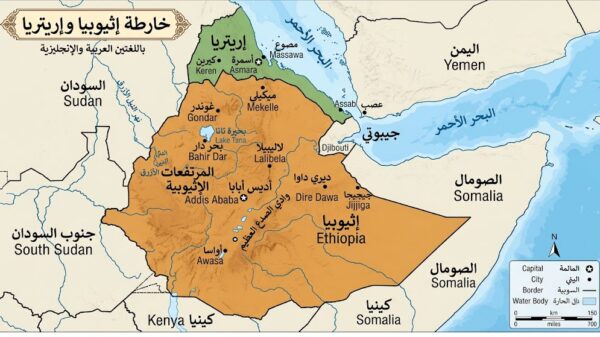






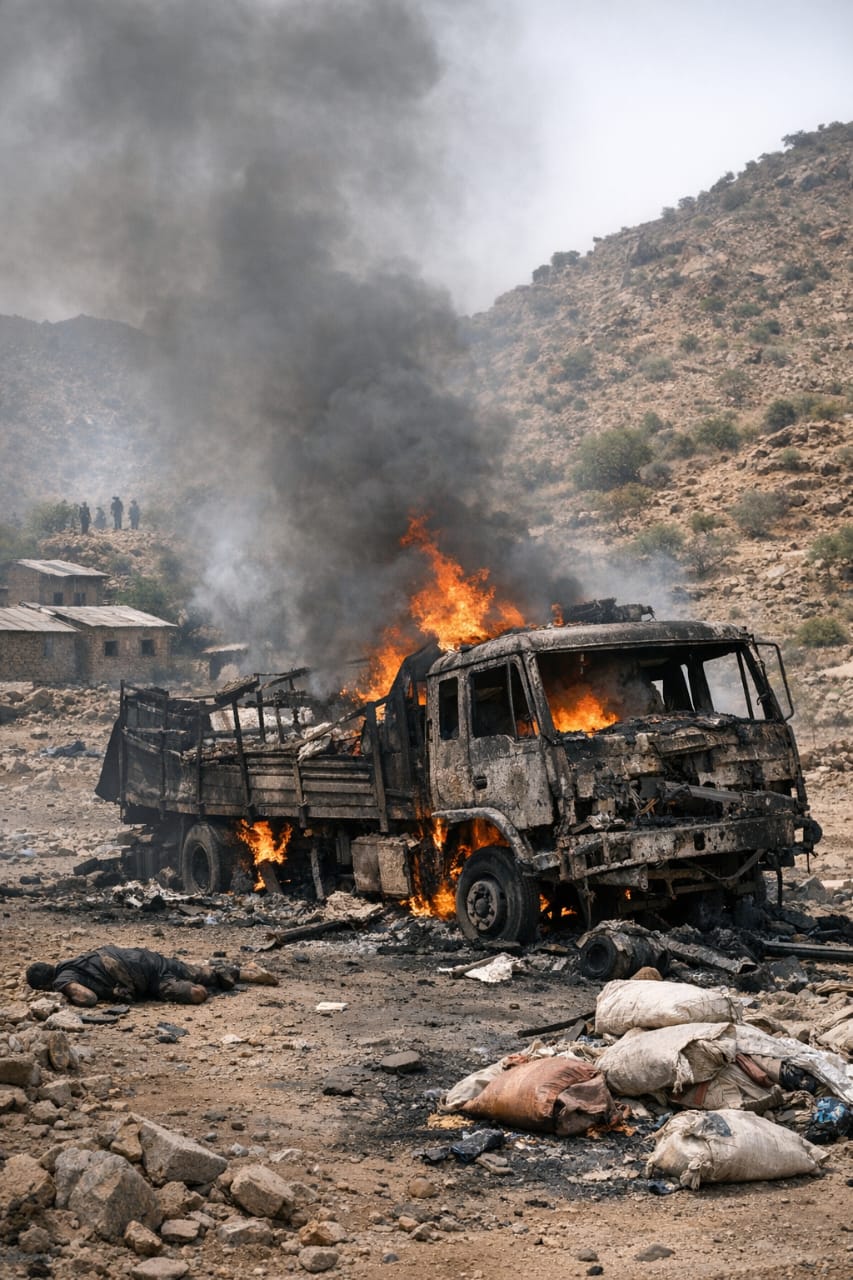
The security situation in Ethiopia’s Tigray region has sharply deteriorated, with regional authorities confirming the first use of drone strikes since the signing of the 2022 Pretoria Peace Agreement, triggering urgent calls for restraint from the African Union, the United Nations, and the European Union.
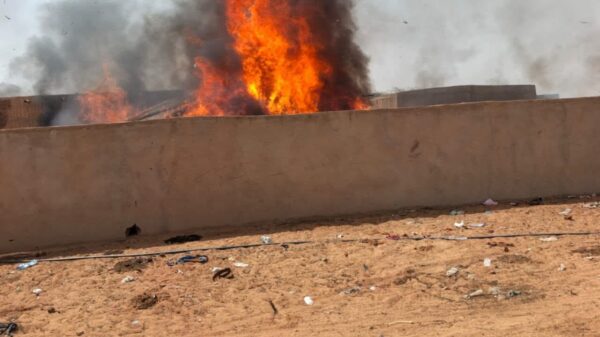
According to the Tigray Communication Affairs Bureau and regional media outlets, two separate drone strikes were carried out early Saturday morning in the Central Tigray Zone, marking a significant escalation after months of fragile calm.
The first strike occurred between 3:30 a.m. and 4:00 a.m. in the town of Enticho, where an Isuzu truck was hit. Regional officials said the driver was killed and his assistant injured. A second strike was reported around 5:30 a.m. in the Gendebta area of the Ahferom district, also targeting a truck.
Tigrayan authorities said the vehicles were transporting civilian goods, including food, cooking oil, and coffee. Pro-government sources alleged the trucks were carrying weapons. As of February 1, the Ethiopian National Defense Force had not issued an official statement addressing the incidents or the competing claims.
Escalating Military Tensions
The drone strikes come amid a week of worsening security across several parts of Tigray. Ground clashes were reported earlier in the week in Tselemti, in Western Tigray, and in Alamata, in Southern Tigray, areas long disputed between Tigray and the neighboring Amhara region.
Reports also indicate that Tigrayan forces recently entered the towns of Alamata and Korem following the withdrawal of federal troops. These developments have heightened concern among diplomats and humanitarian agencies that the region could slide back into full-scale conflict.
In another sign of instability, Ethiopian Airlines suspended all flights to Mekele, Axum, Shire, and Humera on January 29. The suspensions remain in place, with no timeline announced for the resumption of air services.
International Alarm
International actors have responded with alarm, warning that renewed hostilities could undermine the fragile peace process.
The Chairperson of the African Union Commission expressed deep concern on January 30, urging all parties to exercise maximum restraint and resolve disputes through dialogue. The AU High-Level Panel offered to intensify mediation efforts.
The United Nations Secretary-General warned on January 31 of the potential impact on civilians and the risk of a return to wider conflict, calling for full implementation of the cessation of hostilities under the Pretoria agreement.
The European Union cautioned that renewed conflict would have serious consequences for Ethiopia’s stability and its relations with international partners.
Growing Civilian Impact
The deteriorating security situation is already affecting daily life. Residents in Mekele and other major towns reported increased bank withdrawals, with several automated teller machines running out of cash amid public anxiety.
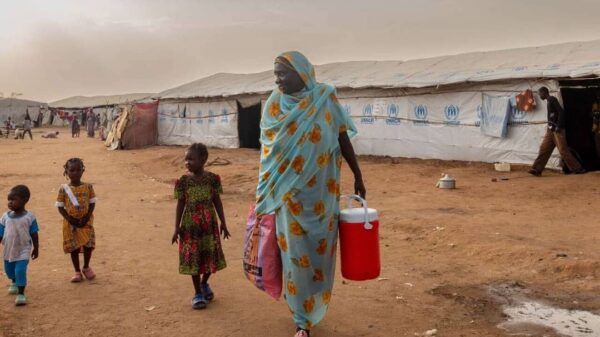
Population movements have also been reported, with civilians attempting to leave the region. Bus services to Addis Ababa are reportedly fully booked days in advance, according to local transport operators.
Observers warn that the coming days will be critical in determining whether Ethiopia can prevent a collapse of the 2022 peace agreement and avoid a return to large-scale conflict in the north.