








Tensions between the United States and Iran have escalated sharply, driven by a volatile combination of military maneuvering, political brinkmanship and a deadly crackdown on anti-government protests inside Iran, raising fears of a direct confrontation between the two long-time adversaries.
The immediate flashpoint is the deployment of a U.S. carrier strike group toward the Middle East, a move that has triggered reciprocal threats from senior officials in Washington and Tehran and intensified regional alarm.
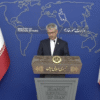
Iran’s Foreign Minister Abbas Araghchi warned in an opinion article published by the Wall Street Journal that Tehran would respond to any “renewed attack” with the full extent of its military capabilities. He cautioned that any future conflict would be “ferocious” and far more prolonged than suggested by regional hardliners.
The remarks referenced the 12-day war launched by Israel against Iran in June 2025, a brief but destructive conflict that remains a defining backdrop to the current standoff.
U.S. President Donald Trump responded with stark language of his own, reiterating that Iran would be “wiped off the face of the earth” if it attempted to assassinate him. His comments followed allegations of Iranian plots against him and the circulation of Iranian state media footage depicting the 2024 shooting in Butler, Pennsylvania, captioned: “This time it will not miss.”
Meanwhile, the USS Abraham Lincoln carrier strike group has transited the Strait of Malacca and entered the Indian Ocean. While U.S. officials have not publicly confirmed its final destination, its current position places it within operational range of the Persian Gulf, reinforcing perceptions of heightened U.S. military readiness.
Domestic unrest fuels international crisis
The external escalation is unfolding alongside sweeping unrest inside Iran. Anti-government protests that erupted in late December 2025, initially driven by economic collapse and currency devaluation, have been met with an aggressive security crackdown.
Human rights organisations estimate that between 3,300 and more than 5,000 people have been killed, with over 26,300 arrested nationwide. Iranian authorities have imposed extensive internet blackouts and blamed the unrest on what they describe as a “Zionist-American alliance.”
Trump has publicly urged Iranian citizens to continue protesting and warned that any mass executions of detainees would trigger U.S. military intervention — statements Tehran has denounced as blatant interference in its internal affairs.
Regional alarm and fragile deterrence
Gulf Arab states, increasingly alarmed by the prospect of another regional war, are reported to be lobbying the White House to refrain from launching a kinetic strike against Iran. Diplomatic channels remain active, but officials on all sides acknowledge that no breakthrough has been achieved.
Analysts describe the situation as a high-readiness deterrence standoff — a fragile balance in which both sides signal preparedness for conflict while stopping short of direct action.
With memories of last year’s brief but destructive Israel–Iran war still fresh, regional observers warn that a single miscalculation could rapidly ignite a far wider confrontation, with consequences extending well beyond Iran and the United States.