










The Rafah Border Crossing is set to reopen on Feb. 1 under strict security measures, marking the first concrete step in the establishment of a new post-war administrative framework for Gaza, according to Israeli, Egyptian and Palestinian officials.
The reopening follows the recovery on Jan. 26 of the remains of the final Israeli hostage, Ran Gvili, which officials said removed a key political obstacle to advancing what has been described as the “second phase” of post-war arrangements.
Egyptian authorities said they were fully prepared to resume the transfer of humanitarian cases and facilitate the return of civilians. Israeli officials, however, confirmed that the reopening would be limited and tightly regulated due to ongoing security concerns.
Limited pedestrian access
Israel’s state broadcaster KAN and Palestinian officials said the crossing would initially be opened only for pedestrian movement, with no commercial cargo allowed.
All individuals entering or leaving Gaza will be subject to full Israeli security screening, supported by remote monitoring and advanced inspection systems. Israeli Defense Forces units are expected to maintain an external security checkpoint near the crossing.
Israeli Prime Minister Benjamin Netanyahu said on Jan. 27 that the number of people allowed to enter Gaza could initially be capped at around 50 per day, despite more than 30,000 Palestinians currently registered in Egypt seeking to return.
New Gaza administrative body
The reopening coincides with the formation of the National Committee for the Administration of Gaza (NCAG), a technocratic body tasked with overseeing civil administration and reconstruction in the enclave.
The committee will be headed by Dr. Ali Shaath, a UK-educated civil engineer and former Palestinian Authority undersecretary. According to diplomats involved in the process, the NCAG will comprise 15 Palestinian technocrats, including independent professionals and figures previously affiliated with Fatah.
Its mandate includes restoring essential services such as water, electricity and healthcare, overseeing rubble removal and infrastructure repair, and supervising the demilitarisation process inside Gaza. Officials said the committee would have no political or diplomatic representation authority.
International oversight
The NCAG will operate under the authority of a U.S.-backed Board of Peace (BoP), a temporary oversight mechanism led by international representatives and overseen by U.S. Special Envoy Steve Witkoff, according to diplomatic sources.
Security on the ground is expected to be supported by an International Stabilization Force, alongside the return of the European Union Border Assistance Mission, EUBAM, at Rafah to act as a liaison between Egyptian and Israeli authorities.
Humanitarian pressure
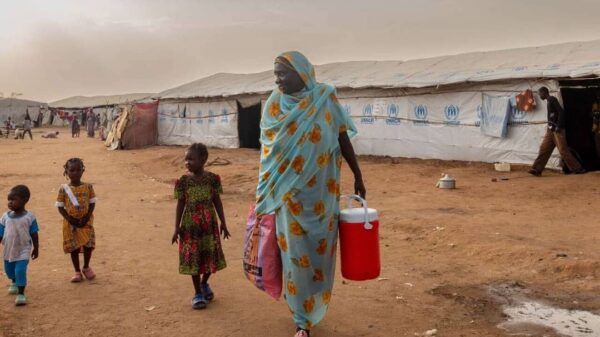
United Nations agencies say around 20,000 patients in Gaza require urgent medical evacuation for war-related injuries or untreated chronic illnesses.
While talks are continuing on expanding access, aid officials warned that without permission to resume commercial cargo flows, the economic impact of the reopening would remain limited.
The Rafah reopening and the creation of the NCAG mark a fragile turning point in Gaza’s post-war transition, with its sustainability dependent on expanded humanitarian access and sustained international engagement.