













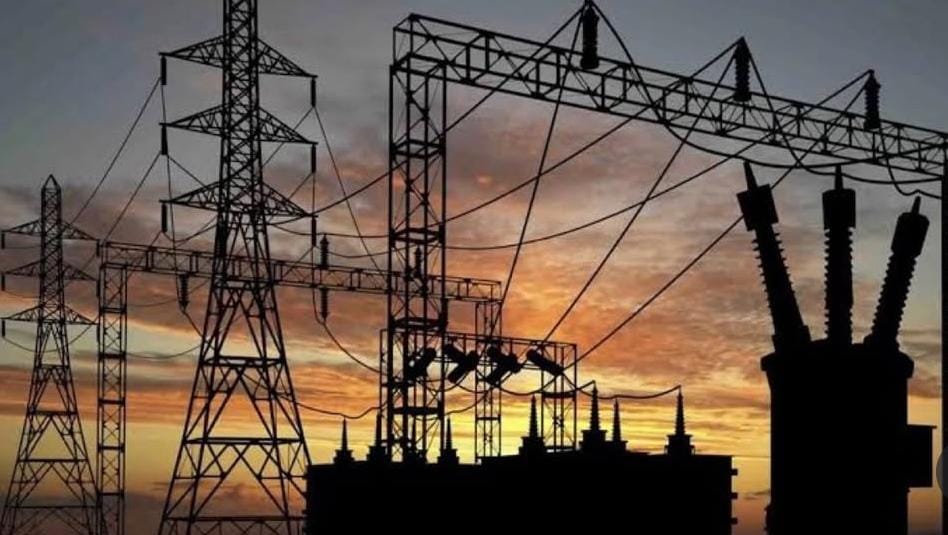
Nigeria’s national electricity grid suffered a total system collapse on Friday afternoon, plunging the country into a nationwide blackout and marking the first major grid failure of 2026, according to official power sector reports.
Statements from the Nigerian Independent System Operator (NISO) and the Transmission Company of Nigeria (TCN) said the grid collapsed at approximately 1:00 p.m. local time, with national power generation falling sharply from more than 4,500 megawatts to zero within minutes.
All 11 electricity distribution companies (DisCos) reported zero load allocation following the incident, effectively cutting off electricity supply across the country. Affected utilities include Abuja Electricity Distribution Company (AEDC), Ikeja Electric (IKEDC), Eko Electricity Distribution Company (EKEDC) and Kano Electricity Distribution Company (KEDCO).
Restoration efforts underway
TCN said phased restoration of the grid began shortly after the collapse. System recovery typically starts with so-called “black-start” capable power stations, notably the Kainji and Jebba hydropower plants, which are used to stabilise frequency and gradually reconnect thermal generation units.
Officials said coordination is under way between generation, transmission and distribution companies to restore supply, though no timeline has been provided for full nationwide recovery.
Preliminary cause: gas constraints and technical instability
While a detailed investigation is ongoing, preliminary diagnostic data from NISO indicates that gas supply constraints, combined with technical instability in parts of the transmission network, triggered the collapse.
In a brief statement, NISO said:
“Power generation fell to zero megawatts at 1:00 p.m. on Friday. We are working with generation and distribution companies to ramp up supply and stabilise the system as quickly as possible.”
A fragile grid
The latest failure underscores the persistent fragility of Nigeria’s electricity infrastructure. Government officials have previously attributed repeated grid collapses to ageing transmission equipment, limited redundancy, and vandalism of key power lines — particularly the Shiroro–Kaduna–Mando transmission corridor.
Friday’s incident marks the first total grid collapse of 2026, following a turbulent 2025 in which the national grid reportedly failed more than a dozen times. The most recent collapse prior to this occurred on December 29, 2025.
Grid performance snapshot – January 2026
Date | Status | Generation level
Jan 5, 2026 | Stable | ~4,330 MW
Jan 11, 2026 | Significant drop | ~3,810 MW
Jan 21, 2026 | Under strain | ~4,140 MW
Jan 23, 2026 | Total collapse | 0 MW
Economic and social impact
The nationwide blackout disrupted businesses, telecommunications services, healthcare facilities and transportation systems. Many urban areas switched to diesel and petrol generators, while rural communities were left without alternative sources of power.
Energy analysts warn that repeated grid failures continue to undermine investor confidence in Nigeria’s power sector and increase costs for households and businesses dependent on private electricity generation.
Awaiting full restoration
TCN has assured the public that restoration efforts are ongoing, but as of Friday evening no definitive timeline had been issued for full power restoration nationwide.
Nigeria remained in blackout conditions late on Friday as engineers worked to stabilise the grid.