







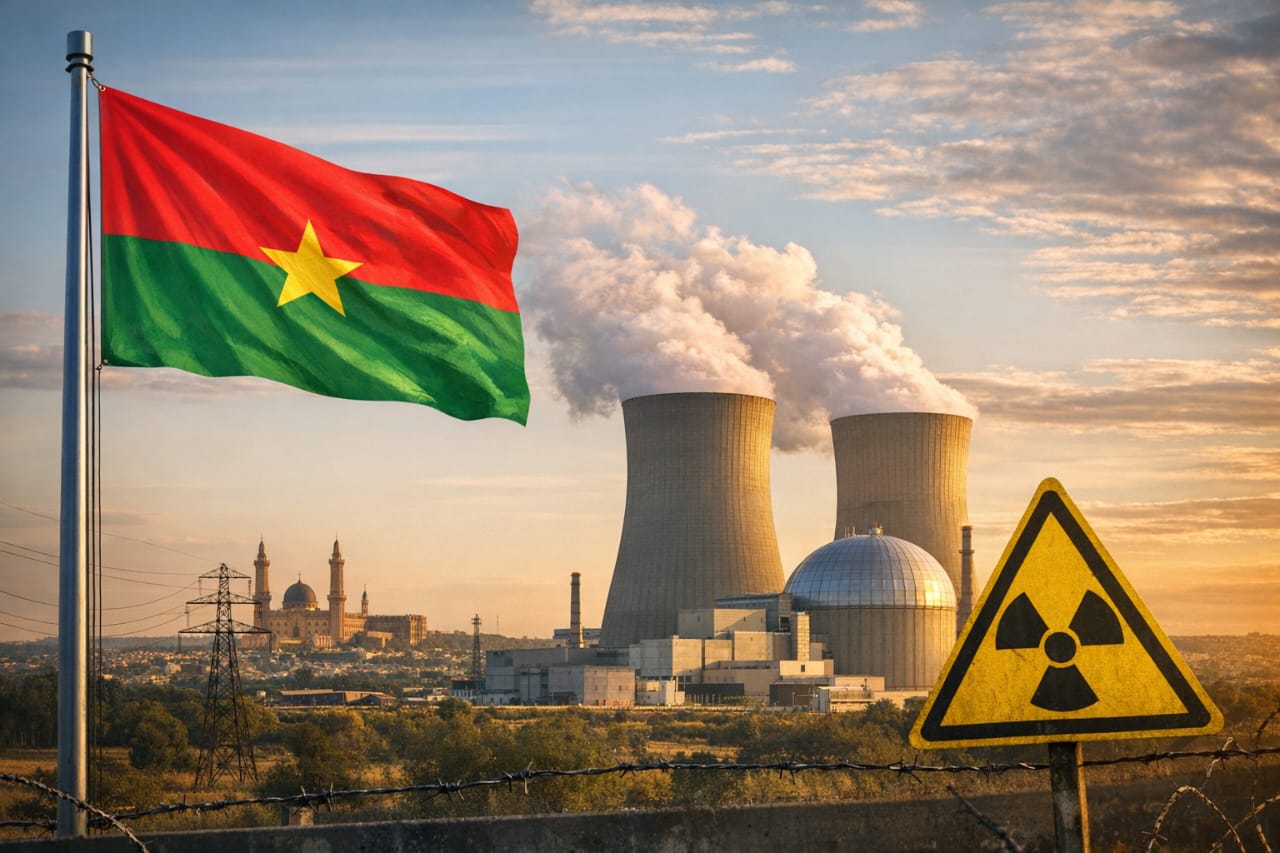
Burkina Faso has formally acceded to the Vienna Convention on Civil Liability for Nuclear Damage, marking a major legal milestone in its plan to launch a civilian nuclear energy program and address chronic national electricity shortages.
The Transitional Legislative Assembly unanimously approved accession to the convention on January 27, 2026, with 66 votes in favor and none against. The move aligns Burkina Faso with international nuclear liability standards and establishes the legal and financial framework required before any nuclear power project can move forward.
Legal Framework for Nuclear Development
Adopted in 1963, the Vienna Convention establishes an international liability regime for nuclear accidents. By acceding to it, Burkina Faso commits to globally recognized rules governing compensation and legal jurisdiction in the event of nuclear damage.
Under the convention, nuclear operators bear strict and exclusive liability, meaning victims do not need to prove negligence, only that damage occurred. The framework allows the state to cap liability, reducing financial uncertainty for investors. Jurisdiction over nuclear-related claims will rest exclusively with national courts, avoiding complex cross-border litigation. Operators are also required to maintain mandatory insurance or financial guarantees to ensure compensation.
Government officials describe accession as a necessary step to attract foreign partners and financing in the nuclear sector.
Partnership with Russia
The legal move follows a series of agreements with Russia’s state nuclear sector, signaling Burkina Faso’s intention to build its first nuclear power plant.
Key milestones include the establishment of the national atomic energy agency in August 2024. In June 2025, Burkina Faso and Russia signed an intergovernmental agreement in Saint Petersburg covering nuclear power plant construction, which was ratified by the legislature in November 2025. Accession to the Vienna Convention completes the required international legal framework.
The project is now expected to move into technical feasibility studies and site selection phases.
Energy Strategy and National Goals
The nuclear initiative is part of President Ibrahim Traoré’s broader strategy to expand electricity access and reduce reliance on imported energy. Electricity access stood at about 22.5% in 2020, with the government aiming to reach 60% by 2027.
Plans indicate the proposed plant would have a capacity of at least one gigawatt, potentially reshaping the country’s energy mix and reducing long-term generation costs.
Beyond power generation, authorities are also exploring nuclear applications in medicine, including cancer treatment, as well as agricultural uses such as pest control and food preservation.
Next Phase
With legislative approval secured and international legal obligations in place, attention now turns to technical design, environmental assessments, and financing. Analysts note that choosing between large-scale reactors and smaller modular reactor technology will be a key factor influencing timelines and costs.
Accession to the Vienna Convention signals Burkina Faso’s regulatory readiness and its intention to join a growing group of African states pursuing nuclear energy to meet development needs.