

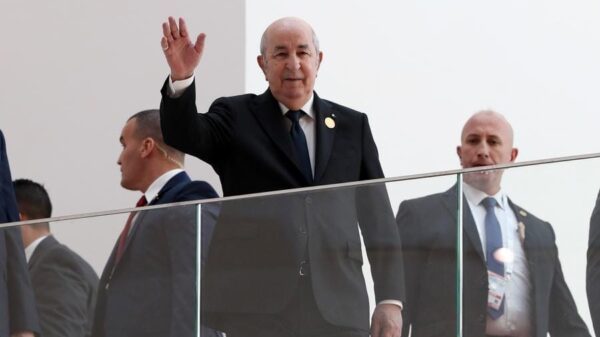






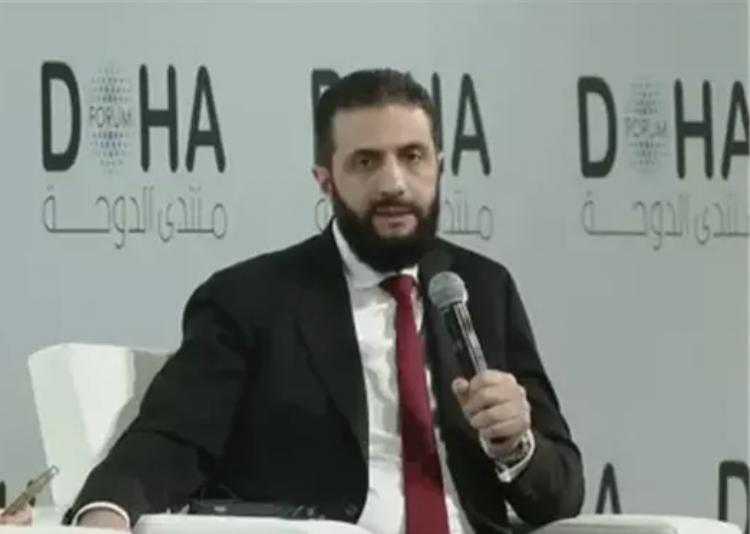
In a striking moment at an international forum in Doha, hundreds of officials and diplomats broke into applause for Syrian President Ahmed Al-Shar’a — a man who was once listed globally as a terrorist.
The vigorous applause came in response to his forceful argument challenging the traditional definition of terrorism, and exposing what he described as deep double standards in its application.
This moment was more than a passing media highlight; it can be read as a symbolic reflection of broader shifts in the global geopolitical landscape, where resistance to unilateral dominance is growing and power balances are changing.
Al-Shar’a built his speech on a direct and forceful argumentative structure, relying on contrasting examples to highlight what he called the international community’s inconsistencies.
He cited Israeli and American military operations, as well as past campaigns by the Syrian regime, which he said caused high numbers of civilian casualties — yet the perpetrators were not labelled “terrorists.”
By contrast, he rejected claims that his former organization — once designated as terrorist — had targeted civilians or displaced populations, insisting it had protected them.
He concluded that the term “terrorist” is often a political tool wielded by those who themselves use violence, in order to discredit their opponents.
This reception cannot be separated from the current international environment, marked by fractures in the Western-led global order following the Gaza war and the war in Ukraine.
The applause in Doha was more than appreciation for a well-crafted speech; it served as a signal of a widening crack in the previously assumed international consensus.
Ahmed Al-Shar’a’s address succeeded in shifting the stage: from a tribunal examining his past to an indictment of the international system’s hypocrisy.