









In Mali, the front lines are no longer measured by territorial gains or the number of attacks, but by how much fuel remains in the capital’s storage tanks. Over the past eleven weeks, fuel has become a central weapon in the hands of Jama’at Nusrat al-Islam wal-Muslimin (JNIM), which has imposed a silent, calculated siege aimed at strangling the economy and undermining the military junta that has ruled since 2020.
What is unfolding, analysts say, is the most severe strategic crisis the country has faced in a decade.
1. Fuel as a Strategic Weapon
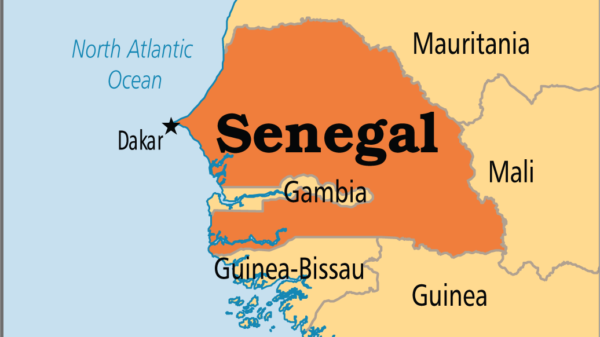
The siege began taking shape in early September 2025, when JNIM intensified attacks on fuel convoys from Senegal and Côte d’Ivoire. Within weeks, the main supply routes through Ségou, Kayes and Bougouni were turned into ghost corridors:
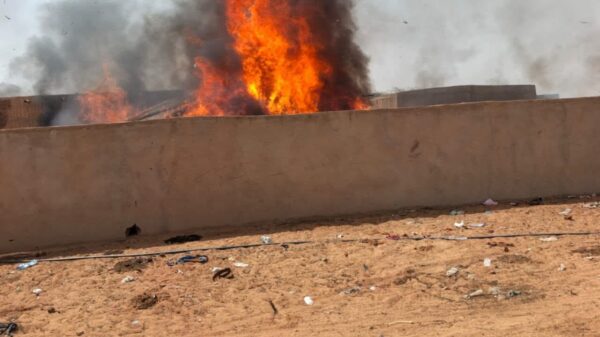
- More than 100 tankers destroyed in targeted attacks
- Drivers and civilians killed in ambushes
- Power cuts, school closures and a collapse in basic services
- Fuel prices skyrocketing on the black market
This is not logistical disruption; it is a deliberate strategy of attrition designed to force internal collapse and drag the junta to negotiations on the group’s terms.
2. The Macina Battalion: The Siege Enforcer
Behind the strategy stands the Macina Battalion led by Amadou Koufa.
The group effectively controls the central corridors leading to Bamako and employs a “long siege” doctrine that deprives the state of any quick victory.
Its effectiveness stems from:
- Open terrain suitable for mobile ambushes
- Control of villages and inner routes inaccessible to the army
- Local support driven by anger over abuses by Malian and Russian forces
The battalion seeks not only to fight, but to establish an Islamic governance model in rural regions—making the siege a political project, not just a military tactic.
3. Russia Falters, the Junta Loses Ground
The junta’s reliance on Russian forces—transitioning from Wagner to the so-called “Africa Corps”—has shown clear limits:
- Security has deteriorated despite Russia’s presence
- Multiple escorted fuel convoys ended in disaster
- Reports of rifts between Malian officers and Russian fighters
Wagner-era abuses have also eroded local trust, pushing communities toward JNIM influence.
4. Growing International Alarm
The crisis has become a regional flashpoint:
- The U.S., France, Germany and the U.K. urged citizens to leave Mali
- The African Union called for urgent international action
- Withdrawal from ECOWAS deepened Bamako’s isolation
Analysts warn that a collapse in Mali could destabilize the entire Sahel, especially neighboring juntas facing similar threats.
5. Limited Relief in the Capital, Crisis Nationwide
Some fuel convoys have recently reached Bamako under heavy escort, allowing:
- Schools and universities to reopen
- Partial operation of fuel stations
- Slight improvement in electricity supply
But outside the capital:
- Severe shortages persist
- Strategic roads remain under siege
- Attacks on convoys continue
A tactical easing, but no strategic breakthrough.
A War of Economic Geography
Mali’s conflict has shifted from battlefield engagements to control over economic arteries.
By weaponizing fuel, JNIM and the Macina Battalion are attacking the state’s functioning, not just its forces.
The junta and its Russian allies appear unable to break the siege—raising a decisive question:
Is Mali sliding into slow-motion collapse, or will the authorities be forced toward political compromise?
What is certain:
The war in Mali is now fought not only with bullets, but with fuel—or its absence.