






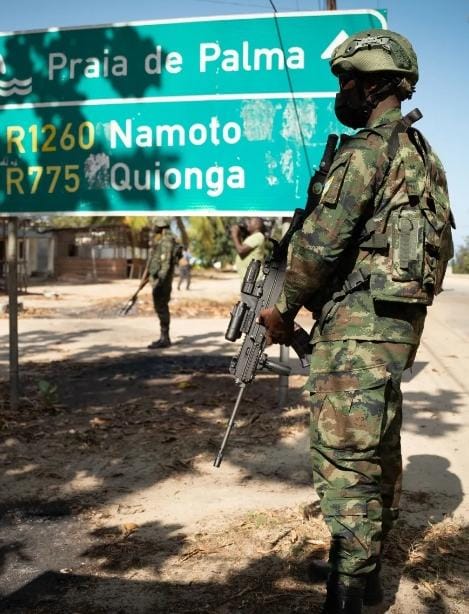
Rwanda has warned it could withdraw its military forces from northern Mozambique unless international partners secure sustainable funding for the mission in Cabo Delgado raising concerns about regional security and the protection of a major liquefied natural gas development.
Officials in Kigali said the deployment of the Rwanda Defence Force which has been central to stabilizing the insurgency hit province could end if financial support from international partners is not renewed.
The warning comes as the current funding mechanism provided by the European Union through the European Peace Facility approaches its expiration.
Rwandan Foreign Minister Olivier Nduhungirehe said the mission cannot continue without a reliable financial arrangement noting that Rwanda cannot be expected to shoulder most of the operational costs indefinitely.
Government spokesperson Yolande Makolo added that European Union funding estimated at about twenty million euros covers only a small portion of the mission’s real expenses.
Kigali also expressed frustration over United States sanctions and visa restrictions targeting senior Rwandan military officials arguing that some Western governments criticize Rwanda while benefiting from the security its forces provide in northern Mozambique.
The potential withdrawal comes at a sensitive moment after the regional military mission led by the Southern African Development Community concluded its mandate earlier.
With the regional mission ended Rwandan troops now represent the primary security force combating insurgents linked to the Islamic State network in Cabo Delgado.
Rwanda currently maintains between two thousand five hundred and five thousand personnel in the province where they have played a key role in securing towns and critical infrastructure previously threatened by militants.
Security analysts warn that a Rwandan withdrawal could create an immediate security vacuum because Mozambique’s national military is not yet considered capable of maintaining stability across the volatile northern region on its own.
The potential security gap carries significant economic implications particularly for Mozambique’s major offshore gas development.
A large international energy company recently resumed work on a liquefied natural gas project worth about twenty billion dollars at Afungi in Cabo Delgado after years of suspension caused by insurgent attacks.
Industry estimates suggest the project is about forty percent complete with thousands of workers currently mobilized at the construction site.
However security guarantees provided by Rwandan forces are widely seen as essential for the project to continue. Analysts warn that a withdrawal could trigger another suspension delaying one of Africa’s largest energy investments.
The tensions surrounding the mission also reflect broader geopolitical strains in East and Central Africa particularly accusations that Rwanda supports a rebel movement in eastern Democratic Republic of Congo an allegation Kigali denies.
Stability in Cabo Delgado is considered critical not only for Mozambique but also for global energy markets because the region hosts some of the world’s largest recent offshore natural gas discoveries.
With the current European Union funding set to expire soon diplomats and security officials expect negotiations to intensify in the coming weeks to determine whether Rwanda’s deployment can continue or whether the region will face a new phase of uncertainty.