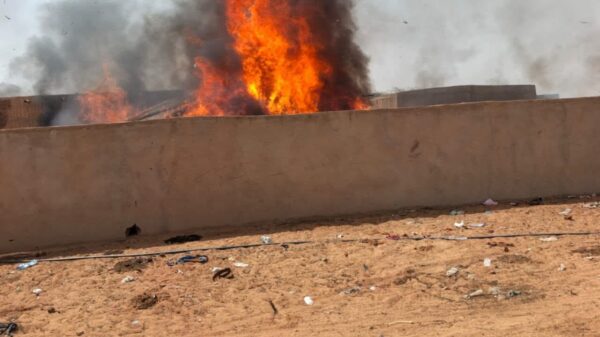







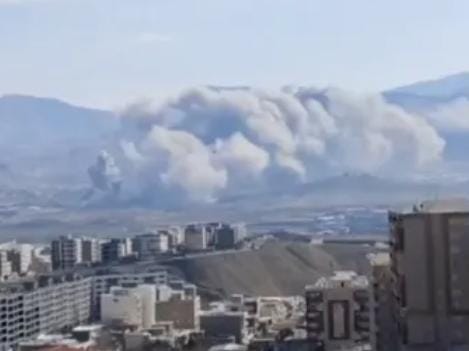
Fighting in western Iran intensified as Kurdistan province emerged as one of the regions most heavily affected by the war triggered by United States and Israeli strikes on Iranian military infrastructure.
Local health authorities reported rising casualty figures following continued airstrikes and retaliatory operations while regional political tensions increased amid reports that Kurdish factions could play a role in any potential ground phase of the campaign.
According to provincial health and emergency officials at least one hundred twelve people have been killed in Kurdistan province since the beginning of the campaign while nine hundred sixty nine others have been injured placing heavy strain on local hospitals and medical facilities.
Hospital officials said thirty two people remain hospitalized including five in intensive care units and twenty seven receiving treatment in standard wards.
Kurdistan is among the five Iranian provinces reporting the highest combined civilian and military casualties since the conflict began alongside Tehran Kermanshah Hormozgan and Sistan and Baluchestan.
Local officials warned that casualty figures may continue to rise as rescue teams search through damaged residential areas while medical services struggle with shortages of equipment and personnel.
The surge in violence comes amid growing geopolitical maneuvering over the potential use of Kurdish forces in any ground phase of the war.
Regional political sources said the United States president held high level calls with Kurdish leaders including the head of the Kurdistan Democratic Party and the leader of the Patriotic Union of Kurdistan.
The discussions reportedly explored whether Kurdish Peshmerga forces could serve as a logistical land bridge linking coalition operations with Iranian Kurdish opposition groups including the Democratic Party of Iranian Kurdistan.
However messaging from Washington has been inconsistent with the United States president stating publicly that he did not want a Kurdish offensive that could make the war more complex.
Iran signaled its opposition to Kurdish involvement shortly afterward.
The Islamic Revolutionary Guard Corps launched missile and drone strikes targeting facilities linked to the Democratic Party of Iranian Kurdistan in northern Iraq a move widely interpreted as a warning against Kurdish cooperation with United States military plans.
Iranian officials say armed Kurdish groups operating from Iraq represent security threats and have warned neighboring states against allowing their territory to be used as staging grounds for operations against Iran.
The violence in Kurdistan province forms part of a broader national crisis unfolding across the country.
According to Iran’s Ministry of Health at least one thousand four hundred forty four people have been killed nationwide since the conflict began while independent monitoring organizations estimate the real toll could range from three thousand to more than four thousand seven hundred including at least two hundred five children.
Kurds make up roughly ten percent of Iran’s population and have historically maintained tense relations with the central government.
Kurdish majority regions were among the most active during the recent anti government protests that swept the country earlier in the year.
Local authorities in the provincial capital Sanandaj also reported damage to cultural heritage sites.
At least twelve historical monuments across the province have been partially damaged or destroyed during recent airstrikes raising concern among cultural heritage organizations about the long term loss of historic structures.
Analysts warn that the Kurdish dimension of the conflict could significantly widen the war if regional Kurdish forces become directly involved in ground operations against Iran.
Such a development could draw in multiple cross border actors across Iraq Turkey and Syria potentially transforming the already volatile confrontation into a broader regional conflict.