









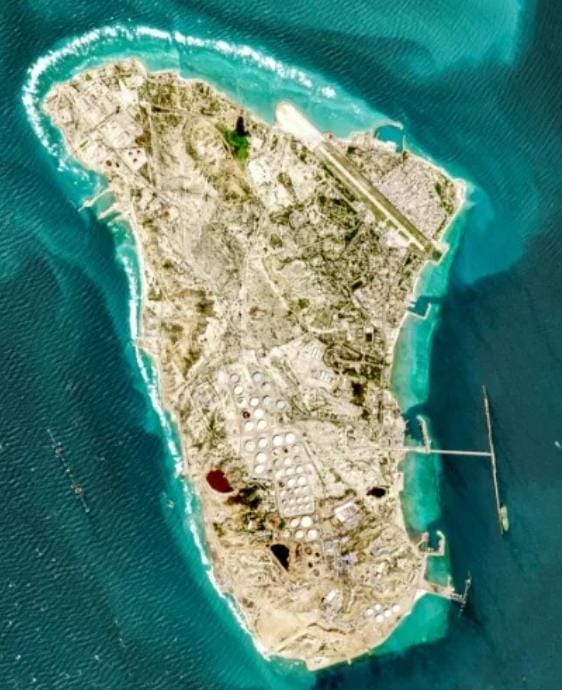
The United States carried out a major airstrike on Iran’s Kharg Island targeting military facilities at the country’s primary oil export hub in a dramatic escalation of the conflict that has gripped the Middle East for more than two weeks.
U.S. President Donald Trump said the operation was conducted by U.S. Central Command as part of a broader military campaign known as Operation Epic Fury describing the attack as one of the most powerful bombing raids in the region’s modern history.
Kharg Island located in the northern Persian Gulf handles roughly ninety percent of Iran’s crude oil exports and is considered one of the most strategically important energy facilities in the country.
According to U.S. officials the strikes focused on military infrastructure on the island including air defense systems a naval installation and airport facilities used for logistical support.
Trump said Washington deliberately avoided targeting Iran’s oil export infrastructure stating that the United States chose not to destroy the oil facilities for humanitarian reasons while warning that the decision could change if Iran attempts to block shipping through the Strait of Hormuz.
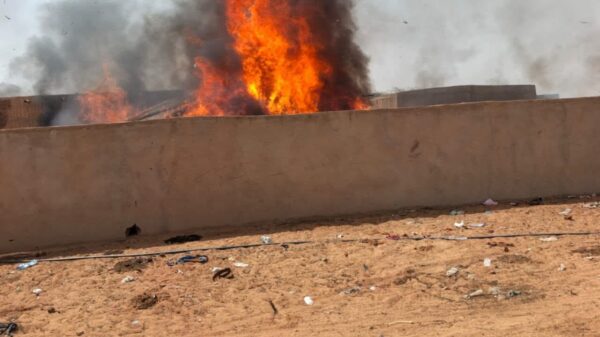
Iranian media reported more than fifteen explosions across the island with thick smoke rising from several locations. Initial reports indicated that military installations suffered heavy damage while oil terminals remained largely intact and operational.
Tehran reacted sharply warning that attacks on its strategic infrastructure could trigger immediate retaliation against energy facilities linked to the United States across the region.
Iranian military officials said energy installations in Saudi Arabia the United Arab Emirates and Qatar could become targets if Iran’s ability to export oil is crippled.
Iran also threatened cyber retaliation accusing major American technology companies of providing infrastructure that supports U.S. military operations.
The escalation has severely disrupted maritime traffic through the Strait of Hormuz one of the world’s most critical energy chokepoints.
Commercial tanker traffic through the narrow waterway has slowed significantly as shipping companies and insurers reassess operations amid rising security risks.
U.S. naval officials said preparations are underway to begin escorting commercial vessels through the strait in an effort to maintain global energy flows and deter further attacks on shipping.
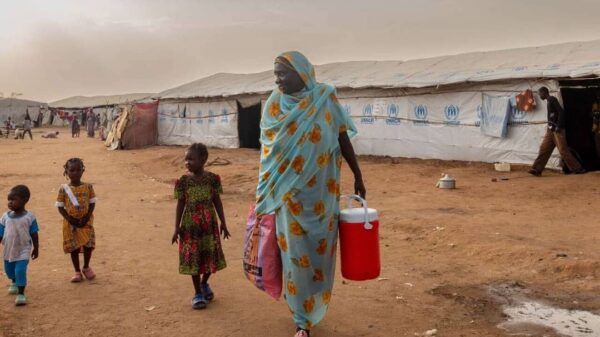
As the conflict enters its third week the humanitarian toll inside Iran continues to rise.
Figures released by Iran’s Ministry of Health show that at least one thousand four hundred forty four people have been killed since the war began with more than eighteen thousand five hundred fifty one others wounded.
The casualties include civilians of all ages and damage to healthcare infrastructure has complicated the crisis with twenty five hospitals damaged and nine no longer operational.
The United States has also reinforced its military presence in the region.
Among the latest deployments is the amphibious assault ship USS Tripoli accompanied by a Marine Expeditionary Unit of roughly two thousand five hundred personnel.
U.S. officials said the unit’s primary mission is to support embassy security and potential civilian evacuations though it also provides a ready ground force should the conflict expand.
The widening war has already sent shockwaves through global energy markets.
Brent crude prices have surged roughly fifty percent since the conflict began frequently trading between one hundred fifteen and one hundred twenty dollars per barrel as traders factor in the risk of supply disruptions in the Persian Gulf.
Analysts warn that any prolonged closure of the Strait of Hormuz or major damage to regional oil infrastructure could trigger a far more severe global energy shock.
With both Washington and Tehran signaling readiness to escalate diplomats and security analysts say the coming days may determine whether the conflict remains limited or expands into a broader regional war.