












The regional war triggered by joint United States and Israeli strikes against Iran expanded further after drone attacks reached the Gulf states of Oman and the United Arab Emirates, raising fears that the confrontation could engulf a wider part of the Middle East.
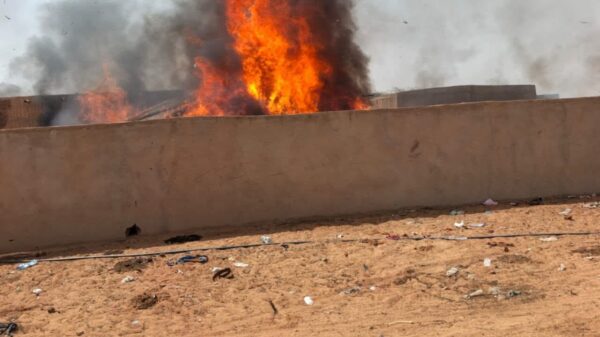
Authorities in Sohar, a major industrial hub in northern Oman, confirmed that a drone strike hit the Al Awahi Industrial Area, killing two foreign nationals and injuring several others as emergency teams responded and security forces secured the surrounding zone.
Officials also reported that a second drone aimed at a sensitive industrial facility was intercepted by air defense systems before reaching its target.
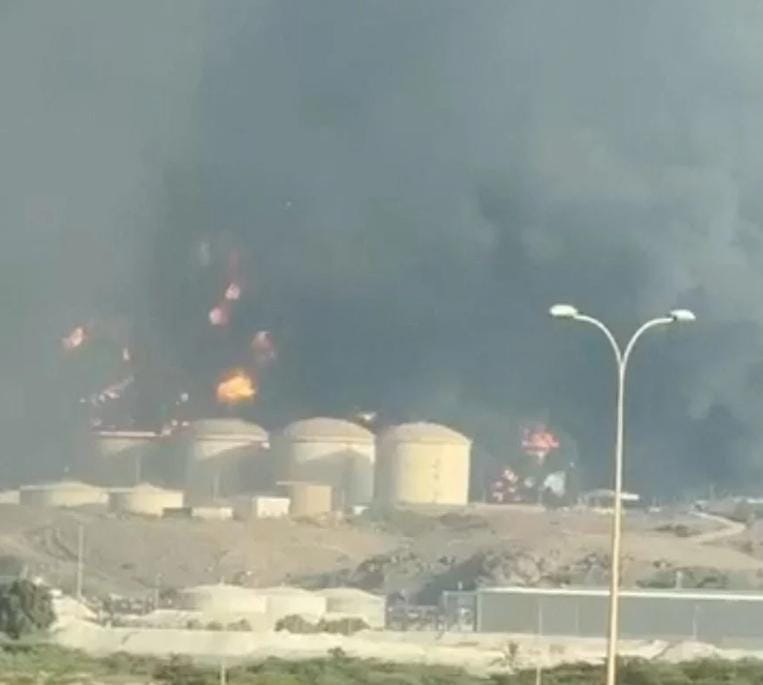
Earlier in the week a separate drone strike hit fuel storage facilities at the Port of Salalah in southern Oman causing significant damage to fuel tanks and forcing port authorities to suspend operations in the southern section of the port.
The attacks mark a rare instance of direct hostilities affecting Omani territory as the country has traditionally played a mediating role in regional disputes.
In the United Arab Emirates authorities said fragments from an intercepted drone fell onto the façade of a commercial building in central Dubai.
Officials stated that the drone had been neutralized by air defense systems before reaching its intended target and no injuries were reported though the incident heightened security concerns in one of the world’s busiest financial and tourism centers.
Saudi Arabia meanwhile continues to face what military officials describe as waves of hostile drones targeting major cities and strategic facilities.
Air defense units intercepted a drone approaching the Diplomatic Quarter in Riyadh an area that hosts numerous embassies and foreign missions.
Saudi authorities also reported intercepting at least fourteen drones across the kingdom’s central and eastern regions following a heavy barrage the previous day during which air defenses destroyed twenty four drones and two ballistic missiles.
The escalation has coincided with a sharp disruption in shipping through the Strait of Hormuz one of the world’s most critical oil transit routes.
Shipping monitoring services report that vessel traffic through the strait has dropped by about seventy percent amid security concerns and attacks on commercial shipping.
Energy markets reacted sharply as oil prices surged before stabilizing slightly after international measures aimed at easing the disruption.
The International Energy Agency authorized the release of four hundred million barrels from global strategic reserves the largest coordinated release in its history in an effort to stabilize supply.
Diplomatic efforts to halt the conflict remain deadlocked. Iran’s president outlined conditions for a ceasefire including recognition of what Tehran describes as its legitimate rights war reparations and guarantees against future attacks.
The United States and Israel rejected those terms saying any settlement must include the dismantling of Iran’s nuclear and missile programs.
The leadership transition in Tehran following the death of the previous supreme leader has further complicated negotiations with the new leadership vowing to continue attacks until United States military bases across the region are closed.
Security analysts warn that continued drone and missile attacks across the Gulf could draw additional countries into the conflict as shipping lanes remain disrupted energy markets volatile and regional air defense systems operating at full capacity.