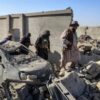







The humanitarian situation inside Iran has deteriorated sharply as the military campaign carried out by the United States and Israel continues, with authorities reporting rising civilian casualties and extensive damage to civilian infrastructure across the country.
Iranian officials say approximately twenty thousand civilian buildings have been affected by airstrikes and related explosions. Around sixteen thousand of those structures are residential units, leaving thousands of families displaced.
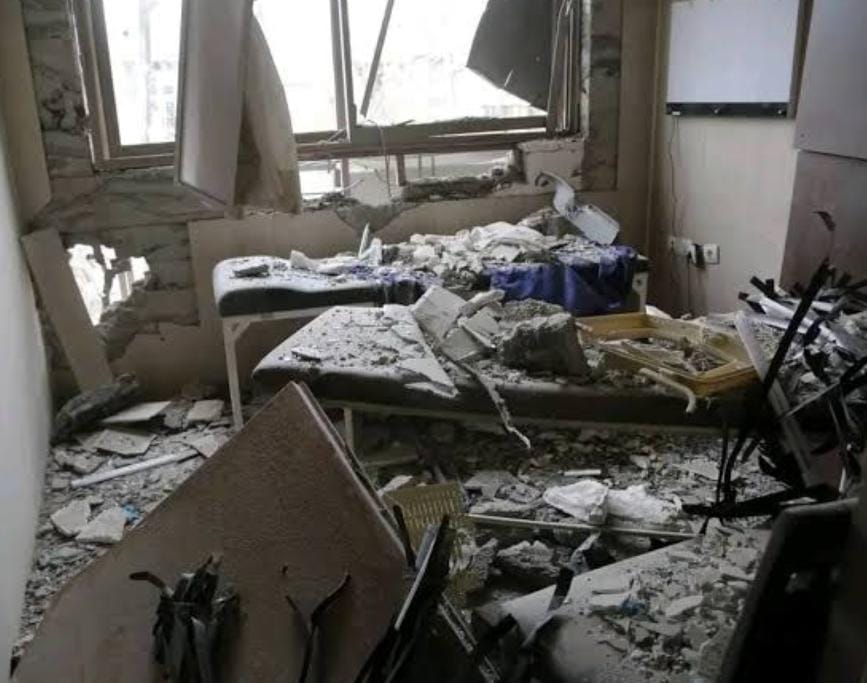
Healthcare infrastructure has also been heavily impacted. According to Iran’s Ministry of Health, seventy seven healthcare facilities have sustained varying levels of damage during the campaign.
One of the most serious incidents involved the Persian Gulf Martyrs Hospital in Bushehr, which has been forced out of service after nearby strikes caused structural damage from shockwaves. Ten additional medical facilities across the country are currently inactive, further straining an already overwhelmed healthcare system.
Education facilities have also been affected. Authorities report that sixty five schools and educational institutions have been damaged in the strikes.
The deadliest incident cited by officials occurred on the first day of the conflict in the southern city of Minab, where an airstrike reportedly struck an elementary school killing one hundred sixty seven people, most of them children.
Civilian casualties continue to rise.
Iran’s deputy health minister said the conflict has so far resulted in more than one thousand two hundred fifty confirmed deaths and over twelve thousand injuries nationwide.
According to the ministry’s figures around two hundred of the victims are children, underscoring growing humanitarian concern among aid agencies.
Emergency services and volunteer groups coordinated by the Iranian Red Crescent continue search and rescue operations in multiple cities where residential buildings have been hit.
On the strategic front Iran’s military leadership signaled a widening scope of retaliation.
The Islamic Revolutionary Guard Corps announced that it now considers U.S. and Israeli economic interests banks and technology companies with military applications in the region to be legitimate targets.
The declaration has raised concerns among international observers that the conflict could expand further into cyber operations economic warfare and attacks on commercial infrastructure.
The conflict has also triggered a major shift in Iran’s political leadership.
Iran’s supreme leader Ali Khamenei was killed during the initial wave of strikes at the beginning of the war. Following emergency deliberations by the Assembly of Experts his son Mojtaba Khamenei was named the country’s new supreme leader.
The leadership transition represents one of the most significant political developments in Iran in decades and comes amid mounting military pressure and domestic instability.
Officials in Washington and Tel Aviv say their campaign aims to cripple Iran’s nuclear program military command structures and strategic infrastructure.
The Israeli military says its air operations have killed more than one thousand nine hundred Iranian military personnel since the start of the campaign.
Both governments indicate that weakening the current leadership in Tehran could open the door to broader political change within the country.
The war has already expanded beyond Iran’s borders.
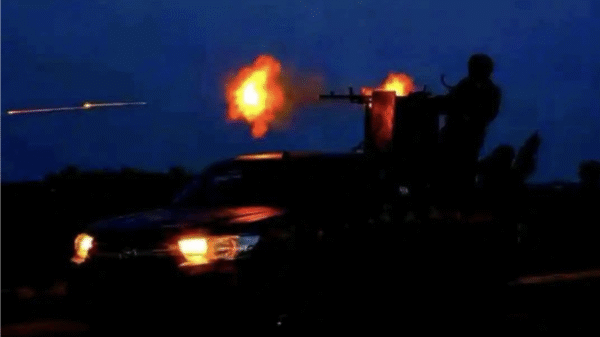
Iranian retaliatory strikes have targeted U.S. military installations across the Gulf region increasing the risk of a wider regional confrontation.
Commercial shipping through the Strait of Hormuz one of the world’s most critical energy corridors remains heavily disrupted as military activity intensifies.
Energy markets have reacted sharply with global oil prices rising above one hundred dollars per barrel amid fears that prolonged disruption in the Gulf could affect a large portion of global supply.
Humanitarian organizations warn that conditions inside Iran could deteriorate further if the fighting continues without a ceasefire.