









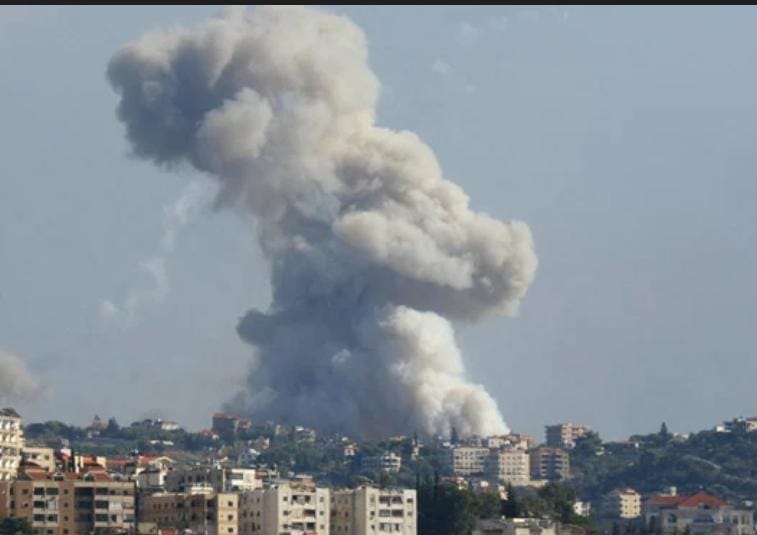
International monitors and Lebanese authorities have reported evidence suggesting the use of white phosphorus munitions during recent fighting in southern Lebanon, raising renewed concerns about civilian safety and compliance with international humanitarian law.
Investigators said airburst artillery shells believed to contain white phosphorus were fired over residential areas in the town of Yohmor during hostilities earlier in the week.
Analysis of visual material reviewed by international researchers identified the distinctive smoke pattern commonly associated with 155-millimeter artillery shells containing white phosphorus.
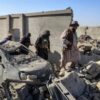
According to investigators, fragments from the munitions ignited fires in residential buildings and at least one civilian vehicle.
The incident occurred shortly after Israeli forces issued evacuation warnings covering the town and dozens of surrounding villages in southern Lebanon.
Human rights observers said the use of such munitions over populated areas may be considered indiscriminate if civilians remain present, raising potential concerns under international humanitarian law.
Lebanese authorities reported rising casualties during the same period of intensified fighting.
Health officials said that between early March and the middle of the week more than two hundred people were killed and hundreds more wounded in southern Lebanon.
Medical services also reported dozens of injuries believed to be linked to exposure to white phosphorus earlier in the conflict, including severe burns and respiratory complications.
Officials said they are continuing to review medical data related to the latest reported incident.
Agricultural authorities warned that repeated incendiary strikes have triggered hundreds of fires across farmland and forested areas in the south.
The fires have damaged extensive olive groves and woodland areas, threatening the livelihoods of farming communities already affected by the conflict.
Heavy fighting and airstrikes continued across parts of southern Lebanon and areas on the outskirts of the capital.
Local media reported intense bombardment in several suburbs frequently targeted during previous escalations.
One southern region recorded some of the highest casualty figures in the current round of fighting, with dozens of deaths and hundreds of injuries reported within a few days.
International peacekeeping forces expressed growing concern about the deteriorating security situation along the border.
Peacekeepers confirmed reports of ground activity near several border towns and warned that the expansion of military operations could lead to further displacement of civilians.
The Israeli military has not issued a specific response to the latest allegations.
In previous statements, Israeli officials said the substance has been used primarily to create smoke screens and obscure troop movements, arguing that such use complies with international law.
Authorities have also said measures were taken in the past to reduce the use of the material in densely populated areas.
Humanitarian organizations warned that the continued escalation could further strain an already fragile situation in southern Lebanon.
Large-scale evacuation orders combined with airstrikes and artillery fire have forced many residents to flee their homes while emergency services struggle to respond to rising casualties.
International observers say investigations into the reported use of white phosphorus and other controversial munitions are likely to intensify as hostilities continue.