











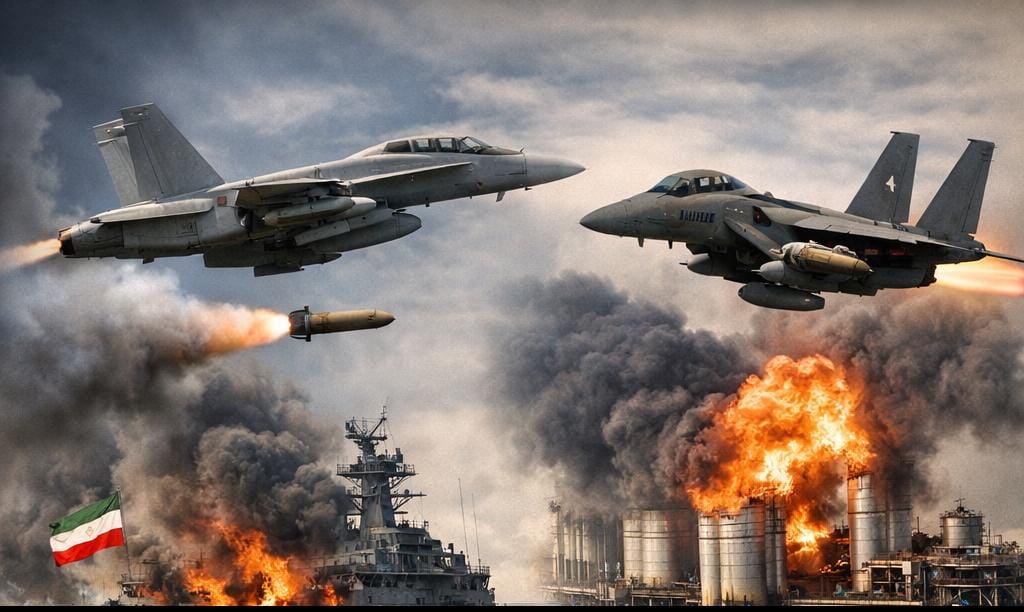
The military confrontation involving the United States, Israel, and Iran has intensified as the conflict enters its ninth day, prompting growing international concern over the possibility of a wider regional war and major disruptions to global energy markets.
Officials in Washington and Jerusalem say the joint military campaign is designed to significantly weaken Iran’s strategic capabilities. The operation has been described by U.S. authorities as an effort to dismantle Iran’s naval capacity and degrade its ballistic missile and nuclear infrastructure.
American officials have characterized the strikes as a preventive defensive action intended to neutralize threats to U.S. and allied military assets in the region. They argue that the campaign is aimed at preventing attacks rather than responding to a single incident.
Israeli military officials said their aircraft carried out strikes targeting key Iranian energy facilities, including installations used to store and distribute fuel.
Among the facilities struck were major oil depots that Israeli authorities claim supply fuel to military logistics networks.
Officials described the attacks as an important step in weakening the operational capabilities of Iran’s security and defense structure.
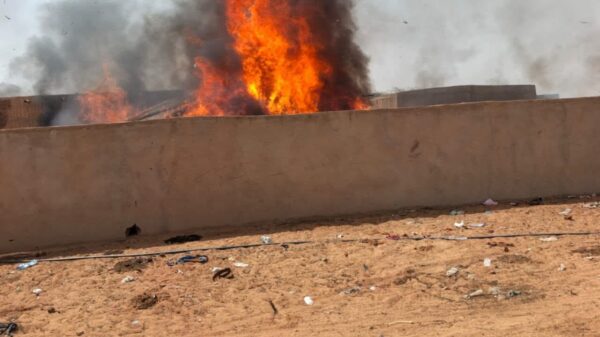
Iranian authorities acknowledged that several energy installations were damaged during the strikes. Officials responsible for fuel distribution said emergency crews were deployed to control fires that broke out at multiple facilities.
According to Iranian officials, several people were killed in the attacks, including tanker drivers working at the targeted depots.
Iran’s military leadership has signaled that the country is preparing for a prolonged confrontation.
Officials linked to the Revolutionary Guard said Iran is capable of sustaining months of high-intensity warfare if necessary and warned that further retaliatory operations could continue across the region.
Iranian forces also claimed responsibility for drone and missile attacks targeting military facilities linked to the United States and its allies, asserting that the strikes were part of a broader response to the ongoing air campaign.
At the same time, Iranian leaders have sent mixed diplomatic signals.
Iran’s president indicated that Tehran may be willing to limit the geographical expansion of the conflict if neighboring Gulf countries are not used as launch points for attacks on Iranian territory.
The statement appeared aimed at preventing the war from drawing additional regional actors directly into the confrontation.
International reactions to the escalation have been swift.
Global leaders and international organizations warned that the conflict risks spiraling beyond control if hostilities continue to intensify.
Human rights experts have also raised legal concerns regarding the military campaign, noting that the absence of authorization from the international community raises questions under international law.
Across the Gulf region, the conflict is already producing security disruptions.
Authorities in several countries have reported intercepting drones or missiles in areas near diplomatic and energy infrastructure.
Security analysts warn that continued strikes against energy facilities or transportation hubs could destabilize global oil markets and disrupt international aviation routes.
As the conflict moves deeper into its second week, military operations remain active across multiple fronts while diplomatic efforts to reduce tensions remain fragile.
International observers say the coming days will be decisive in determining whether negotiations can prevent the confrontation from expanding into a broader regional war involving additional powers.