







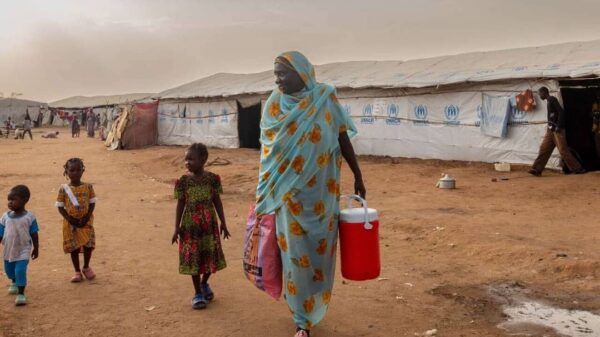



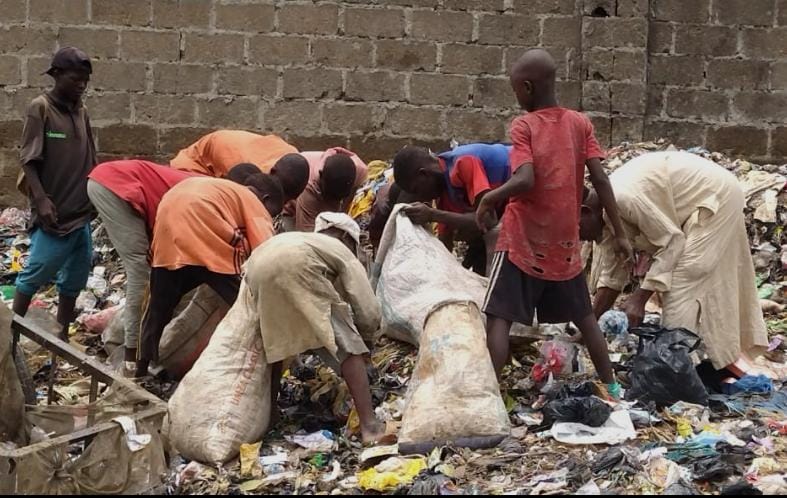
In the crowded markets of Harare, particularly in the densely populated suburb of Mbare and the industrial hub of Siyaso, increasing numbers of children can be seen sorting through piles of scrap metal, highlighting a worsening humanitarian crisis driven by poverty, economic instability and weak enforcement of child protection laws.
Recent assessments by international organizations and government agencies indicate that the country is facing one of its most severe child labour challenges in decades.
Estimates from the International Labour Organization suggest that about 4.2 million children in the country are involved in some form of labour. Around 14 percent of children aged between five and fourteen are active in the workforce, many in hazardous environments classified among the worst forms of child labour.
In Harare’s informal scrap markets, children as young as six gather copper, brass and iron for resale. With the global scrap metal industry projected to reach about 94 billion dollars by 2032, demand filters down to local traders. Yet at street level children often earn only 10 to 20 US cents per kilogram, income that frequently determines whether their families are able to eat that day.
Poverty remains the main driver. Surveys indicate that about 60 percent of families cite lack of income as the primary reason their children enter the workforce.
Working conditions in areas such as Mbare expose children to serious physical and psychological harm. A study conducted in late 2025 found that around 60 percent of children involved in waste scavenging had suffered injuries including deep cuts, nail punctures and untreated infections.
Health risks extend beyond visible injuries. Children regularly handle discarded medical waste, chemical containers and industrial debris, contributing to high rates of skin disease and respiratory illness. The risk of tetanus and long-term lung damage is particularly high.
Exploitation is also widespread. Some scrap traders acknowledge paying children lower rates than adults, arguing that children are not seeking significant income, a justification that rights groups describe as systemic economic abuse.
Authorities approved a new national policy framework aimed at addressing the crisis.
The National Action Plan for Children IV, covering the period from 2026 to 2030, identifies the elimination of child labour as one of its central priorities. The plan seeks to strengthen child protection systems, expand access to basic services and support families and communities so that economic pressure does not force children into work.
While the policy represents an important acknowledgment of the scale of the problem, analysts say its success will depend largely on implementation. Detailed information on enforcement mechanisms, monitoring systems and budget allocations has not yet been publicly disclosed.
Existing legislation already prohibits hazardous labour for children under the age of sixteen. However enforcement remains inconsistent, particularly in informal markets where oversight is limited.
The situation reflects broader trends across the region. Although global child labour has declined significantly since 2000, international agencies report that the world failed to meet its target of eliminating child labour by 2025, with sub-Saharan Africa continuing to carry the highest burden.
In Zimbabwe, economic hardship, high unemployment and rising living costs have intensified the cycle of poverty. Children who leave school to earn immediate income often sacrifice long-term education and economic opportunities, reinforcing intergenerational disadvantage.
Specialists describe the scrap trade in Harare as a survival economy shaped by intense competition and minimal regulation. For many households, the small daily income generated by children is essential for survival, but it comes at considerable long-term social cost.
Without sustained funding, stronger enforcement and expanded social protection programmes, the national action plan may struggle to meet its goal of eliminating child labour by 2030.
For now, in the narrow alleys of Mbare and Siyaso, children carrying heavy sacks of metal under the midday sun remain a visible reminder of the human cost of economic vulnerability.