














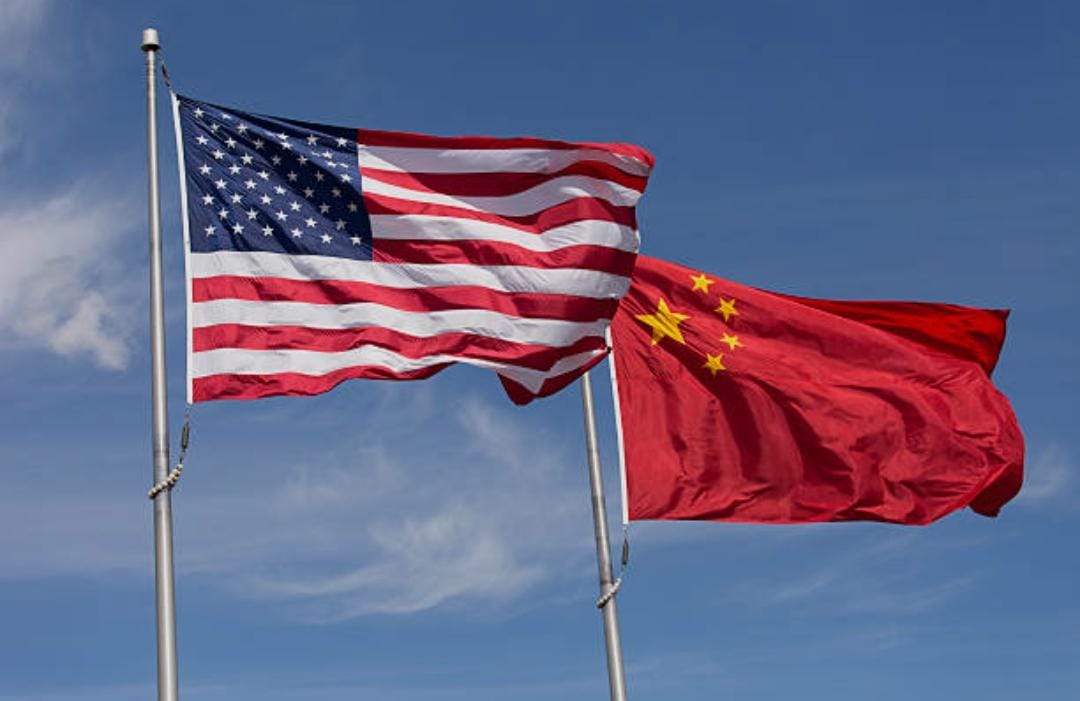
WASHINGTON, D.C., Feb. 21, 2026 The White House has announced that Donald Trump will travel to Beijing from March 31 to April 2, 2026, for a high-stakes summit with Chinese President Xi Jinping, marking the first visit by a sitting U.S. president to China since 2017.
The diplomatic breakthrough comes just one day after a landmark decision by the Supreme Court of the United States significantly curtailed the administration’s authority to impose sweeping tariffs, reshaping the legal framework underpinning U.S. trade policy.
High-Stakes Summit in Beijing
According to the White House, the three-day summit will focus primarily on extending the current U.S.China “trade truce” and negotiating a potential multibillion-dollar commercial agreement. The proposed deal is expected to center on large-scale Chinese purchases of American agricultural products particularly soybeans and U.S. aircraft.
Beyond trade, officials say the leaders will address cooperation on curbing the illicit fentanyl trade, an issue that has strained bilateral ties, as well as tensions surrounding U.S. arms sales to Taiwan. Washington approved a record $11.1 billion in arms transfers to Taipei in late 2025, prompting strong objections from Beijing.
President Trump previewed the trip in bold terms, promising it would be “exceptional” and pledging to create what he described as the “biggest display” in the history of U.S.–China relations. The visit signals a renewed emphasis on leader-level diplomacy following months of economic friction and legal uncertainty over tariff authority.
Supreme Court Delivers Major Blow to Tariff Strategy
On February 20, 2026, the Supreme Court issued a 6–3 ruling striking down several of the administration’s most sweeping tariffs. Writing for the majority, Chief Justice John Roberts concluded that the International Emergency Economic Powers Act (IEEPA) does not authorize the president to impose tariffs.
“The power to tax and set duties is very clearly reserved for Congress under Article I of the Constitution,” Roberts wrote, emphasizing the separation of powers and Congress’s exclusive authority over revenue measures.
The ruling invalidates the administration’s “Liberation Day” tariffs and the 2025 “Reciprocal Blanket Tariffs,” measures that had collectively generated an estimated $160 billion in tariff revenue under the now-rejected legal justification.
White House Pushback and New Trade Move
President Trump swiftly criticized the ruling, accusing the justices of being “disloyal to the Constitution.” Within hours, he signed a new proclamation invoking Section 122 of the Trade Act of 1974, imposing a temporary 10 percent import duty effective February 24. The administration framed the move as necessary to address “international payment problems.”
Legal analysts note that Section 122 provides narrower authority than IEEPA and is limited in scope and duration, potentially setting the stage for further legal and political battles over trade powers.
Diverging Western Strategies Toward Beijing
The developments come amid a broader recalibration of Western economic strategies toward China.
While Washington seeks new legal avenues to sustain a 10 percent global import duty and continues to emphasize high-profile diplomacy, Canada and several European governments have pivoted toward selective engagement. Measures include lifting certain restrictions on Chinese electric vehicles and pursuing new trade deals, alongside investment in renewable energy technologies and advanced robotics sourced from Chinese firms.
The U.S., by contrast, has doubled down on fossil fuel production and framed its China policy around “détente” at the leadership level, paired with strategic competition in technology and security.
A Pivotal Moment for U.S.China Relations
The confluence of a major constitutional ruling and a renewed push for top-level diplomacy places U.S.–China relations at a critical juncture. With tariff authority constrained and negotiations looming, the outcome of the Beijing summit could redefine the balance between confrontation and cooperation in one of the world’s most consequential bilateral relationships.
Markets, lawmakers and international partners alike will be watching closely as President Trump prepares for what may prove to be a defining diplomatic moment of his second term.