






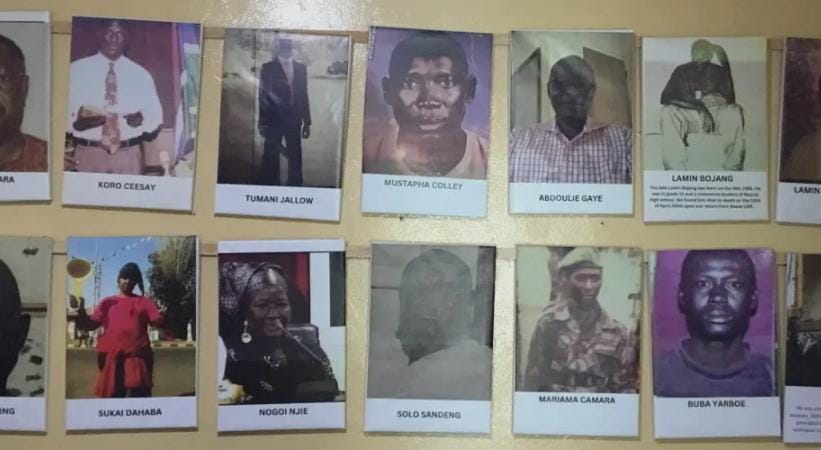
Survivors of abuses committed during the 22-year rule of former Gambian President Yahya Jammeh are beginning to receive long-awaited financial reparations, but many insist that compensation alone cannot deliver justice without criminal accountability for those responsible.
More than eight years after Jammeh’s departure from power, The Gambia’s transitional justice process has entered a critical implementation phase. While key legal structures are operational and prosecutions are advancing domestically and abroad, victims emphasize that healing remains incomplete without trials for the former leader and his closest enforcers.
Reparations Process Gains Momentum
Following the passage of the Victims Reparations Act in 2024, the government established an independent Reparations Commission, fully operational in 2025. In January 2026, the Commission began disbursing 20 million dalasi (approximately $274,000) for the current budget cycle.
Payments are issued chronologically, starting with victims of violations documented between 1994 and 1996. Among recent beneficiaries is the family of Cadet Amadou Sillah, executed after a failed coup attempt in 1994, who received full compensation of 600,000 dalasi (approximately $8,200).
Of the 1,009 victims identified by the Truth, Reconciliation and Reparations Commission (TRRC), about 25% have been fully compensated, while the remainder have received partial payments, with additional installments planned as funding becomes available.
Part of the reparations budget comes from the sale of Jammeh’s seized assets, totaling approximately $20 million. However, victim groups argue this represents only a fraction of the alleged misappropriated wealth and call for expanded asset recovery efforts.
Special Accountability Mechanism Moves Forward
Alongside reparations, The Gambia has launched a comprehensive criminal justice framework in partnership with ECOWAS.
The three-tier Special Accountability Mechanism (SAM) includes:
Tier 1: Special Prosecutor’s Office — Established in May 2024 and leading investigations into serious crimes committed during the Jammeh era.
Tier 2: Special Criminal Division — Operating within The Gambia’s High Court to handle domestic prosecutions.
Tier 3: Hybrid Special Tribunal — Approved by ECOWAS in December 2024, comprising Gambian and international judges, mandated to try those bearing the greatest responsibility, including Jammeh.
Jammeh remains in exile in Equatorial Guinea, complicating extradition efforts. Authorities and ECOWAS officials reaffirm their commitment to pursuing accountability through international legal channels.
Universal Jurisdiction Cases Abroad
Several alleged accomplices have faced prosecution abroad under universal jurisdiction.
In Switzerland, former Interior Minister Ousman Sonko was sentenced in May 2024 to 20 years in prison for crimes against humanity. His appeal trial is scheduled for March 30, 2026.
In Germany, Bai Lowe’s conviction was upheld in November 2024.
In the United States, Michael Sang Correa’s trial is set for April 2025 in Denver, with further developments anticipated in early 2026.
These cases demonstrate accountability can proceed even amid domestic challenges.
Challenges Remain
Forensic evidence remains critical. Victims’ remains linked to the 1994 coup attempt are preserved in Banjul’s morgue.
The government plans symbolic measures, including renaming Arch 22 to the “Never Again Memorial Arch.”
Survivors stress the need for comprehensive medical and psychosocial care beyond financial compensation.
A Test of Political Will
The coming months will test whether The Gambia can complete its transitional justice process and ensure accountability.
Français
La Gambie avance dans les réparations et la justice pour les victimes de l’ère Jammeh face aux appels persistants à la responsabilité
Banjul, 20 février 2026
Les survivants des abus commis durant les 22 années de pouvoir de l’ancien président gambien Yahya Jammeh commencent à recevoir des réparations financières attendues de longue date, mais beaucoup estiment qu’une indemnisation seule ne peut rendre justice sans responsabilité pénale.
Plus de huit ans après le départ de Jammeh, le processus de justice transitionnelle est entré dans une phase cruciale de mise en œuvre.
Le processus de réparations progresse
La Commission indépendante des réparations a commencé à verser 20 millions de dalasis en janvier 2026.
Mécanisme spécial de responsabilité
Le mécanisme comprend trois niveaux, incluant un tribunal hybride approuvé par la CEDEAO.
Cas de compétence universelle
Des poursuites ont eu lieu en Suisse, en Allemagne et aux États-Unis.
Des défis persistent
Les preuves médico-légales restent essentielles.
Un test de volonté politique
Les prochains mois seront déterminants pour la justice transitionnelle en Gambie.