









A series of coordinated militant attacks struck Pakistan’s northwestern Khyber Pakhtunkhwa province on Monday, killing security personnel and civilians, officials said, underscoring mounting security challenges despite ongoing counterterrorism operations.
Bajaur suicide bombing
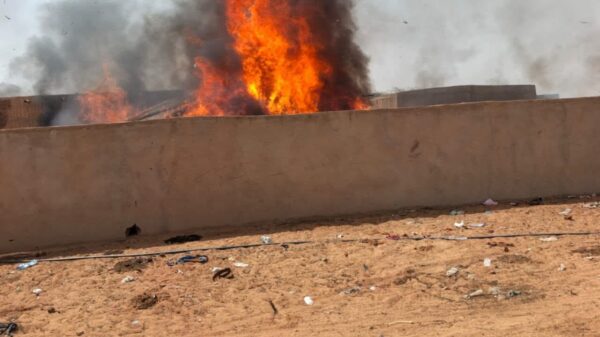
The deadliest attack occurred in Bajaur district, where a suicide bomber rammed an explosives-laden vehicle into the perimeter wall of a joint security checkpost operated by the Frontier Corps and local police.
According to the military’s media wing, the Inter-Services Public Relations (ISPR), the blast caused the structure to collapse and damaged nearby homes. Eleven security personnel and one girl were killed, while seven others, including women and children, were injured.
Security forces launched a retaliatory operation and killed 12 militants in a gun battle, officials said. The banned group Tehreek-i-Taliban Pakistan (TTP) claimed responsibility.
Motorcycle bombing in Bannu
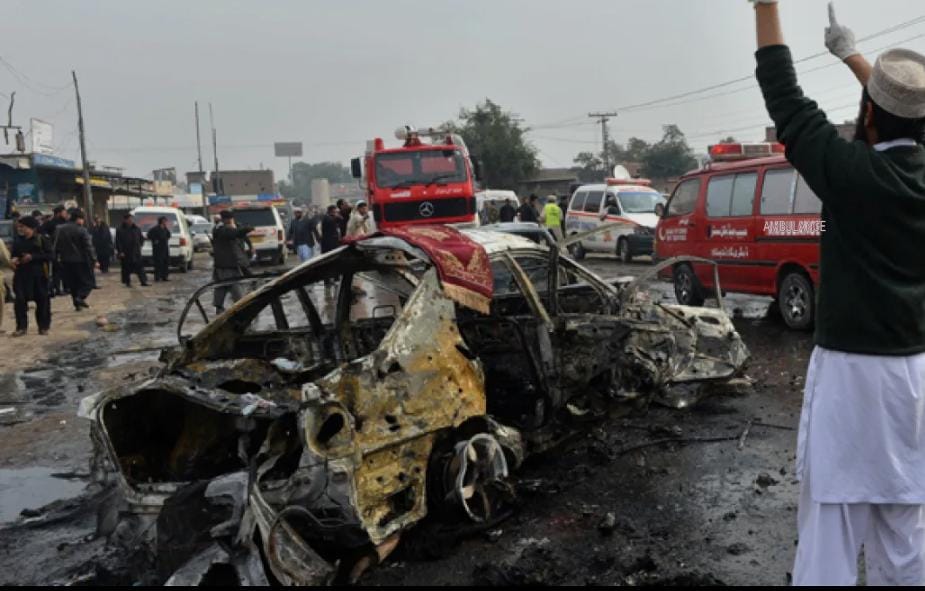
In Bannu district, a motorcycle packed with explosives detonated near the main gate of Miryan Police Station. At least two people, including a child, were killed and between 12 and 17 others injured, police said. Several victims were reported in critical condition.
Authorities sealed off the area and began a search operation.
Intelligence-based operation in Shangla
In Shangla district, security forces conducted an intelligence-based operation targeting suspected militants allegedly linked to previous attacks on Chinese nationals. The exchange of fire left three police officers and three militants dead, officials said.
Broader security context
The attacks come amid a rise in militant violence in early 2026.
On Feb. 6, a suicide bombing at a mosque in Islamabad killed at least 32 people and wounded 92. The attack was claimed by Islamic State Khorasan Province (ISIL-K).
In Balochistan, security forces recently concluded Operation Radd-ul-Fitna-1 following coordinated assaults by the Balochistan Liberation Army (BLA), reporting that 216 militants were killed.
Government response
President Asif Ali Zardari and Prime Minister Shehbaz Sharif condemned the latest attacks, calling them attempts to destabilize the country.
The government reiterated its commitment to the nationwide “Azm-e-Istehkam” campaign aimed at restoring security.
Analysts say the resurgence of coordinated militant activity presents a significant challenge to Pakistan’s stability in the months ahead.