











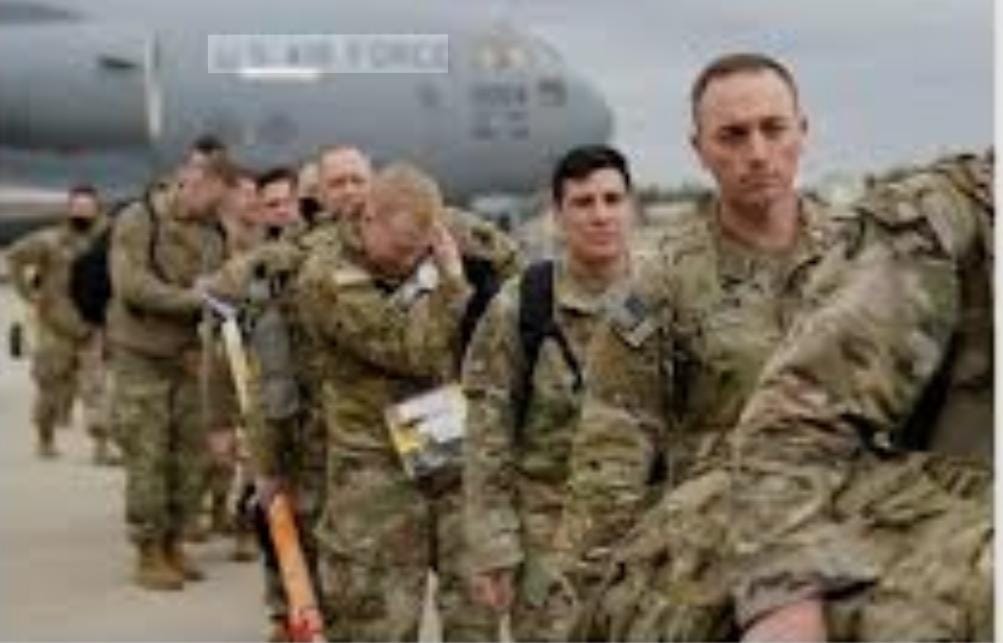
The deployment of U.S. military personnel to Nigeria, which began on Feb. 12, marks a significant expansion of security cooperation between Abuja and Washington as Nigeria intensifies operations against Islamist insurgents in its northeast.
Nigeria’s Defence Headquarters (DHQ) and the United States Africa Command (AFRICOM) confirmed that the mission is aimed at strengthening Nigeria’s intelligence capabilities, air coordination and strategic planning in the fight against Boko Haram and the Islamic State West Africa Province (ISWAP).
Gradual deployment to Maiduguri and Kainji
Between Feb. 12 and Feb. 15, at least five U.S. military transport aircraft, including C-17A Globemaster and C-130J planes, landed at Maiduguri Air Base in Borno State, the epicentre of Nigeria’s insurgency.
About 100 U.S. personnel form the initial deployment, according to defence officials. The Pentagon said the total contingent could rise to roughly 200 personnel in the coming weeks.
Logistical movements were also reported at Kainji Air Base, where Nigeria operates A-29 Super Tucano light attack aircraft acquired under a previous security partnership with the United States.
Officially non-combat mission
Major General Samaila Uba, spokesperson for Nigeria’s Defence Headquarters, said U.S. personnel would not take part in direct combat operations.
“These personnel have no direct operational mandate. Nigerian forces retain full command authority across sovereign territory,” he said.
According to Nigerian officials, the mission focuses on strategic advisory roles and intelligence analysis. U.S. teams are expected to support improved coordination between airstrikes and ground operations, an area that has drawn criticism in the past over targeting accuracy.
Surveillance support is expected to include flights operating from Ghana, providing real-time data on militant movements in the Lake Chad basin and northeastern Nigeria.
Political and diplomatic context
The reinforcement comes amid heightened diplomatic exchanges between the two countries. President Donald Trump has reportedly linked aspects of U.S. security support to improved civilian protection in Nigeria’s conflict-affected regions, including the Middle Belt.
Despite rhetoric in Washington criticising past communal violence, Nigerian officials said the current deployment reflects a pragmatic effort to stabilise the northeast ahead of upcoming political milestones.
Strategic moment
The deployment signals a recalibration of U.S.–Nigeria defence ties at a time when jihadist activity is expanding across the Sahel and the Lake Chad region.
While both governments stress the non-combat nature of the mission, the presence of U.S. personnel on Nigerian soil represents a visible commitment to supporting counter-insurgency operations.
Analysts say the phased build-up will be closely watched domestically and internationally as security concerns remain intertwined with broader diplomatic considerations.