







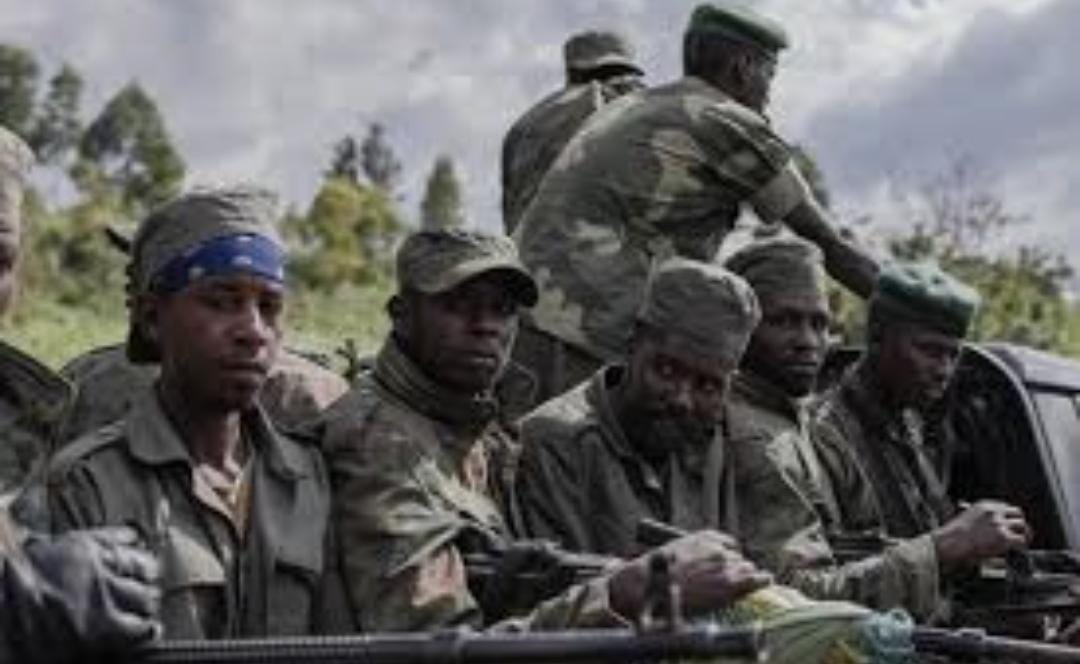
the Democratic Republic of the Congo has formally accepted a ceasefire proposal brokered by Angola, marking a significant diplomatic step toward de-escalating the conflict in the country’s volatile eastern region. However, uncertainty persists amid mixed signals from the M23 rebel movement regarding its participation.
Kinshasa Endorses Luanda Initiative
In an official communiqué issued on February 13, the Presidency announced that President Félix Tshisekedi had approved a ceasefire proposal presented by Angolan President João Lourenço. The truce is scheduled to take effect at 12:00 noon on February 18, 2026.
President Lourenço, acting as regional mediator, introduced the proposal during high-level consultations in Luanda that brought together the leaders of Angola and the DRC, along with President Faure Gnassingbé of Togo and former Nigerian President Olusegun Obasanjo.
Kinshasa said its acceptance was made “in a spirit of responsibility and de-escalation,” reaffirming its commitment to a peaceful resolution. However, the government warned that any unilateral consolidation of military positions by rebel forces during the truce would undermine the process.
M23 Issues Ambiguous Response
Despite the government’s formal endorsement, the M23 rebel movement — also operating politically under the Alliance Fleuve Congo (AFC) — has issued a cautious reaction.
Senior M23 official Benjamin Mbonimpa said the group had not been officially notified of the Angola-brokered initiative. He stressed that the movement remains committed to the Doha Framework Agreement signed in late 2025 and early 2026, as well as to ceasefire monitoring arrangements previously negotiated in Doha, Qatar.
The divergence raises questions about whether the Luanda initiative can be fully implemented without explicit consent from rebel leadership.
UN and AU Prepare Monitoring Framework
The United Nations said preparations are underway to oversee the proposed ceasefire. Jean-Pierre Lacroix, UN Under-Secretary-General for Peace Operations, confirmed that MONUSCO is preparing to deploy units to the border city of Uvira in South Kivu province.
The UN is seeking security guarantees from all parties to enable aerial surveillance operations and secure access to key airports, particularly in Goma.
The African Union welcomed the agreed “terms of reference” for the ceasefire mechanism. AU Commission Chairperson Mahmoud Ali Youssouf described the initiative as a “significant confidence-building measure” that could lay the groundwork for broader political dialogue.
Evolving Security Landscape
The ceasefire push reflects shifting territorial realities in eastern Congo. The M23/AFC controls extensive areas, including the provincial capitals of Goma, seized in January 2025, and Bukavu, captured in February 2025.
Despite diplomatic momentum, tensions remain high. Earlier this month, the UN reported a drone attack attributed to M23 targeting an airport in Kisangani, highlighting the fragility of the current environment.
A Critical Test Ahead
Kinshasa’s formal endorsement of the Angola-mediated proposal represents a potentially pivotal moment. However, the durability of the ceasefire will depend on unified commitments from all armed actors and credible international oversight.
With implementation scheduled for February 18, regional and international stakeholders are closely monitoring whether the Luanda initiative can translate into tangible de-escalation — or whether parallel diplomatic tracks and battlefield dynamics will complicate the path toward peace.