











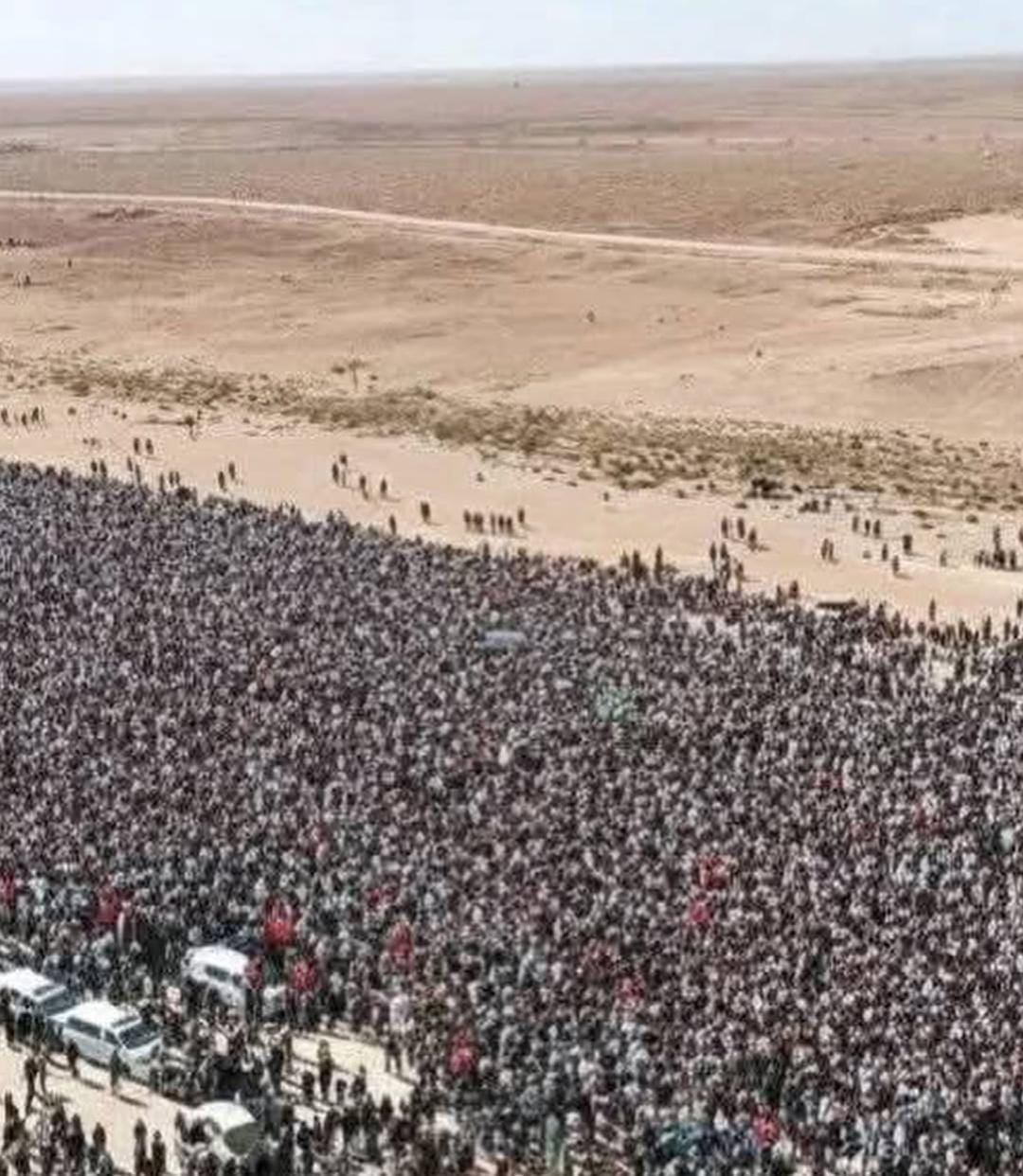
Thousands of Libyans gathered on Friday to attend the funeral of Seif al-Islam Gaddafi, son of former Libyan leader Muammar Gaddafi, days after his killing in an armed attack that has sent shockwaves through Libya’s fragile political landscape.
The funeral took place in Bani Walid, a longtime stronghold of Gaddafi loyalists and the Warfalla tribe. Mourners carried his coffin through the streets while waving plain green flags, the national flag of Libya during Muammar Gaddafi’s rule from 1977 to 2011. Many attendees described Seif al-Islam as a symbol of reconciliation and a potential unifying figure in a country fractured by years of conflict.
Assassination in Zintan
According to official statements from the Libyan Attorney General’s Office, Seif al-Islam Gaddafi was killed on Tuesday, February 3, 2026, at his residence in the northwestern town of Zintan, about 136 kilometers southwest of Tripoli.
His political team and lawyer, Khaled al-Zaidi, said four masked gunmen stormed the house around noon, disabled security cameras, and engaged in what was described as a “direct armed confrontation.” Seif al-Islam was fatally shot during the attack.
The Public Prosecutor’s Office confirmed that forensic examinations determined the cause of death to be gunshot wounds and announced that a criminal investigation is underway to identify those responsible.
International Condemnation
The killing prompted swift condemnation from international and regional bodies.
The United Nations Support Mission in Libya expressed “deep dismay,” describing the assassination as a targeted act of violence that undermines the rule of law and threatens Libya’s stability.
The African Union also condemned the attack. AU Commission Chairperson Mahmoud Ali Youssouf called for a swift and transparent investigation, warning that political violence could derail efforts to restore peace.
Human rights organizations, including Human Rights Watch and DAWN, noted that Seif al-Islam’s death effectively ends any possibility of legal proceedings related to the International Criminal Court arrest warrant issued against him for alleged crimes against humanity during the 2011 uprising.
A Fragile Political Moment
Seif al-Islam Gaddafi remained a controversial figure after the fall of his father but continued to command loyalty among segments of the population. He registered as a presidential candidate in Libya’s postponed 2021 elections, presenting himself as a nationalist alternative amid prolonged political deadlock.
Libya remains divided between the UN-backed Government of National Unity in Tripoli and the eastern-based Government of National Stability. Leaders from both camps, including Presidential Council head Mohamed al-Menfi, urged restraint, warning that the assassination could inflame tensions and undermine ongoing reconciliation efforts.
As investigations continue, analysts warn that the killing of Seif al-Islam Gaddafi risks deepening Libya’s divisions at a critical moment as the country struggles to move toward elections and lasting stability.