











The ceasefire between Israel and Lebanon, brokered in November 2024 after months of cross-border fighting, is under severe strain, as humanitarian agencies, United Nations officials, and Lebanese authorities warn that the agreement is increasingly ineffective amid a sharp escalation in military activity.
Official data released this week show a dramatic rise in Israeli air operations, growing civilian harm, and new allegations of environmental violations, fueling concerns that the truce now exists largely in name only.
Sharp Rise in Israeli Airstrikes
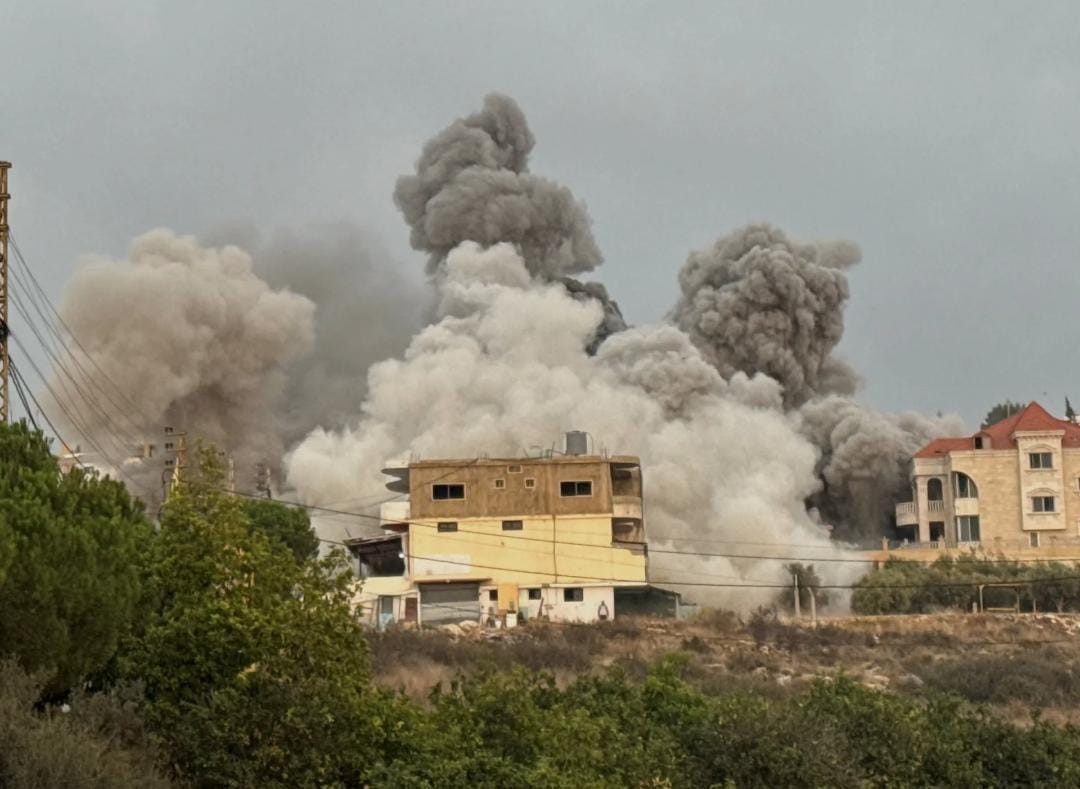
According to a report published on February 5 by the Norwegian Refugee Council, Israeli airstrikes in January 2026 reached their highest monthly level since the ceasefire began. At least 87 airstrikes were recorded during the month, more than double the 41 documented in December 2025.
Data compiled by the Alma Research Center and Atlas Assistance indicate that roughly half of the January strikes occurred north of the Litani River, an area intended to remain largely insulated from hostilities under the ceasefire terms.
Israel says the strikes target Hezbollah’s efforts to rebuild military capabilities. Humanitarian organizations, however, report extensive civilian impact, particularly in southern Lebanese villages such as Kfar Tebnit, Ain Qana, and Qennarit, where homes have been destroyed, families displaced, and schools—some recently rehabilitated by aid agencies—damaged or rendered unusable.
Environmental and Public Health Allegations
Tensions escalated further after reports that Israeli aircraft carried out aerial spraying of an unidentified substance over southern Lebanese border areas on February 1 and 2.
Lebanese President Joseph Aoun condemned the incident as an “environmental and public health crime,” while the Foreign Ministry said it is preparing documentation for a formal complaint to the United Nations Security Council.
The UN Interim Force in Lebanon described the activity as “unacceptable,” stating that peacekeepers were forced to remain under shelter for more than nine hours and were unable to conduct patrols or monitoring. While the Israeli military reportedly told UNIFIL that the substance was a “non-toxic chemical,” the UN mission confirmed it is supporting Lebanese authorities in testing samples to assess any potential health or environmental risks.
Ceasefire Terms Under Pressure
The November 2024 ceasefire called for a mutual halt to hostilities, the withdrawal of Hezbollah forces north of the Litani River, and a complete Israeli military withdrawal from southern Lebanon.
Although the withdrawal deadline was extended to February 18, 2026, Lebanese officials say Israeli forces remain positioned at five strategic border outposts.
Figures released by the Lebanese National News Agency and government sources indicate that Israel has carried out more than 7,000 airspace violations and over 2,400 military activities within UNIFIL’s area of operations since the ceasefire took effect.
The Israeli Defense Forces say these actions are necessary responses to Hezbollah’s continued attempts to reconstitute military infrastructure, which Israel considers a fundamental breach of the ceasefire.
Civilian Toll and Displacement
The humanitarian toll continues to rise. Since November 2024, between 330 and 360 people have been killed by Israeli fire in Lebanon, including at least 127 civilians, according to Lebanese and humanitarian sources.
An estimated 64,000 civilians remain displaced, unable to return home due to ongoing airstrikes, unexploded ordnance, and fears of possible chemical contamination in agricultural areas.
Growing International Concern
United Nations officials and humanitarian groups warn that continued violations risk triggering a broader collapse of the ceasefire and further destabilizing southern Lebanon.
With the withdrawal deadline approaching and military activity intensifying, diplomats fear the agreement may no longer function as an effective mechanism to prevent renewed large-scale conflict along the Israel–Lebanon border.