







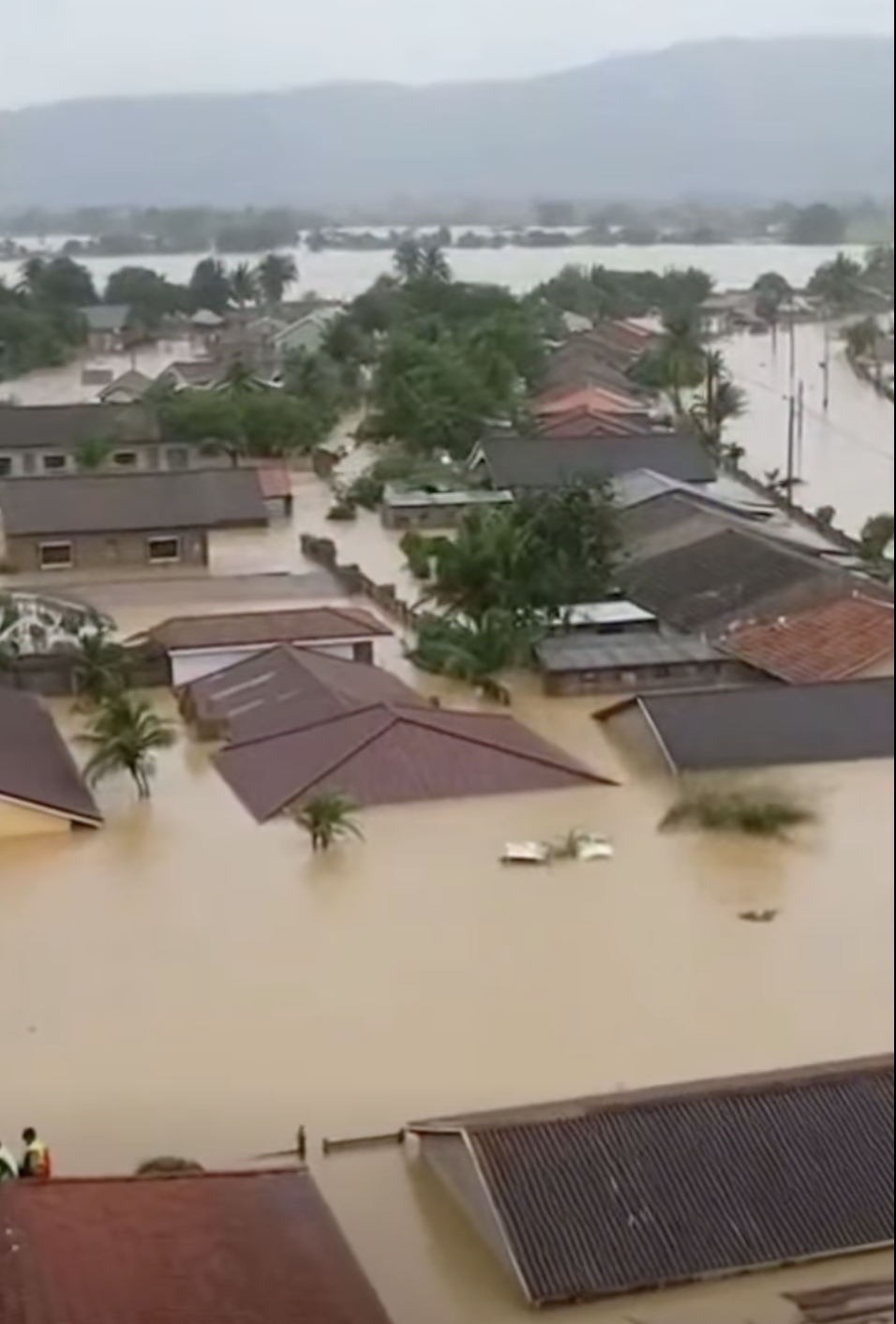
Severe flooding across southern Mozambique has escalated into a full-scale humanitarian emergency, with official reports from the Southern African Development Community (SADC) and United Nations agencies confirming that the situation has reached a critical level. Gaza Province remains the epicenter of the disaster, as rising waters from the Limpopo River basin continue to inundate communities, destroy infrastructure, and displace hundreds of thousands of residents.
On January 24, SADC deployed its Emergency Response Team (ERT) to Xai-Xai, the capital of Gaza Province, to reinforce national disaster operations. The mission is led by Brigadier General Chere Makhetha, SADC’s Chief of Staff, and includes specialists in search and rescue, logistics, public health, civil-military coordination, and information management. The team is expected to remain on the ground until at least January 31, supporting Mozambique’s National Institute for Disaster Management (INGD) as rescue and relief operations intensify.
According to the latest data released jointly by INGD and the UN Office for the Coordination of Humanitarian Affairs (OCHA), nearly 779,000 people have now been affected nationwide — a sharp increase from earlier estimates of 650,000. At least 12 deaths have been officially confirmed, though UN humanitarian clusters report that provisional casualty figures may rise as assessment teams reach isolated communities. Approximately 392,000 people have been displaced, with nearly 100,000 currently sheltering in 91 official accommodation centers.
The destruction of infrastructure has severely hampered relief efforts. More than 5,000 kilometers of roads have been damaged, including large sections of the critical EN1 highway linking Maputo to northern provinces. With road access cut off, humanitarian agencies are increasingly relying on boats and helicopters to reach stranded populations.
Gaza Province accounts for roughly 75 percent of the total affected population. Districts such as Chókwè and Xai-Xai remain submerged as the Limpopo River continues to overflow. UN officials have raised alarm over the collapse of traditional housing structures, noting that nearly 90 percent of homes in the region are constructed from earth-based adobe materials that disintegrate after prolonged exposure to floodwaters.
Environmental and safety risks are compounding the crisis. OCHA has issued warnings that crocodiles swept from the Limpopo River have entered flooded residential areas, posing serious danger to both residents and rescue teams.
Public health concerns are also mounting. The Ministry of Health and humanitarian partners report damage to 229 health facilities, increasing the risk of cholera and other waterborne diseases. Meanwhile, the education sector has been heavily disrupted, with 364 schools affected and more than 300,000 children facing prolonged interruption to learning.
Agricultural losses threaten long-term food security. Over 181,000 hectares of farmland are submerged, and more than 58,000 livestock have been lost, raising concerns about livelihoods and post-flood recovery.
The crisis extends beyond Mozambique’s borders. South Africa declared a State of National Disaster on January 18 for its Limpopo and Mpumalanga provinces, which share the same river basins, highlighting the regional scale of the extreme weather event.
Humanitarian agencies are calling for urgent international support as response capacity is stretched. With further rainfall forecast in coming days, authorities warn that conditions may deteriorate before relief operations can stabilize the situation.