












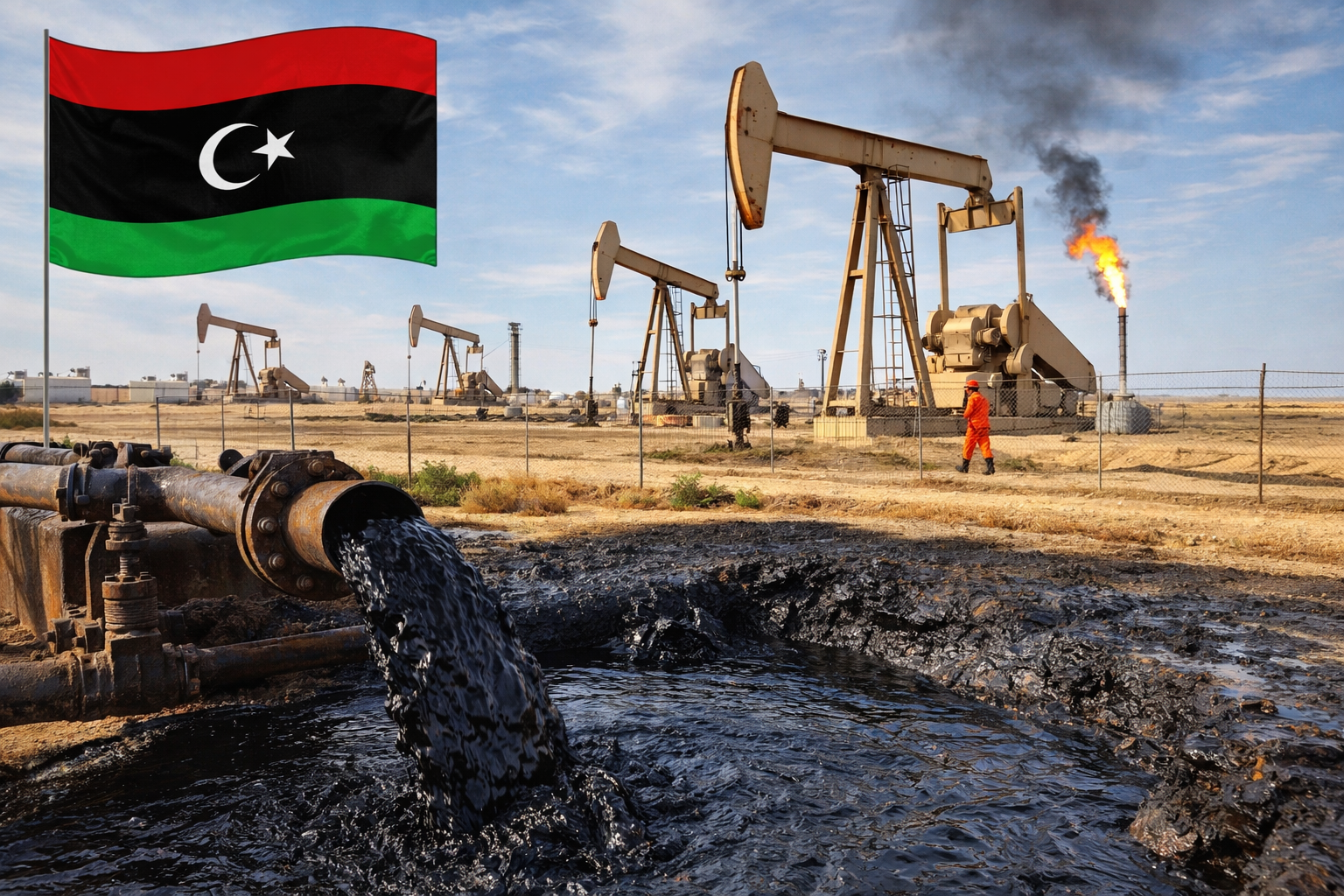
Libya’s National Oil Corporation (NOC) and the Libyan government have confirmed that 2025 marked the strongest performance for the country’s energy sector in more than a decade, signaling a renewed phase of recovery after years of instability and underinvestment.
According to official data released by the NOC during the Libya Energy & Economy Summit (LEES) held in Tripoli, Libya’s oil industry reached its highest production levels since 2013, supported by new field developments, rehabilitated infrastructure and improved operational stability.
Record Production and Revenues
Libya produced an average of 1.374 million barrels of crude oil per day in 2025, delivering a total annual output of 501 million barrels. The performance generated $21.9 billion in revenues, representing a 15% increase compared with 2024.
The NOC said the results are part of a broader strategic roadmap aimed at expanding national capacity. Libya is targeting production of 1.6 million barrels per day by the end of 2026, with a longer-term goal of reaching 2 million barrels per day within three to five years.
Officials described the figures as a turning point for Libya’s energy recovery, citing improved field reliability and renewed confidence among foreign investors.
Major International Agreements
Several landmark agreements were signed during the LEES 2026 summit, held in Tripoli from January 24 to 26, aimed at securing long-term production growth.
A $20 billion, 25-year extension of the Waha concession was finalized with TotalEnergies of France and ConocoPhillips of the United States. The deal is expected to significantly expand output at the Waha fields, which produced around 375,000 barrels per day in 2025, with a target of exceeding 850,000 barrels per day in the coming years.
In parallel, the NOC signed a memorandum of understanding with Chevron to explore new upstream development opportunities, as well as a technical cooperation agreement with Egypt focused on logistics, training and operational support in the oil sector.
First Licensing Round in 17 Years
Libya is also nearing completion of its first oil and gas exploration licensing round since 2008, marking a major reopening of its upstream sector to international investment.
The tender includes 22 onshore and offshore blocks, with prequalified bidders comprising global energy majors such as Eni, BP, ExxonMobil, Shell and QatarEnergy. Official results and the list of awarded companies are expected in the second week of February 2026.
Industry analysts view the licensing round as a key test of Libya’s ability to attract sustained foreign investment amid evolving political conditions.
Gas Expansion and Renewable Energy
Beyond oil, Libya is advancing major natural gas infrastructure projects. The $8 billion offshore Structures A&E gas project, led by Italy’s Eni, is expected to come onstream in 2026, supplying an additional 750 million cubic feet of natural gas per day to the national grid.
The Ministry of Oil and Gas has also confirmed the adoption of a national renewable energy strategy, prioritizing large-scale solar integration into the electricity system. The initiative aims to reduce domestic oil consumption used for power generation, freeing additional crude volumes for export.
Africa’s Largest Proven Oil Reserves
According to OPEC’s 2025–2026 data, Libya continues to hold Africa’s largest proven oil reserves, estimated at 48.4 billion barrels, accounting for roughly 3% of global proven reserves. The resource base underpins Libya’s long-term role as a key supplier to European and Mediterranean energy markets.
Outlook
With production rising, international partnerships expanding and exploration activity returning after nearly two decades, Libya’s energy sector appears positioned for sustained growth in 2026 and beyond. The upcoming announcement of licensing round winners in February is expected to shape the next phase of the country’s oil and gas development.