









Türkiye has intensified diplomatic and security efforts in response to escalating unrest in Iran, pursuing a dual-track strategy aimed at preventing a wider regional conflict while quietly pressing Tehran to address the economic drivers of its internal crisis through international engagement.
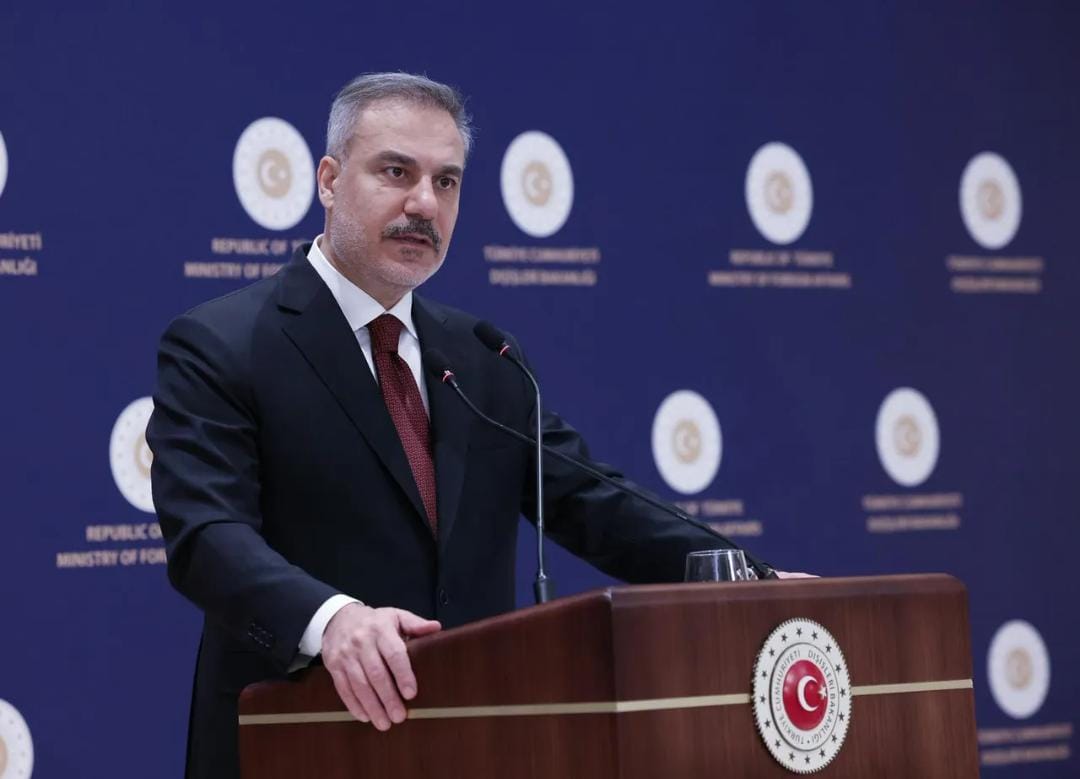
According to official statements and diplomatic briefings from early January, Turkish Foreign Minister Hakan Fidan has stepped up high-level contacts with both Iranian and U.S. officials as Ankara seeks to de-escalate tensions between Tehran and Washington while safeguarding its own security interests.
Diplomatic Shuttle Efforts
Turkish diplomatic sources said Fidan has been engaged in intensive “shuttle diplomacy” over the past week. Between Jan. 13 and 14, he held two telephone conversations with Iranian Foreign Minister Abbas Araghchi, focusing on preventing further escalation and encouraging Iran to pursue political and economic dialogue with the international community.
At the same time, Fidan met in Ankara with the U.S. envoy, Tom Barrack, to convey Türkiye’s concerns over the risk of U.S. military escalation under President Donald Trump. Turkish officials warned that any foreign military intervention in Iran could trigger a broader regional war, destabilise neighbouring countries and spark new refugee and security crises.
Officials said Ankara’s outreach reflects its traditional role as a regional mediator, balancing its NATO membership with pragmatic engagement with Iran.
The ‘Grey Area’ Assessment
In a formal statement this week, Fidan described Iran’s unrest as existing in a “grey area,” rejecting both depictions of the protests as an ideological revolution and Tehran’s claims that they are solely the product of foreign-backed subversion.
Türkiye’s official assessment is that the protests are largely rooted in economic hardship stemming from prolonged international isolation. Turkish policymakers argue that framing the crisis as a revolution risks legitimising external intervention — a scenario Ankara strongly opposes.
“The solution lies in economic normalisation and international cooperation, not external military action,” a senior Turkish foreign ministry official said.
Quiet Security Coordination with Tehran
Despite opposing foreign intervention, Ankara remains concerned about the security implications of instability in Iran, particularly along its eastern borders.
Security sources said Turkish intelligence agencies recently shared warnings with Iran’s Islamic Revolutionary Guard Corps about armed groups seeking to exploit the unrest to infiltrate Iranian territory from northern Iraq.
The coordination is focused on counter-terrorism efforts against militant networks linked to the PKK and PJAK, an area of sustained cooperation between Türkiye and Iran despite broader political differences.
Turkish officials said maintaining border security cooperation is essential to preventing spillover violence and protecting Türkiye’s southeastern frontier.
Strategic Calculus
Analysts say Türkiye’s approach reflects a careful balancing act: discouraging external military intervention, encouraging Iranian economic reform, and defending its own national security interests.
Officials in Ankara have repeatedly warned that a destabilised Iran would pose serious risks to the wider Middle East, global energy routes and regional migration patterns — concerns that underpin Türkiye’s proactive diplomacy.
As tensions between Tehran and Washington continue to rise, Türkiye appears determined to position itself as both a mediator and a security stakeholder in one of the most volatile regional crises of early 2026.