





Iran’s political crisis has entered a decisive and volatile phase as international human rights monitors and U.S. officials confirmed that Iranian authorities are preparing to carry out the first execution of a protester linked to the ongoing nationwide unrest, coinciding with sharply escalating economic and military warnings from Washington.
U.S. officials and rights organisations say the planned execution raises the risk of intensified domestic repression while increasing the likelihood of a broader international confrontation.
First Protester Execution Confirmed
According to statements from the U.S. State Department and reports by the Hengaw Organization for Human Rights, Iranian authorities are expected to execute 26-year-old protester Erfan Soltani on Wednesday.
Soltani, a resident of Fardis near the city of Karaj, was arrested on Jan. 8 during demonstrations that have spread across multiple Iranian provinces. He was convicted of moharebeh, or “waging war against God,” a charge under Iran’s Islamic Penal Code that carries a mandatory death sentence.
Human rights groups and U.S. officials allege that Soltani was denied access to legal counsel and sentenced without a formal trial. His family was reportedly granted a final 10-minute visitation on Jan. 11.
International monitors estimate that more than 10,600 people have been arrested since protests intensified earlier this month, with dozens reportedly facing capital charges.
“This is the first scheduled execution of a protester. It may not be the last,” a senior U.S. official said in a statement released on Tuesday.
Trump Issues Escalation Warning
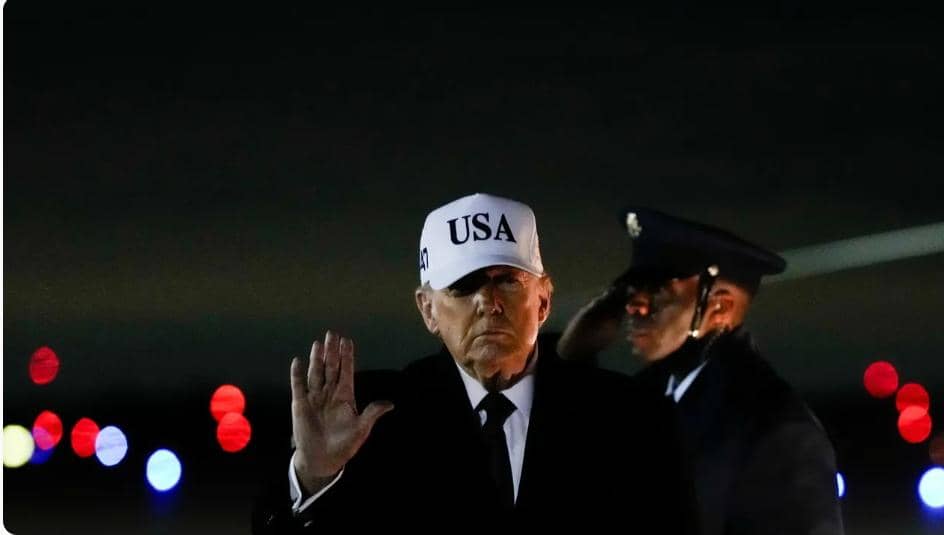
The execution announcement comes as U.S. President Donald Trump issued explicit warnings to Tehran.
In an interview with CBS News in Michigan on Jan. 13, Trump said the United States would take “very strong action” if Iranian authorities proceed with executing protesters by hanging. While he did not spell out specific military measures, he referred to past U.S. strikes in the region and reiterated earlier messages directed at Iranian citizens that “help is on its way.”
Trump also said Washington had cancelled all diplomatic engagements with Iranian officials and urged Iranians to “take over your institutions,” further hardening the administration’s public stance.
On the economic front, the White House confirmed that as of Jan. 12 the United States has imposed a 25% tariff on any country that continues to trade with Iran, a measure widely seen as targeting China and several regional trading partners in an effort to deepen Iran’s economic isolation.
Tehran Responds with Defiance
Iranian officials rejected U.S. statements and accused Washington of foreign interference.
Ali Larijani, secretary of Iran’s Supreme National Security Council, issued a statement accusing Trump and Israeli Prime Minister Benjamin Netanyahu of being the “main killers of the Iranian people” and said they would bear responsibility for any civilian casualties resulting from external action.
Meanwhile, Mohammad Bagher Ghalibaf, the speaker of Iran’s parliament, warned that any U.S. military strike would trigger retaliatory attacks on American military assets and maritime shipping in the region.
Iranian state media have portrayed the protests as a foreign-backed destabilisation campaign, while security forces have reportedly increased deployments in major cities.
Humanitarian Situation Worsens
Human rights organisations describe a rapidly deteriorating humanitarian situation. Arrests continue on a large scale, families of detainees report limited access to information, and communication disruptions have been reported in several provinces.
Rights groups and diplomatic analysts warn that the scheduled execution could trigger wider unrest and harsher crackdowns, marking one of the most dangerous moments in Iran’s internal crisis in decades.
Outlook
With the first execution imminent, Washington escalating pressure and Tehran warning of retaliation, the crisis now stands at a critical crossroads. Whether the execution proceeds, and how protesters and foreign powers respond, may determine whether the unrest remains contained or spirals into a wider regional conflict.