






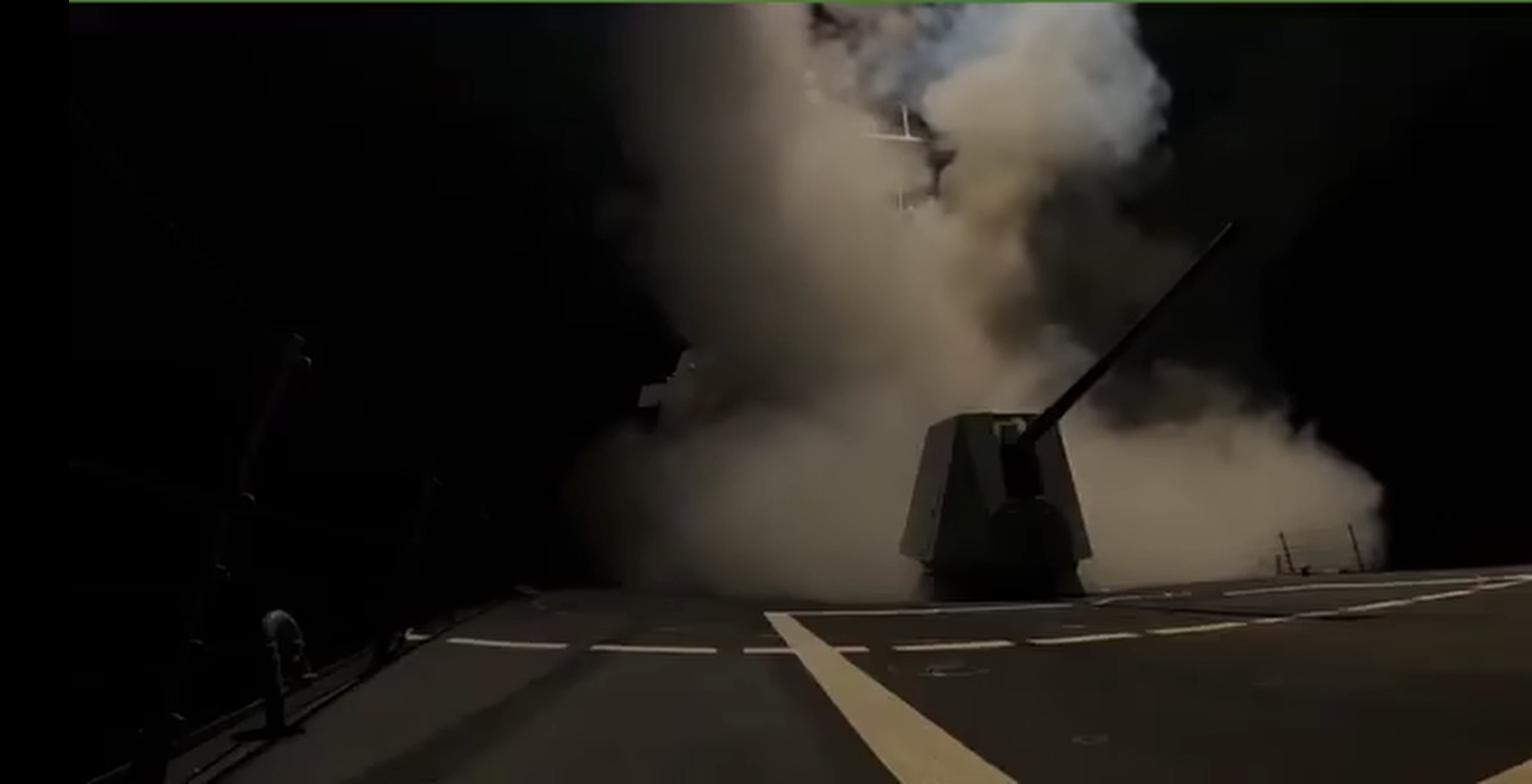
In a development long anticipated following repeated threats by U.S. President Donald Trump, and coinciding with Christmas celebrations, the United States launched a series of military strikes on 25 December 2025 against targets in north-western Nigeria.
While Washington and Abuja offered partially divergent accounts regarding the motives and mechanics of the operation, the intervention exposed a deep rift in the political and media portrayal of a highly complex security crisis. It also raised fundamental questions about the limits and effectiveness of external military intervention in conflicts whose roots lie primarily in local governance failures and representational deficits.
The strikes, described by Washington as “powerful and lethal,” targeted Sokoto State in north-west Nigeria, near the border with Niger. U.S. Africa Command (AFRICOM) stated that the operation resulted in the killing of “several” militants, while a local official in Tangaza area indicated that camps belonging to the armed group Lakurawa had been hit.
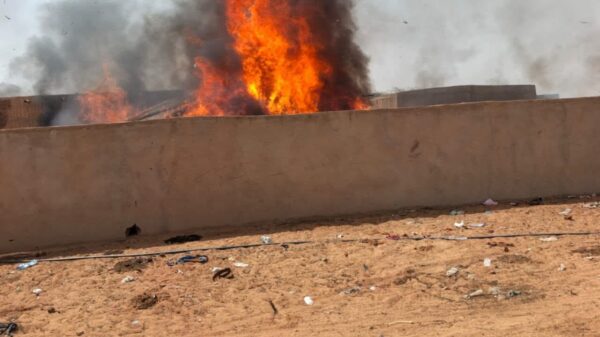
From a technical standpoint, official information pointed to the use of long-range precision munitions launched from a U.S. naval platform in the Gulf of Guinea, alongside strikes conducted by armed unmanned aerial vehicles. Nigeria’s Minister of Information, Mohammed Idris Malagi, specified that the operation took place between 00:12 and 01:30 a.m., targeting two key sites in Bauni Forest, and that debris fell in the communities of Jabo and Uffa without causing civilian casualties.
Conflicting narratives: “protecting Christians” versus “security cooperation”
The core controversy lies in the stark contrast between the two official narratives.
The U.S. narrative – a religious framing
President Donald Trump framed the strikes as a response to what he termed a “genocide of Christians” in Nigeria, claiming that armed groups were “primarily targeting innocent Christians.” He even referred to the timing as a “Christmas gift” to the militants. The strikes followed months of similar rhetoric, threats to cut assistance, and the designation of Nigeria as a “country of particular concern” regarding religious freedom.
The Nigerian narrative – sovereignty and partnership
By contrast, the Nigerian government repeatedly stressed that the operation was a joint one, conducted at Abuja’s request as part of a structured and longstanding security partnership with Washington. Foreign Minister Yusuf Tuggar firmly rejected any religious dimension, stating: “This is a joint operation and has nothing to do with any specific religion.” Authorities emphasized that terrorist groups target both Muslims and Christians alike.
A revealing geographical disconnect
The location of the strikes highlights another critical inconsistency. Sokoto State, overwhelmingly Muslim, was targeted, while claims of “Christian persecution” promoted in certain U.S. political circles primarily relate to a distinct conflict in Nigeria’s Middle Belt, where clashes between farmers (often Christian) and herders (often Muslim) are driven largely by land and water competition, with economic and ethnic dimensions outweighing purely religious ones.
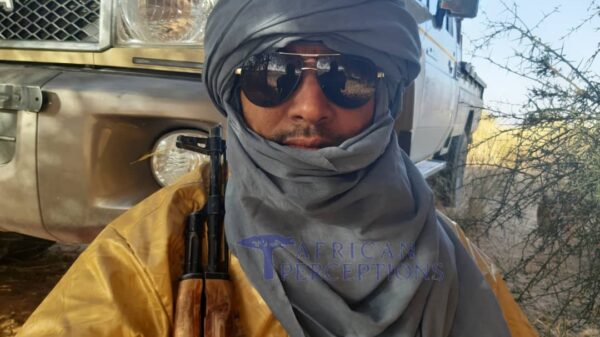
Identifying the target group also remains challenging. According to Nigerian authorities, the primary focus was Lakurawa, an armed group that recently emerged along the Niger border. Official assessments suggest it began as a self-defence group against banditry before evolving into a coercive force with increasingly radical tendencies, though its direct operational ties to the Islamic State remain unclear.
Moreover, residents of Jabo village, where debris landed, stated that their community has no known history of links to Lakurawa or the Islamic State and that Muslims and Christians there coexist peacefully.
The limits of force and the governance gap
The intervention raises serious questions about sustainability and impact.
Limited effectiveness
Analysts argue that while such strikes may temporarily degrade certain groups, they are insufficient to address Nigeria’s multifaceted violence. Some experts have also questioned the strategic rationale for focusing on Sokoto while more entrenched threats persist elsewhere.
Addressing symptoms, not causes
Nigeria’s security crisis is widely linked to governance failures, state absence in rural areas, inadequate service delivery, and resource-based conflicts. Defence Minister Christopher Musa has acknowledged that military solutions account for only about 30 percent of the response, with the remainder requiring improved governance.
Risks of political instrumentalization
Observers warn that religiously charged rhetoric and the symbolic choice of Christmas risk portraying the conflict as a religious war, potentially inflaming communal tensions and obscuring the broader, non-sectarian nature of the crisis affecting all Nigerians.
Conclusion
Beyond simplified narratives, the U.S. strikes in Nigeria underscore a deeply complex reality. While they mark a significant step in bilateral military cooperation at Nigeria’s request, they also illustrate the dangers of externally driven political framings that reduce a multifaceted crisis to a single dimension.
The central challenge for Nigeria and its partners remains tackling the root causes of violence through inclusive governance, economic equity, and comprehensive solutions that address state failure before armed groups are able to exploit it.