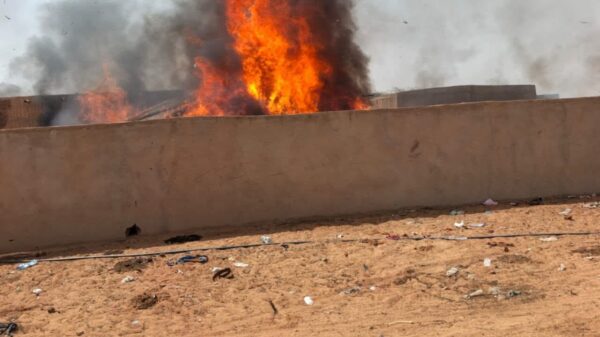








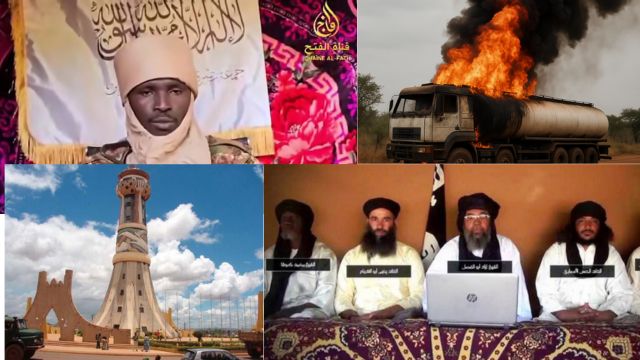
On the surface, today’s crisis in Mali appears to be a familiar conflict between a ruling military junta, armed groups advancing in the peripheries, and a fuel shortage paralyzing life in the capital. But behind this outward scene, and according to exclusive field testimonies, deeper layers of division are emerging inside the Malian army itself, fueled by the privileges granted to the Russian Legion (formerly Wagner), and transforming fuel for trucks and generators into a strategic pressure tool in the hands of groups linked to Al-Qaeda.
This intertwining of internal collapse, dependency on mercenary networks, and economic siege shows that what is unfolding in Mali is not a passing crisis — but rather a fundamental restructuring of the balance of power and weaponry in the country.
1. Soldiers on the Frontlines… and Second-Class Citizens
Exclusive testimonies from units deployed in northern Mali reveal that the fracture inside the army did not begin with statements or slogans, but with the daily details of life inside joint bases shared by Malian soldiers and members of the Russian Legion.
Malian soldiers do not watch the mercenaries from afar; they live with them in the same camps, fight alongside them in the same operations, and come under the same enemy fire. But when a Russian fighter is injured, he is immediately airlifted to the best hospitals in Bamako — while the Malian soldier is left in dire medical conditions inside a besieged base, sometimes without a real doctor, only attended by trainees with limited experience in areas already suffering a critical shortage of health services.
A wounded Malian soldier can die inside the base — not due to the severity of his injury, but due to the absence of even minimal care and the failure to provide equal air evacuation between the “foreign ally” and the “national soldier.”
2. Bottled Water for the Mercenary… Polluted Ponds for the Soldier
The disparity extends beyond medical care:
• Water:
Russian fighters are supplied with bottled mineral water from the army command in Bamako,
while Malian soldiers drink from contaminated surface ponds and wells in a harsh desert climate unfamiliar to them, as most come from the south.
• Food:
The Russians receive specially prepared healthy meals.
Malian soldiers are served poorly cooked rice from large dirty communal pots in dusty desert conditions — a daily reminder of humiliation and inequality.
• Pay:
A Russian mercenary earns in one month what a Malian soldier earns in an entire year.
The message is unmistakable: their lives are considered worth more.
3. Immunity for the Legion… A “License” for Violence
Civilians who encountered joint units of the army and Russian Legion recount that these forces enter villages, kill whomever they choose, loot property, and rape women — with complete impunity.
There are no credible investigations, no prosecutions, and — according to these testimonies — no official dares hold them accountable, “not even the president himself.”
Experts attribute this to sovereign agreements signed by the coup leaders in Bamako with Wagner-linked networks first, and later with the Russian Legion. These agreements secure the regime’s survival in exchange for granting mercenaries wide freedom over land and resources.
Even more worrying, some Malian soldiers have absorbed this culture of impunity, worsening civilian suffering and eroding trust in the state.
4. Goïta: Personal Security Dependent on the Legion
Analysts believe that Colonel Assimi Goïta relies not only on the Russian Legion as a combat partner, but as a personal security shield for himself and his inner circle.
In a country that has seen two coups in less than two years, a crucial question arises:
Who protects the ruler from his own army?
The mercenaries provide the ideal answer:
a heavily armed force with no local loyalties, no family or tribal ties, and a vested interest in protecting the ruling elite as long as the contracts continue.
Holding them accountable would undermine the very foundation of the military regime’s survival.
5. A Divided Army, A Disorganized Society
These inequalities have spread through the military ranks… then to their families… then across the public.
But in Bamako:
- political parties have been dissolved
- unions dismantled
- civic groups suppressed
- popular leaders imprisoned, assassinated, or exiled
Figures like Imam Mahmoud Dicko — once highly influential — have been pushed out or silenced. A form of leadership has even re-formed in exile in Paris.
This means:
anger exists — but no one can organize it.
6. “Economic Jihad” and the Fuel Siege on Bamako
This is precisely where the Group for the Support of Islam and Muslims (JNIM) found an opportunity.
Sources close to the group say the decision to impose a fuel siege on Bamako is strategic:
• Every fuel truck blocked means hospitals without electricity
• Water pumping stations go offline
• Transportation stops
• Food prices surge
Thus, the rage shifts from
“armed groups are blocking us”
to
“the government is too weak and corrupt to protect us.”
UN agencies warn that the fuel shortage is crippling humanitarian operations, threatening millions who rely on aid — especially in the north and center.
7. JNIM’s Statement: A Mirror of the Crisis
In its latest communiqué, JNIM urged:
- elites
- companies
- students and workers
to unite and overthrow the regime, replacing it with an “Islamic government ruled by Sharia.”
The group also accused the junta of surrendering sovereignty to “Russian militias and foreign forces,” and accused Turkish drones of committing “massacres” in Timbuktu, Massina, and Arbinda.
The timing is critical:
- A deeply split army
- A partial humanitarian and economic collapse
- Total political suffocation in the capital
→ Together, they create a historic opening for the group.
Conclusion: A State Drained from Within and Without
The internal information from northern camps reveals a conflict no longer limited to “the state vs. armed groups,” but rather:
- an army whose own soldiers feel colonized by a foreign ally
- a regime dependent on mercenaries for survival
- jihadists turning the economy into a battleground
- and a society prevented from resisting
And at the center of this:
A people asked to remain silent —
while their water is polluted, their fuel disappears,
and the voices meant to speak for them are jailed or in exile.