















Introduction
As we grow older, memory lapses become common. But when does forgetfulness go beyond normal aging? That’s where dementia comes in — a complex brain condition that reshapes the lives of those affected and their families.
What is dementia?
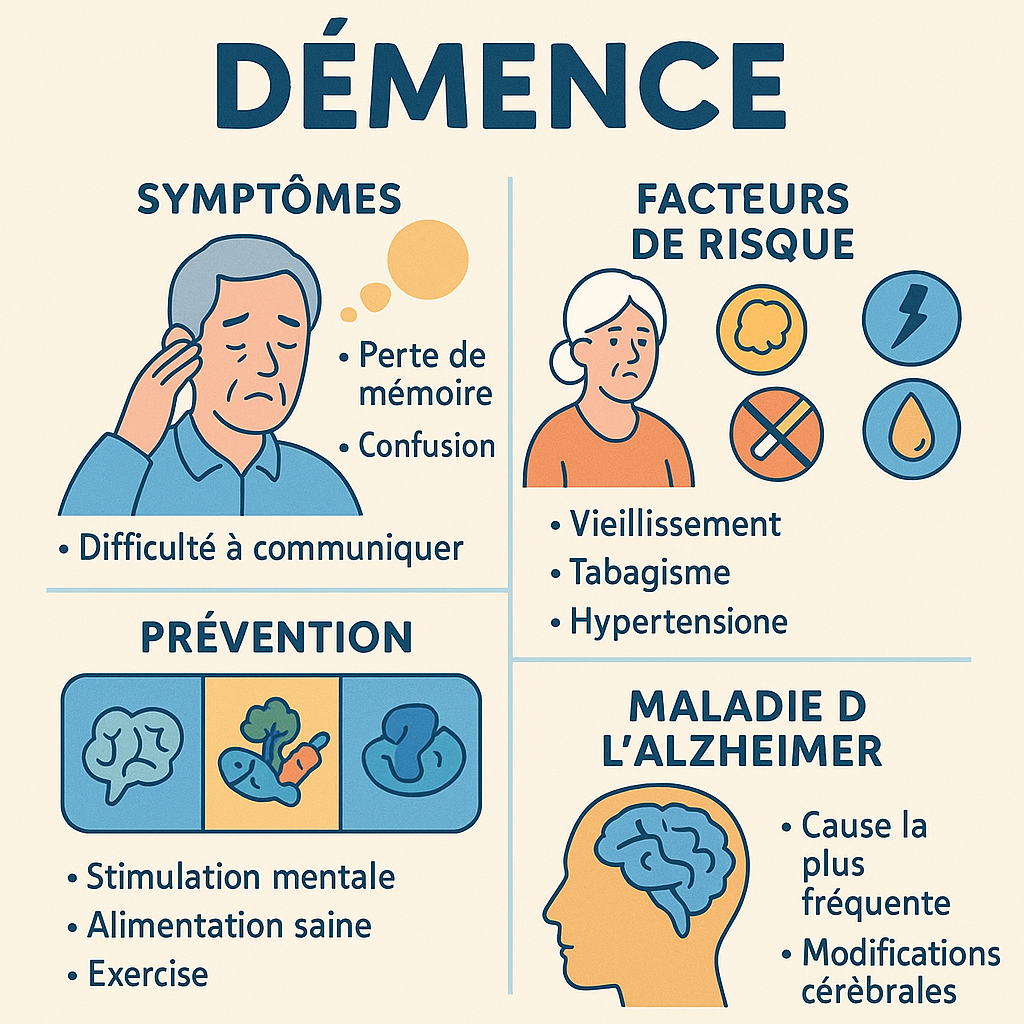
Dementia is a general term for a decline in mental ability severe enough to interfere with daily life. It covers multiple conditions:
- Alzheimer’s disease – Accounts for 60–70% of all dementia cases. Starts with memory loss and gradually impairs language and recognition.
- Vascular dementia – Caused by reduced blood flow to the brain, often after strokes. Affects reasoning and decision-making.
- Lewy body dementia – Characterized by visual hallucinations, cognitive fluctuations, and Parkinson-like symptoms.
- Frontotemporal dementia – Affects younger adults; impacts behavior and speech before memory.
Early warning signs:
- Frequent recent memory loss
- Difficulty expressing thoughts
- Disorientation in time and place
- Sudden mood or personality changes
Key facts (WHO):
- Over 55 million people affected globally
- 10 million new cases annually
- Expected to double by 2050
🧠 Prof. John Burns, statistician:
“Prevention starts in midlife. A balanced diet, physical activity, and avoiding tobacco can reduce dementia risk by up to 40%.”
Can dementia be prevented?
Yes. By:
- Keeping your brain active (reading, puzzles)
- Eating a Mediterranean-style diet
- Exercising regularly
- Managing blood pressure, sugar, and cholesterol
- Avoiding smoking and alcohol
Care & support:
- No definitive cure yet
- Medications like Donepezil or Memantine may help
- Psychological and social support is crucial
Conclusion
Dementia is not the end — it’s the beginning of a journey that calls for awareness, compassion, and proactive care. A healthy life today is the best gift for tomorrow’s mind.