






The UN mission’s end confirms the practical death of the referendum and hands Rabat a political opening, but it neither closes the file legally nor produces a settlement
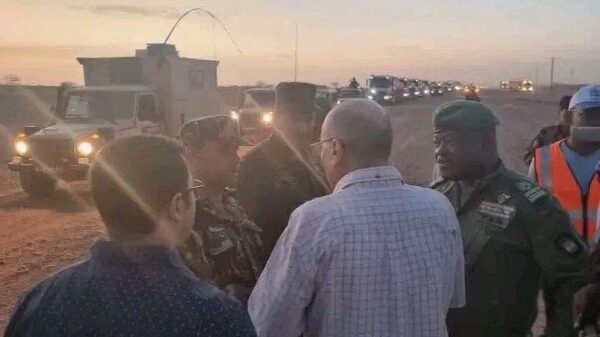
At midnight on 31 October 2026, the UN Mission for the Referendum in Western Sahara, MINURSO, came to an end. Within hours, on 1 November, the withdrawal of its personnel and equipment began, paving the way for the liquidation of its presence in the territory. This was less a deliberate decision to shut the mission down than the product of a Security Council unable to renew its mandate amid a US–Russian rift.
How the mission fell
MINURSO was created in 1991 under the Settlement Plan with two tasks: monitoring the ceasefire and organising a self-determination referendum offering a choice between independence and integration with Morocco. The vote never took place, blocked by disputes over who was entitled to take part, while the mission’s mandate was renewed some 47 times in the hope of a deal.
On 30 October 2026, the United States tabled a draft resolution that won 11 votes but was struck down by a Russian veto. The text proposed a one-year extension but carried sweeping changes: renaming the mission “MINUSO” by dropping the word “referendum”, adopting Morocco’s autonomy proposal as the basis for a solution, and restructuring and downsizing the mission. It was these changes that triggered Moscow’s veto. A rival Russian draft for a simple technical rollover won only three votes and also failed.
UN Secretary-General António Guterres quickly stressed that the mission’s departure does not cancel the inalienable right to self-determination, and that the UN remains ready to support dialogue through his Personal Envoy, Staffan de Mistura. He warned of the risk of escalation and called for maximum restraint.
What MINURSO’s absence means
First, the decision ends the UN’s military presence on the ground, which had monitored the ceasefire for 35 years, although some unfinished work such as demining continues. It erodes the conflict-management formula born of the 1991 settlement. The mission embodied a deferred international process while also performing a monitoring function in the field. Without it, there is less capacity to keep political waiting fenced in by security safeguards.
As the shared institution weakens, facts on the ground carry more weight: effective control, military capability, recognitions and diplomatic backing. This tilts the balance somewhat towards Morocco, but may push its opponents to raise the cost of entrenching the status quo.
The formal referendum framework also recedes. The US proposal was essentially meant to “update and renew” the mission away from the referendum and towards a political solution based on the autonomy initiative under Moroccan sovereignty, a path already backed by Security Council Resolution 2797 in 2025, which described autonomy as “the most feasible solution”.
More troubling, the decision widens the gap between the dispute’s legal survival and the shrinking practical tools to address it. The right may continue to be affirmed internationally while the mechanisms able to turn it into an accepted process dwindle. Such a gap can breed frustration and escalation rather than settlement.
Still, this is not the end of the UN’s role, but rather its weakening, an erosion of its credibility and a fading of hopes placed in it. The Personal Envoy remains and political efforts will continue, as Guterres made clear, even if Morocco sees in the episode “an opportunity to take the file off the Security Council’s agenda”.
Is the referendum dead?
This is the central question, because the referendum was the core of the whole process. In its original form, a choice between independence and integration, it has become harder to hold now that the institution created to prepare it is gone. In truth, it has been dead in practice for years, owing to the impossibility of agreeing on the voter rolls. The end of the mission that bears its name confirms that reality rather than changing it.
Yet it would be wrong to conclude that the right to self-determination has lapsed along with the instrument, as the Secretary-General underlined. A future negotiated settlement, including an autonomy agreement, could still be put to the population. But that is a different proposition from the original referendum, and questions about the options on offer, the electorate, the guarantees and the freedom to accept or reject remain decisive.
The shift towards autonomy, moreover, predates the withdrawal. Resolution 2797 made the Moroccan proposal the basis for negotiations and described genuine autonomy as a more achievable outcome, while retaining the requirement of a solution acceptable to the parties and of self-determination. That is a clear political tilt, but not a final agreement on sovereignty or on how the population’s will is to be expressed. The original referendum is now more stalled and institutionally weaker, but its outright cancellation, or equating self-determination solely with autonomy, does not follow automatically from the withdrawal.
Rabat: a diplomatic gain without a guaranteed settlement
Morocco welcomed the outcome emphatically. In a statement issued right after the vote, the Royal Cabinet called it “an important development and a significant step towards the final closure of the Moroccan Sahara file within the United Nations”. Rabat requested the removal of personnel, vehicles, equipment and insignia in the following days, turning the page on 35 years of UN presence, while reaffirming its commitment to the ceasefire. It described the UN political process as “suspended” because of the other parties’ stalling, pointing to support from more than two-thirds of UN member states, including permanent Security Council members, for autonomy under Moroccan sovereignty.
The decision appears to favour Morocco above all. It removes the tool that internationalised the dispute, embodied by the mission and the Council’s periodic debates; it reinforces the status quo of Moroccan control over most of the territory; and it effectively ends UN pressure on the ground. The official welcome can be read as an effort to turn the end of the mission into the end of an era in which sovereignty itself hung on a UN process.
There is, however, one point Rabat cannot easily get past: the decision does not fully close the file in legal terms. As Guterres made clear, the UN keeps the territory classified as a “non-self-governing territory” and therefore affirms the continuing right to self-determination. Moreover, succeeding in removing an institution is not the same as succeeding in building legitimacy for a settlement the other side will accept, which is what the US draft sought. Morocco may gain diplomatically, then lose part of that gain if it leads to lasting insecurity.
Polisario and Algeria: a lost framework, not a lost veto
The Polisario Front, in a string of statements, voiced concern over the deadlock, called this outcome “unacceptable” and held Morocco responsible for any consequences for peace and security. The Front had earlier threatened to quit the political process if the US draft passed without substantial amendments, and reaffirmed its commitment to self-determination and independence by all legitimate means.
Its loss goes beyond symbolism. Persuading its base that waiting within the old framework will lead to a referendum is becoming ever harder. It may turn to escalation as leverage, but the mission’s end does not automatically give it new military capacity, nor make escalation a sure way to improve its position.
Algeria expressed “deep regret”, blaming the US draft’s “excessive bias” towards Morocco at the Polisario’s expense, and renewed its commitment to a just political solution guaranteeing self-determination. The development puts Algiers’ strategy to the test: how to sustain the cause and its regional standing once one of the tools for managing it has weakened? Whether it moves from diplomatic objection to an actual change of policy remains to be seen.
Both lose the international monitoring mechanism and the formal reference point of the referendum, and their negotiating position weakens. They fear the “legitimisation” of the status quo, its passage from de facto control to an internationally accepted situation. They have lost an institutional framework, but not their ability to object.
Three possible paths
Three scenarios can be distinguished for the period ahead:
- New negotiations on autonomy, shifting the focus to powers, guarantees, representation, resources, the return of refugees and how an agreement would be endorsed. This could yield a settlement if there is genuine acceptance and enforceable guarantees.
- A continued status quo under weaker international oversight: no deal and no all-out war, but entrenched control, friction and diplomatic rivalry. This may gradually favour Morocco, but leaves the conflict open and liable to flare.
- Escalation that forces a return to an international arrangement: if the cost of the vacuum rises, the need for observers, a liaison mechanism or a different mission will return. The current institution’s failure does not erase the need for its functions.
In theory, the end of the old arrangement could push the parties towards serious negotiation, since the cost of deadlock will rise. That would require a clear alternative providing a negotiating reference, security guarantees, a mechanism for expressing the population’s will and arrangements for implementation. But the mission’s departure before these elements are agreed weakens the conditions for a settlement: monitoring and field communications decline, competing accounts of incidents become more likely, and each side may be tempted to test the other’s limits.
The paradox
The mission was accused of entrenching the deadlock, yet its disappearance may also remove some of what kept that deadlock from sliding into wider confrontation. Ending the management of a conflict does not end the conflict. Although Morocco has reaffirmed its commitment to the ceasefire, the contours of the new situation remain unclear. It could lead to a longer freeze, or to a political process accelerating outside the Security Council, with the low-intensity tensions that have persisted since 2020 continuing.
In the end, MINURSO’s fall reflects the US–Russian contest more than any deliberate choice. It denied Morocco a resolution that would have enshrined its option, yet serves it politically, and puts a practical end to the original referendum framework without ending either the conflict or the UN’s political role. The greatest danger now is that the old promise of a referendum fades before a legitimate, workable agreement emerges to replace it. Then the move would not be towards peace, but from an institution-managed stalemate to a conflict with fewer restraints. The consequences will depend on how the orderly withdrawal is handled, how the parties behave, and whether Personal Envoy de Mistura’s efforts continue.