








Niger’s government has formed a technical committee to manage the petroleum products crisis and restructure the cross-debts among the sector’s institutions, amid supply difficulties, fuel shortages in some areas and financial pressures hampering the production and distribution chain.
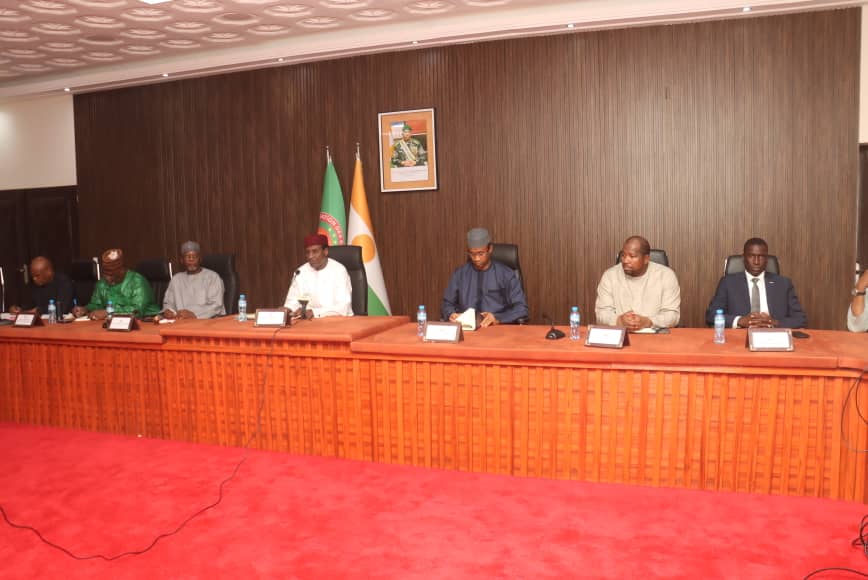
Prime Minister Ali Lamine Zeine took the chair of the committee on Monday, October 12. It has been tasked with ensuring fuel remains available across the country, raising output at the Zinder refinery, and settling the debts that have built up between the state and oil institutions within three months.
Zinder: from 15,000 to 20,000 barrels a day
The plan calls for gradually raising the processing capacity of the Zinder refinery, SORAZ, from 15,000 barrels a day to 20,000, in coordination with the China National Petroleum Corporation’s Niger arm, “CNPCNP.”
The committee will work to guarantee delivery of the crude volumes the refinery needs and to remove the technical, financial and contractual obstacles limiting its output.
It will also identify the bottlenecks holding up the production, transport and distribution of petroleum products, and propose measures to keep diesel, gasoline and liquefied petroleum gas available in every part of the country.
The debt file: a three-month deadline and set priorities
Resolving the cross-debts is one of the committee’s main assignments, covering amounts owed among the state, the Nigerien Petroleum Products Company (Sonidep), the electricity utility Nigelec, the SORAZ refinery and China’s national oil company.
The committee will update the figures for debts and receivables previously determined by a government committee formed last April, while widening the review to include SORAZ and the Chinese company and putting accounts that warrant it through audit.
A practical plan to settle these debts is due within three months, with priority given to the state’s debts owed to Sonidep, followed by Sonidep’s debts to the SORAZ refinery.
The plan aims to protect the continuity of crude and refined-product supply and to prevent new arrears from piling up within the supply chain.
Pump prices held steady, import cost gaps to be offset
With the government having decided to keep current fuel prices at filling stations, the committee will propose a mechanism to compensate for import cost differences, while regulating the quantities of gasoline and liquefied petroleum gas imported.
It will track stock levels, Zinder refinery output, foreign imports and shortages recorded in each region on a daily basis, and will draw up a supply program covering the country’s needs for 30 days, reviewed weekly and specifying the volumes allocated to each depot.
Electricity: a diesel reserve and alternative energy routes
Working with Nigelec, the committee will prepare a program to supply thermal power plants with diesel, updated whenever a power outage occurs, with a fuel reserve earmarked for these plants within the national stockpile.
The plan also includes changing the fuel used in thermal plants to cut their reliance on diesel. In the short term, Niger could rely on importing gas or fuel oil via Algeria, while in the medium term it is studying the use of associated gas extracted from the Agadem basin in the east of the country.
A 45-day safety stock and preparation for 2027 maintenance
The committee has also been asked to prepare a plan to secure Niger’s fuel needs during the major maintenance work scheduled for the SORAZ refinery in 2027, to avoid widespread disruption to distribution while production is halted.
It will propose a program to build new depots that would raise safety reserves of petroleum products to a level covering 45 days of national consumption.
Its tasks also include combating fuel smuggling and informal distribution networks, by coordinating the operations of oversight bodies across regions in cooperation with regional governors, and following up on legal proceedings against offenders.
Who sits on the committee, and four sub-committees
Alongside the prime minister, the committee includes the ministers of petroleum, economy, finance, trade and industry, and justice, as well as representatives of the interior and defense ministries, regulators and institutions operating in the sector.
The petroleum minister serves as first vice-chair, followed by the minister of economy and finance, then the minister of trade and industry, and the minister of justice.
Also taking part are the energy sector regulatory authority, the Nigerien Agency for Standardization, Metrology and Certification, and the companies Sonidep and SORAZ, with the Chinese company, Nigelec and other relevant bodies to be brought in as needed.
The committee’s work is divided into four sub-committees covering SORAZ production, debt and financing, supply and distribution, and oversight and fraud prevention.
The committee will submit to the prime minister a report identifying weaknesses in the supply chain and proposed solutions, along with a monthly report on implementation of the Advisory Council for the Refoundation’s recommendations on the hydrocarbons sector.
The committee’s mandate is set at 12 months, extendable until the major maintenance of the Zinder refinery is complete and the country’s fuel supplies return to normal.