





The spark was an assault by the Movement for the Salvation of Azawad, backed by elements believed to belong to Russia’s Africa Corps, on the town of In Araben, which lies under Islamic State influence. But the response did not fall on the attacking force. It spread to civilian communities of the Daoussahak, leaving dozens dead and a new wave of displacement.
Ménaka, Mali | October 20, 2026
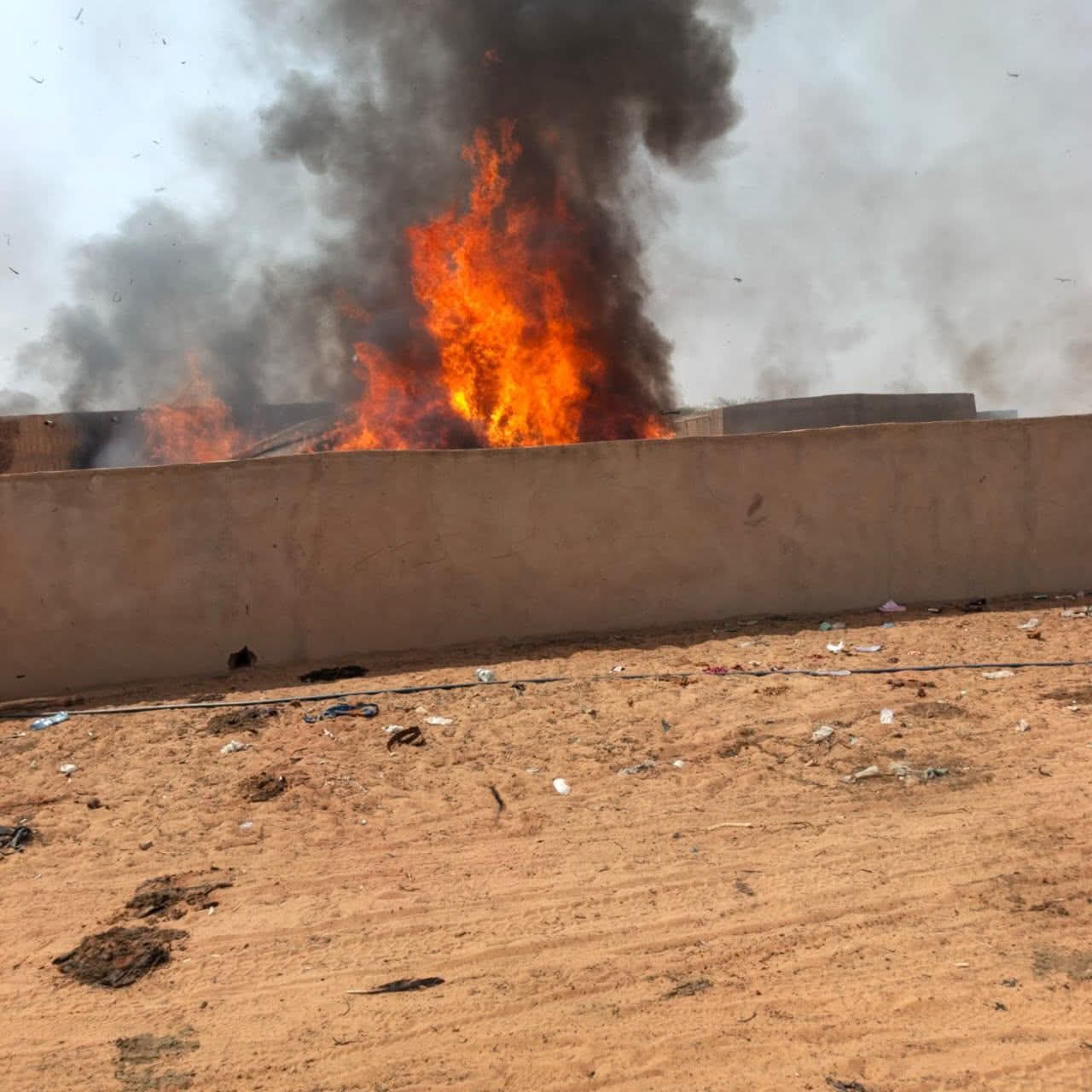
Mali’s northeastern Ménaka region is entering a new phase of escalation after an attack on one of the Islamic State’s most prominent strongholds, followed by retaliatory operations that struck civilian communities of the Daoussahak tribes, killing dozens and displacing families who had only recently returned to their villages.
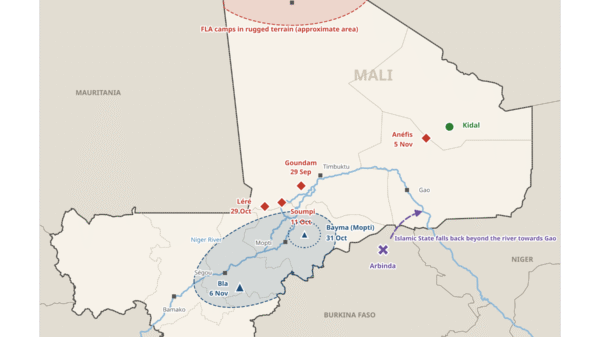
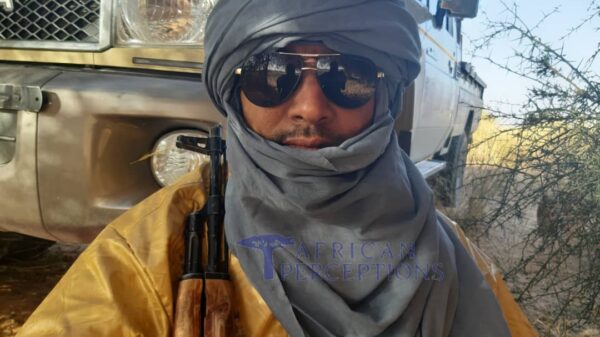
According to information obtained by African Insights (Al-Ru’a al-Afrikia) from local sources in Ménaka and in the border areas with Niger, events began on October 17, when forces of the Movement for the Salvation of Azawad, known by its French initials MSA, attacked In Araben, a town east of Ménaka under Islamic State influence.
The sources say the attack was carried out with the participation of elements of Russia’s Africa Corps and included shelling of positions inside the town, which is an important center of the group’s influence but also home to numbers of civilians, among them Daoussahak families.
The involvement of Russian forces, the nature of the targets that were shelled, and the scale of losses inside In Araben could not be independently verified.
The end of a pattern of mutual avoidance
The significance of the attack lies in the fact that it broke a pattern of mutual avoidance that, according to local sources, had held between the Islamic State and the MSA, even though both operate in neighboring areas.
Mohamed Abdullah, in a statement from the area, said the group had previously avoided attacking the movement’s positions, and that the two sides moved within the same geographic space without engaging in broad confrontation. He added that the situation changed on October 17, when the movement’s fighters advanced on In Araben and attacked it, arguing that the decision to strike first opened the door to the wave of revenge that followed.
Mohamed Abdullah said:
“The Islamic State used to turn a blind eye to the MSA and did not go after it, even though they were in the same area. But the movement attacked In Araben and shelled the town, so the group responded by killing a large number of Daoussahak and driving them out of their areas, while the attacking force has so far not suffered a blow comparable to what befell the civilians.”
Abdullah believes civilians have become victims of a conflict to which they do not necessarily belong on either side, explaining that residents include peaceful families and others close to the Azawad Liberation Front or the Group for the Support of Islam and Muslims, who are not tied to the Islamic State or the MSA.
He argued that the sequence of events raises local suspicion over whether the attack was used, indirectly, to force residents who had recently returned to their villages to flee once again. That reading, however, reflects the assessment of a local source, and no independent evidence exists of a prior plan to displace the population.
Tagadayat: 48 dead, with the toll expected to rise
On October 19, the executive office of the Daoussahak community announced the killing of 48 civilians in an attack on Sunday, October 18, in the Tagadayat area of the Ménaka region.
The statement blamed gunmen belonging to the Islamic State for the attack, saying they arrived on several motorcycles and targeted unarmed civilians, also wounding a number of people and spreading widespread fear.
Field sources, however, said the real toll could be higher than the announced figure, given the difficulty of reaching the affected villages, the dispersal of residents, and the impossibility of independently documenting the number of victims and missing.
There is still no comprehensive official toll from Malian authorities, and nothing has been released clarifying the losses suffered by the MSA or Russia’s Africa Corps during the attack on In Araben or the clashes that followed.
A deal with civilians that was within reach?
Another local account reveals an additional layer of complexity. Ali Ahmed said the Islamic State had been close, before the attack, to reaching an understanding with Daoussahak civilians that would allow families to return to In Araben and its surroundings.
In his telling, the attack by the MSA and the Africa Corps caused those understandings to collapse and pushed the group to carry out reprisals that made no distinction between fighters and civilians, nor between degrees of allegiance within the local community.
Ali Ahmed said:
“The group was on the verge of reaching an agreement with civilians allowing them to return to In Araben, but the attack by the MSA and the Russian corps drove it to take revenge on everyone, including civilians it considered to be leaning toward the movement.”
The existence of these negotiations, or how far they had progressed, cannot be independently verified, but the account reflects the web of fragile local understandings that sometimes form between armed groups and residents in areas where the state is absent.
The Daoussahak: caught between tribal belonging and military polarization
The developments carry added sensitivity because of where the Daoussahak stand in the conflict. They are a major demographic component of the Ménaka region, while the MSA itself is made up in large part of fighters from the same community.
Tribal belonging, however, does not mean a unified political or military position. Some Daoussahak are tied to the movement, others live under Islamic State influence, try to stay neutral, or maintain ties with the Azawad Liberation Front and the Group for the Support of Islam and Muslims.
This entanglement leaves civilian communities exposed to collective punishment, as each side may regard an entire village as a haven for its adversary, based on the affiliation of some of its residents or its geographic position, rather than on the participation of all of its inhabitants in the fighting.
The facts made public so far indicate that civilians bore the brunt of the retaliation, while no information is available suggesting the force that launched the first attack suffered comparable losses.
Renewed displacement toward the city of Ménaka
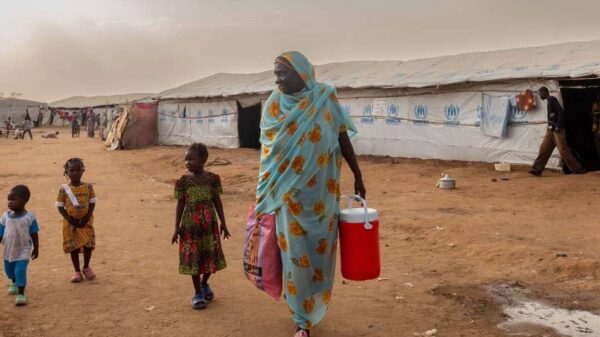
The attacks have pushed many families to leave their villages and head for the city of Ménaka in search of safety, according to the statement by the Daoussahak executive office and accounts from local sources.
The wave of displacement includes women, children and the elderly, among them people who returned to their areas of origin only a short while ago after years of turmoil and displacement.
Their arrival puts additional pressure on a city already struggling with weak services, shortages of food and medicine and limited shelter capacity, amid difficulty for humanitarian organizations in reaching large parts of the region.
The Daoussahak executive office called on Malian authorities, UN agencies and humanitarian organizations to intervene urgently, provide protection and aid to the displaced, and prevent new attacks on civilians.
Islamic State showing growing strength
Ali Ahmed believes the latest escalation comes as the Islamic State works to strengthen its military presence in the Ménaka region. He said the group has recently obtained large quantities of weapons and equipment, and is trying through its retaliatory attacks to show it can protect its areas of influence and respond to any force approaching them.
No independent information is available to determine the scale of the new arms or their sources, but the group’s ability to carry out swift attacks by motorcycle and to move between villages and border areas shows its continued operational flexibility, despite military operations that have targeted it in recent years.
Ménaka’s map of influence in the balance
The events of In Araben and Tagadayat do not look like a limited military clash, but may mark the start of a reshuffling of alliances and lines of influence in Ménaka.
The collapse of the avoidance between the Islamic State and the MSA could open a new front between the two, while a wider entry by Russia’s Africa Corps could broaden the fighting and push the group to launch more reprisal attacks on areas it considers havens for its adversaries.
At the same time, repeated displacement threatens to empty entire villages of their people and turn rural areas into arenas where armed groups move freely, with no stable civilian presence or local authority capable of protecting residents.
Recent reports pointed to new clashes near In Araben, but the parties involved and the scale of losses could not be confirmed.
The developments show once again that civilians in Ménaka face the threat of more than one group; they live inside a complex web of armed groups, local forces, foreign allies and shifting tribal understandings. When any fragile understanding collapses, villages quickly turn from places of return and temporary stability into arenas of revenge and fresh displacement.
Source: African Insights (Al-Ru’a al-Afrikia) and a statement by the Daoussahak community’s executive office (October 19, 2026)