


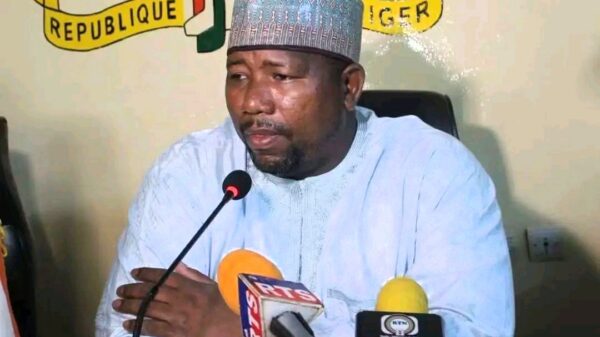





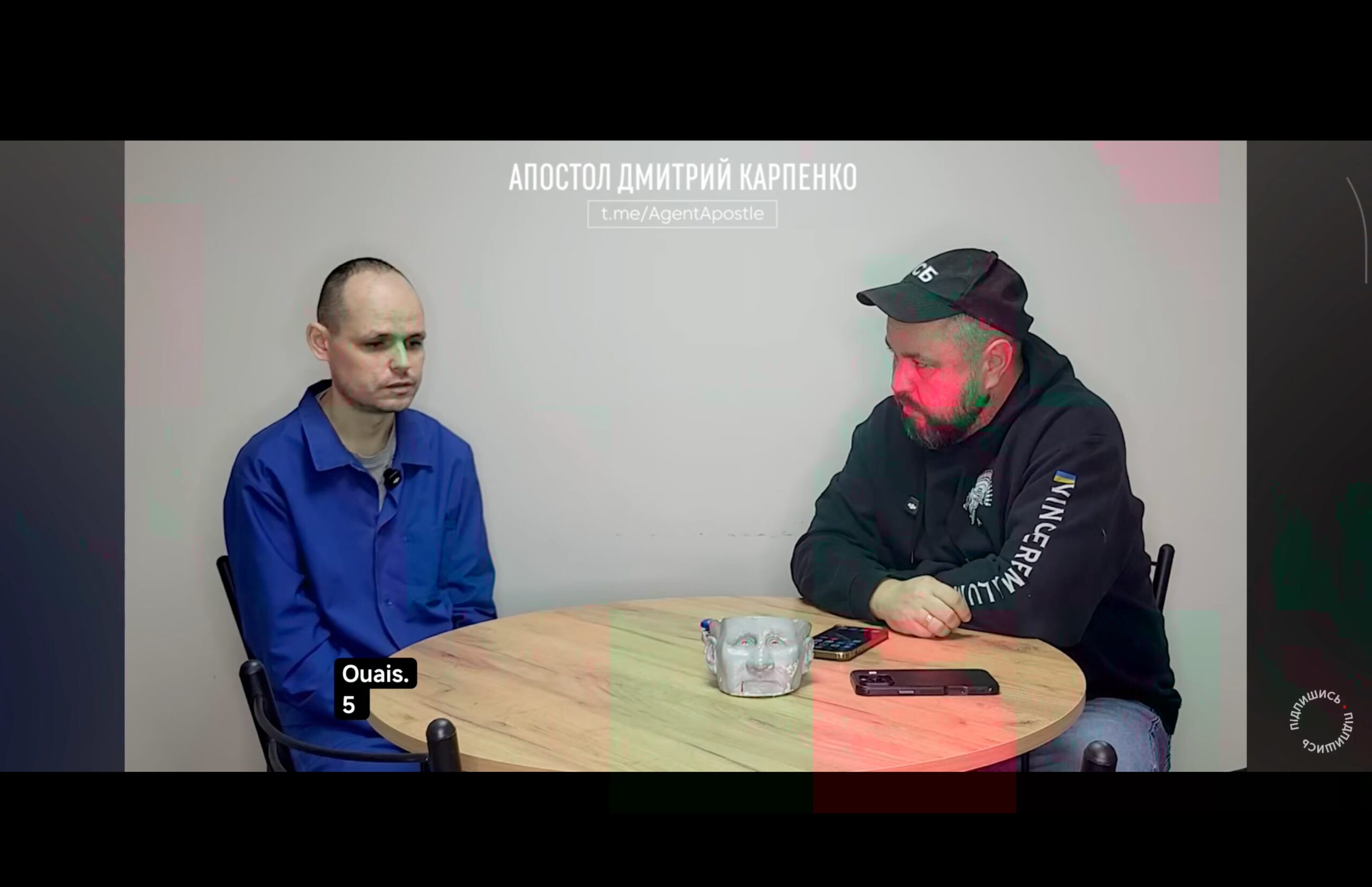
In a video interview published by Ukrainian journalist Dmytro Karpenko, a man identified only as “Alexander,” presented as a former fighter with a group linked to Wagner, describes a stint in Mali as part of what he calls a “military company.” According to his account, that period included using captives labeled “terrorists” as live subjects in first-aid and battlefield trauma-response training.
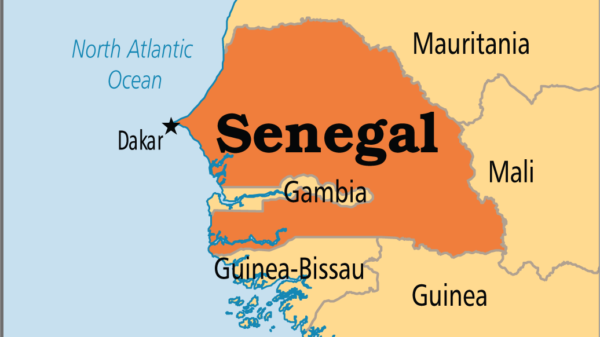
This testimony joins a long record of documented accounts of abuses committed by Wagner and Africa Corps personnel against Tuareg, Arab, and Fulani civilians in northern and central Mali since the group entered the conflict in 2021. Wagner and relevant Russian authorities could not be reached for comment on the specific claims in this interview.
From Syria to Bamako
The man begins his account at a military base in Syria locally referred to as “Tanchik,” where he says he and his group spent two weeks with virtually no assigned duties, amid a tense atmosphere after Russian President Vladimir Putin, according to his telling, briefly labeled the group “terrorists” following what he described as a “march on Moscow” — a decision reversed, he says, the following day.
The group was then flown to Mali’s capital, Bamako, he says, where they were distributed among “detachments” within what he calls the “military company.” He states he spent roughly seven months in Mali, from late September through April 2024.
An account of first-aid drills using captives
“Alexander” describes an initial phase of training that included climate acclimatization, mounting and dismounting armored vehicles, and mine-clearing exercises, before turning to the most contentious part of his testimony: medical first-aid training he called “extremely brutal,” conducted, in his account, on people labeled “terrorist” captives.
He describes two such cases out of what he says was a total of “only two.” In the first, he says a captive’s leg was blown off with a block of TNT explosive, then his arm was shot through an artery, while two trainees chosen by the instructor administered first aid using a tourniquet and dressings. “Alexander” says the man ultimately “bled to death,” with no effective treatment given to actually save him.
In the second case, he says another captive was stabbed in the heart with a knife in front of a group of trainees, while a third man’s leg was amputated with an axe, in order — in his words — to create a “real injury” for two other trainees to practice bleeding-control techniques on.
“Alexander” says he did not personally carry out any of these acts, saying he only watched, explaining his and his colleagues’ silence by saying they were “presented with a fait accompli” without prior knowledge of what would happen, and that they had no option to object.
“We had no training dummies”
This part of the interview closes with a comment from Karpenko that sums up the implicit accusation in the testimony: the absence of medical training mannequins, which — according to this account — led to using live people instead. At one point, Karpenko asks his guest whether he believes in God; “Alexander” says he does. Asked what God was telling him in that moment, he replies that it was telling him “not to intervene.”
Other elements of the testimony: ambushes, casualties, and pay
The interview also touched on other aspects of “Alexander’s” time in Mali. He says he did not take part in direct firefights, describing his role instead as escorting Malian army convoys on protection duty against roadside bombings he attributes to “terrorists” using motorbikes to plant plastic containers packed with homemade nitrate explosives.
He recounts the deaths of two colleagues in an ambush during a motorbike patrol mission, as well as a case of a fighter’s suicide with his own weapon inside the base, without explaining the cause. He also discloses a monthly salary of between 240,000 and 260,000 rubles (roughly $3,000), plus a $100 monthly allowance, saying the money was paid in cash through a power of attorney to designated individuals rather than by bank transfer.
“Alexander” ends by saying he hid the true nature of his mission from his parents, who believed he was working shifts guarding oil facilities, before later learning the truth.
Context
International rights organizations have documented, since Wagner’s entry into Mali in 2021 under military cooperation agreements with Bamako, the killing of hundreds of Tuareg, Arab, and Fulani civilians in what have been described as reprisal operations, alongside cases of field executions and torture affecting women and children across several areas of northern and central Mali. “Alexander’s” testimony adds a new detail to this already documented pattern of abuse — it does not stand in for it, nor is it the sole basis for it.
Full transcript of the interview
There in Syria they took us to a military base, it was called “Tanchik,” that’s what ordinary people called it, and it looked like a local Syrian tank unit. We sat there for another two weeks. When the travel per diems were running, it was 5,000 a day, 5,000 rubles. So we sat there for two weeks doing absolutely nothing at all, just watching football and going to eat, no shifts, nothing, they didn’t issue weapons or give us anything, and generally there were no assignments at all. At that moment, while we were in Syria, the march on Moscow began, and Putin then declared us terrorists. There was panic among many: how could this be, and when? That was in September and October, September and after. And we were talking among ourselves: how do we get home now? What do we do, how do we get back? Even though we hadn’t even reached our destination yet and all we wanted was to earn money. Yes, and just like that we suddenly became terrorists! And the next day Putin cancelled that decision. In the end we sat there for two weeks, then we were flown to Mali, we arrived in Bamako, the capital of Mali. There, near the airport, we also arrived aboard an Ilyushin plane, and there was a base near the airport, and there they started distributing us among the detachments and groups within the “military company.” We sat there for about four hours, ate, and they handed out mosquito nets and a lot of supplies…
– So how long did you spend in Mali, son, from when to when? – From the end of September until April 2024. – From the end of September… 10 months? – September… ah, yes. – Do you know why it’s not 10? October, November, December… 7 months. – From September to October, November, December, January, February, March, April… 7 months, not 10, so yes, 7 months. – Generally, what were you doing there? What was happening? – At first, training and instruction, there had to be climate acclimatization, and they combined it with training: mounting and dismounting armored vehicles, and handling non-standard situations… nothing unusual, engineering training (mine clearing) and medical first aid. The medical first aid was extremely brutal, and it was done on the terrorists [the captives].
– What does that mean? – We would gather for first-aid training, and they’d bring in a captured terrorist, and they’d attach a block of TNT explosive to his leg and light the fuse. Everyone steps back, and of course his leg flies off, and he would scream and cry. The instructors would quickly shout: “Over there!” And two of us — chosen by the instructor — had to administer first aid, and we would watch how everything was done.
– And how many of these subjects did you have in total? – Only two in total. – Two whose legs were cut off? – No, there was something even worse than that. – What was worse? – They showed how to finish him off, that is, with a knife stab to the heart. – Wait, the first one had his leg blown off by a mine? – Someone stepped forward and fixed the tourniquet on him and they started giving him first aid quickly, everything gets tied and wrapped, then they shot him in the artery under his armpit, and did the same to his arm… – A gunshot? Or an explosive charge? – No, they simply shot the artery. – In the arm? – Yes, under the armpit. – Here? – Yes, a through-and-through bullet. – And then what? – First aid had to be administered there too, but the arm… – And was he screaming? – No, not a sound! Yes, he was alive of course, these people are ideologues; you could torture them or do whatever you want and they won’t say a word except their prayers. – And then what? They wrapped his arm, and what happened to him? – Nothing, in general he just dies there, and a convoy of 100 people stands and watches all of this. He dies there and we move on to the next task and watch…
– And you just left him lying there? – Yes. – And he became a “200” [a corpse]? – Yes. – And what was the next task? – No one has told this before… forgive me, but go on. – The next task is that when shooting someone, because most of them are on drugs, even if you hit a vital organ they might stand up and run. There were cases like that. And they showed that you need to use a knife on the heart, how to kill. – You mean the person is lying there and he’s alive? – Yes, wounded or half-alive. – Why half-alive? – Because of the drugs, and because he’s decomposing… and then they take a knife and choose two people again: “Who’s ready?” – Were you ready to be part of this demonstration? – Me? No, I didn’t go there, I was just watching. – Then what? – The instructor says: “This is how you stab the heart and twist the knife.” He says: “Imagine the knife is pointed at you now, how would you feel? Don’t worry about feelings.” And after that, right in front of you, they simply stabbed the man in the heart? And chose two others: you and you? – Yes, whoever wanted to, there were few volunteers, so they said: “Who doesn’t want to?” And from those who raised their hands, they chose. And the third person, they applied a bandage to his leg… they cut off his leg with… a machete! – And he’s alive? – Yes. – And he’s lying there screaming? – Who? The one whose leg was cut off? No. – Who cut it off? – The instructors. – Why? – So there would be a real injury that needed treating, for the two chosen ones to train on. – And did the two of them treat it? – Yes, the tourniquet was applied. Everything was as if it were a real crisis situation, everything was extremely realistic. – And what happened to this person afterward? – Same thing, he simply dies, bleeds to death. – And the fourth one, what did you do to him? – There was no fourth one.
– I’m in shock! Let’s go over this: first aid in Mali, you trained on captive terrorists? – On people who, on the spot, were determined to be terrorists. – What did you do to the first one? His leg was blown off by an explosive charge and his artery was shot, why did you do this? – To create the injury so we could train in military medicine under more realistic conditions, to apply the tourniquet and dressing. – And what happened to him afterward? – He bled to death. – He became a corpse [200]? – A corpse [200]. – And the second one, what did you do to him? – The second one they stabbed with a knife in the heart and twisted it there… and he also became a corpse [200]. And the third one, they cut off his leg with a machete, why? To apply the tourniquet and dressing… of course you didn’t have training mannequins. – There were no mannequins, so it was done on living people! This is the Russian value system! Do you believe in God? – I believe. – And what was God telling you in that place? – Not to intervene there. – No one has told this before… they chose living people for what? To train in first aid! – We didn’t have the option to say anything to anyone, they put us in front of a fait accompli and we didn’t even know what would happen. I had the same reaction when they told me to step back now, maybe bones would fly and it wouldn’t be a pleasant sight. – Did anyone try to say anything? – No. – And in the evening, what did you discuss among yourselves? – Certainly not that, no one spoke about it at all. – But there were ordinary young men there, who two months earlier were working at some factory? – Yes…
– Did you take part in the fighting? – No, I didn’t take part in any firefight or any tight spot. I was only involved in bombing incidents. – Bridges and things like that? – No, no, there are no bridges there. When the convoy moves, our first task was to escort the rotation of local forces [the Malian army]. They were afraid to move without us, they had no weapons, nothing, I don’t think they even had grenades because every other one of them has a relative who’s a terrorist, so they’d sell and hand over ammunition. So we would escort them. And along the way there were bombings planted by the terrorists using motorbikes, they’d bury plastic containers filled with nitrate, homemade nitrate. – Did you have any killed [200] or wounded [300]? – Yes, there were two, they went with the motorbike group on some mission. At that moment I was on guard duty with an AGS gun protecting the base. They went and fell into an ambush, one of them was shot in the back of the head, and the other had his head cut off or nearly cut off, and they were stripped of their gear and their clothes were taken, then photos were taken. A helicopter came and evacuated them. And one committed suicide with a gunshot, no one knows why… – At the base? – Yes, to call home you had to go to the detachment commander’s base, where the work phone was, because personal phones were forbidden and all calls were recorded. And there, halfway there, he shot himself with a Kalashnikov.
– Why did you leave in April? – The detachment commander came and called out my name and another young man’s name and said: either extend your contract or go home. So I said I was flying home, the contracts were over. The contract there isn’t measured in months but 12+, meaning you can stay a year or two depending on their needs. – How much was your salary in Africa? – 240,000 [rubles], and when I became an AGS crew commander it became 260,000 [about $3,000], and a daily allowance of $100 a month for cigarettes and things like that. – You returned in April 2024? – Yes, April 2024. – What did your parents say to you? What did you tell them? – They didn’t know, they thought I’d gone to work shifts guarding oil rigs. That’s how I explained it to them. – And they didn’t know then or later? – No, they found out later where I’d been. – Did they give you all the money in cash? – Yes, in cash, there are no transfers to cards. You write a power of attorney for a specific person, and the person delivering the salary calls them. – And who received your salary? – A close friend of mine traveled to Khabarovsk and received two months’ salary and gave it to my mother, and I received the rest myself when I returned. – How much did you receive in total? – About two million [rubles]. – And what did you do with it? – I spent it on sugar and entertainment! I traveled to Vladivostok, rented an apartment, met a girl, and simply partied, drank, and spent it on various things. – And what did you do after that? – After that my father bought an apartment there, then I worked in several places: at a tire shop, then a welding-robot workshop, and so on…
Video source: the channel of Ukrainian journalist Dmytro Karpenko.