






International media reported that George Desmond Kamurasi had been chosen as king after a life that took him from London’s football pitches to prison and back. A subsequent announcement, however, named a Ugandan television journalist as the new monarch, turning an extraordinary rise to the throne into an open royal succession dispute.
It sounded like a story written for the cinema: the goalkeeper and captain of a modest English football team wakes up to discover that he has been selected to lead a traditional kingdom in western Uganda.
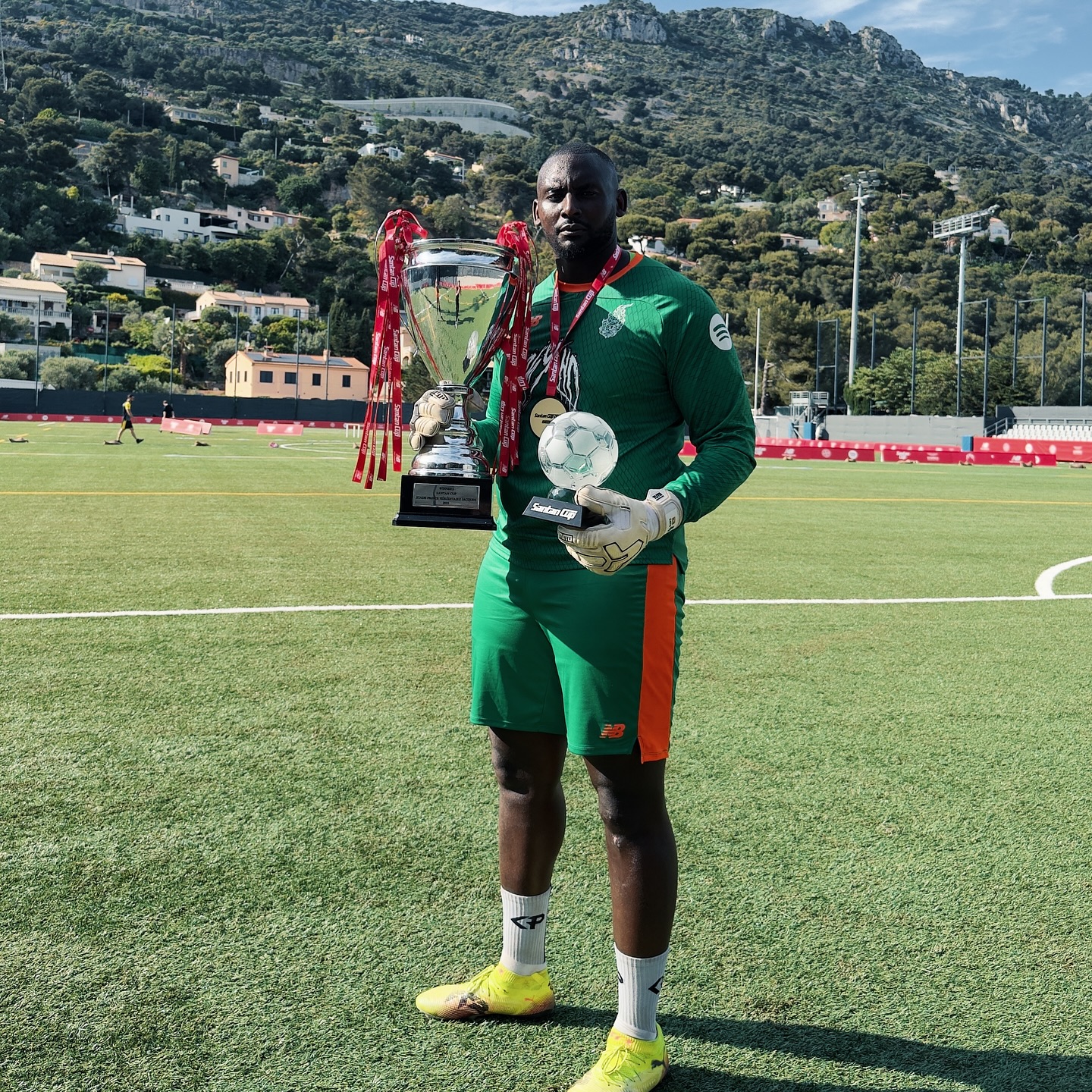
The man at the centre of the reports was George Desmond Kamurasi, a 36-year-old British-Ugandan who captains SE Dons, a club competing in the lower levels of English football.
Media reports said a 21-member royal committee met following the death of Tooro King Oyo Nyimba Kabamba Iguru Rukidi IV. Eighteen members reportedly took part in the vote, with 15 supporting Kamurasi.
Before the goalkeeper’s gloves could be exchanged for a crown, however, the story took another turn.
A committee of leaders from the royal Babiito clan announced at the palace in Fort Portal that Prince Edward Rukidi Kijanangoma, a news anchor and editor at the Uganda Broadcasting Corporation, had been selected as Tooro’s new king.
Reuters and the Associated Press both reported that announcement, turning the succession into a contested process rather than a settled transfer of the throne to Kamurasi.
Two announcements, one throne
The Kamurasi story began when British and Spanish media reported that a royal succession committee had chosen him to become the next Omukama, the traditional title of Tooro’s king.
Those reports said he received 15 votes from the 18 members who attended a meeting of the 21-member committee. They also noted that Kamurasi had not publicly accepted the role and was reportedly hesitant to leave Britain, where he lives with his wife and son.
The later announcement from Fort Portal awarded the title to Edward Kijanangoma, a cousin of the late king and a journalist at Uganda’s state broadcaster.
That declaration did not end the controversy. Queen Mother Best Kemigisa and the late king’s sister, Princess Ruth Komuntale, objected to the succession process.
Members of the royal family said King Oyo had left a will identifying an heir, while Ugandan President Yoweri Museveni referred to the existence of a child of the late monarch who could have a claim to the throne.
The Tooro succession therefore became surrounded by three competing accounts: Kamurasi’s reported selection, the palace announcement naming Kijanangoma, and claims that the late king had designated another heir.
A cultural kingdom, not an independent state
The Tooro Kingdom is located in western Uganda near the border with the Democratic Republic of the Congo. It is one of the country’s traditional kingdoms and retains considerable cultural and social influence, but it is not an independent state and its monarch has no executive authority over Uganda’s institutions.
Uganda is a constitutional republic led by an elected president. Traditional monarchs fulfil symbolic, cultural and social functions and are not permitted to exercise national political power.
Estimates of Tooro’s population also vary. Some reports cite approximately 800,000 people, while others use figures exceeding two million when referring to the kingdom’s broader cultural and social reach. No single figure should therefore be presented as a definitive official count.
The death of the “boy king”
The succession process began after King Oyo Nyimba Kabamba Iguru Rukidi IV died in the United States on August 27, 2026, at the age of 34 while receiving cancer treatment.
Oyo had ascended the throne in 1995 following his father’s death. He was only three years old and was recognised by Guinness World Records as the world’s youngest reigning monarch at the time.
Despite the non-political nature of his position, he became a widely recognised figure in Uganda during his reign of more than three decades and supported initiatives concerning education, young people, healthcare and the fight against HIV/AIDS.
His body was returned to Uganda ahead of burial at the royal tombs in Fort Portal on September 12, with tens of thousands of mourners expected to attend.
From prison to team captain
Kamurasi is a British citizen and a member of the royal Babiito family. He is the son of Prince George Desmond “Jimmy” Mugenyi and a grandson of King George Rukidi III, who ruled Tooro during the 20th century.
His life in Britain, however, was far removed from royal ceremonies.
Kamurasi has spoken about a troubled period following his mother’s death when he was 14. He said grief and anger led him into bad company and poor decisions that eventually resulted in imprisonment.
Looking back on that period, he said prison forced him to recognise that his predicament was the result of his own choices, prompting him to accept responsibility and rebuild his life.
Football became part of that transformation.
Kamurasi plays as a goalkeeper and captains SE Dons, a club in the lower reaches of the English football system that has developed a large following on social media. He has also worked as a football coach at a primary school in London.
Known at the club as “Big G,” he has gained attention for his forceful leadership and passionate pre-match speeches—qualities that encouraged some supporters to see him as capable of taking on a broader cultural role.
Did he play for Barcelona?
Kamurasi has said that his talent was spotted at an early age by the Nike Academy and that his football journey took him to Barcelona, where he played under the watch of Pep Guardiola.
This claim is based on his own account as repeated in media reports. There is no widely available official record showing that he represented FC Barcelona’s first team or was registered as one of its professional players.
The more accurate formulation is therefore that Kamurasi has described a football experience in Barcelona observed by Guardiola—not that he played for Barcelona’s senior team under the Spanish coach.
Kamurasi continued playing football as the royal controversy unfolded, appearing for SE Dons in a recent 2-0 victory while media reports debated whether he would leave the game and his family life in London for Uganda.
The goalkeeper who has not become king
The original story suggested that Kamurasi had moved within hours from captaining a lower-league football team to preparing to represent an entire people.
Subsequent developments made that description far more complicated.
Kamurasi is not, at this stage, the crowned king of Tooro. He is a royal prince whose name appeared in reports of an initial or contested selection before a clan committee at the palace announced Edward Kijanangoma as the new monarch.
With the Queen Mother and the late king’s sister challenging the process, and with claims emerging about a will and a possible child heir, the central question is no longer whether Kamurasi will choose football or the throne. It is who has the authority to choose the king in the first place.
Kamurasi’s journey has therefore not yet taken him from the pitch to the palace as neatly as early reports suggested. Instead, the goalkeeper now finds himself—at a distance—at the centre of one of the most complex royal succession disputes in Tooro’s modern history.