














Every time Europe tightens its visa policy, the same question resurfaces: do these restrictions actually reduce the number of Africans trying to reach the continent, or do they simply push that movement onto other, longer and riskier routes? Data from 2025 and 2026 doesn’t offer a single clean answer — it paints a mixed picture.
Visa numbers: more applications, higher rejection rates in Africa
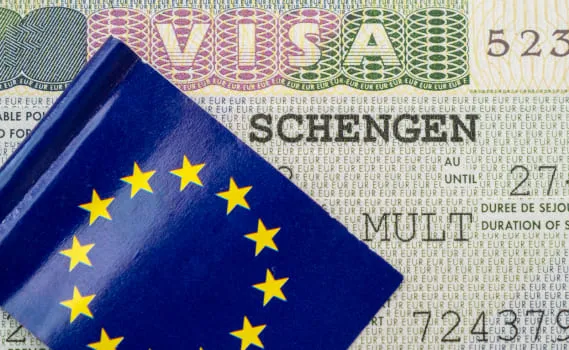
Schengen-area consulates received over 12 million short-stay visa applications in 2025, up more than 4% from the year before, and issued roughly 10.3 million visas, a rise of over 5%. Even so, these figures remain well below pre-pandemic levels, when applications approached 17 million in 2019.
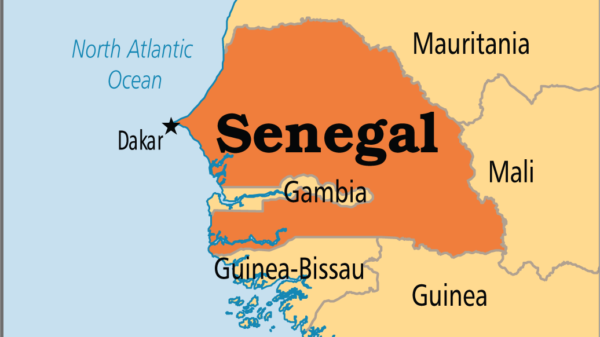
Globally, the rejection rate edged down slightly to 14.6%, from 14.8% the previous year. But that average masks sharp disparities across African countries: Senegal’s rejection rate jumped from about 47% to nearly 52%, Burundi’s from 40% to over 53%, and the Democratic Republic of Congo’s from roughly 30% to 40%. Algeria and Ethiopia, by contrast, saw their rejection rates edge down slightly — a reminder that the trend is far from uniform across the continent.
A direct financial cost for applicants
A rejected visa application isn’t just a disrupted travel plan — it’s a direct financial loss, since the €90 adult application fee is non-refundable. The UK-based research group LAGO estimates that African applicants lost around €60 million to rejected applications in 2024 alone, a figure that doesn’t even account for extra costs like insurance, translation, and travel to application centers. The group’s analysis also found that rejection likelihood tends to rise as a country’s per-capita GDP falls.
A tool of diplomatic leverage
Visas aren’t just used to manage entry — Brussels also wields them to pressure countries of origin into cooperating on the return of deported nationals. A clause in the EU’s visa code allows restrictions on countries deemed insufficiently cooperative on this front. It was applied to the Gambia in 2021 and Ethiopia in 2024, and in July 2025 the European Commission proposed similar measures against Guinea. While restrictions on Ethiopia were later lifted after its cooperation improved, European officials have acknowledged that the threat of sanctions hasn’t always produced the desired response in countries like Senegal and Somalia.
Irregular crossings are down — but routes are shifting
Frontex reported that irregular crossings at the EU’s external borders fell 26% in 2025, to around 178,000 — the lowest figure since 2021 — with a two-thirds drop on the Atlantic route to the Canary Islands, driven by tighter controls in Mauritania, Morocco, and Senegal. That decline continued into the first half of 2026, with an overall drop of 37% and a 67% fall in Canary Islands crossings specifically.
But the picture isn’t one of overall retreat: the Western Mediterranean route, launching mainly from Algeria toward Spain’s Balearic Islands, rose 17% over the same period — evidence that migration flows shift between routes rather than simply disappearing.
That shift is visible in a February 2026 report by the UK-based organization Statewatch, which documented Guinea’s emergence as a new departure point toward the Canaries, as tighter enforcement in Senegal and Mauritania pushed smuggling networks to look for more distant coastlines.
What does the research say about the real effect?
A study published in the International Migration Review by researchers Mathias Czaika and Hein de Haas found that visa requirements do reduce the number of new arrivals from restricted countries. But the same study found they also reduce the number of people leaving or returning home — because once re-entry becomes difficult and costly, migrants already settled in Europe grow reluctant to travel back temporarily. The upshot: restrictions can dampen circular migration without necessarily lowering the long-term resident population.
A rising human toll
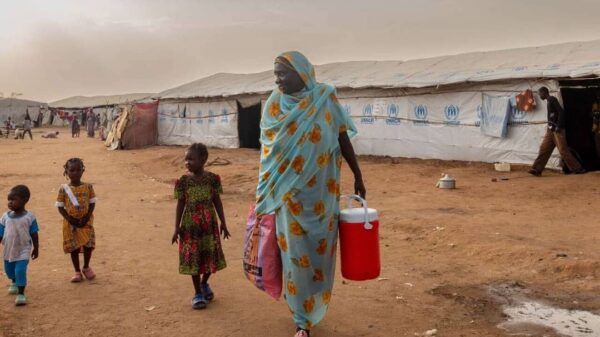
The International Organization for Migration recorded at least 7,667 deaths or disappearances on migration routes worldwide in 2025 — including 2,185 in the Mediterranean and 1,214 on the Atlantic route to the Canaries alone — while cautioning that actual numbers are likely higher, given drownings and disappearances that go unrecorded. The farther smuggling networks are pushed to evade controls, the longer and more dangerous the journeys become.
The bigger picture: most African migration stays within Africa
Despite Europe’s political and media focus on migration toward its shores, a joint report by the African Union and the IOM finds that roughly 80% of African migration happens within the continent itself. That points to a broader limitation: however tight, visa and border policies can’t on their own address the root causes of migration — poverty, conflict, unemployment, and climate change.
The clearest conclusion the data supports is that European restrictions don’t stop migration outright — they reshape its timing, form, and destination. They may reduce movement along one particular route, while pushing part of that flow toward permanent settlement or toward longer, costlier, and more dangerous alternatives.