









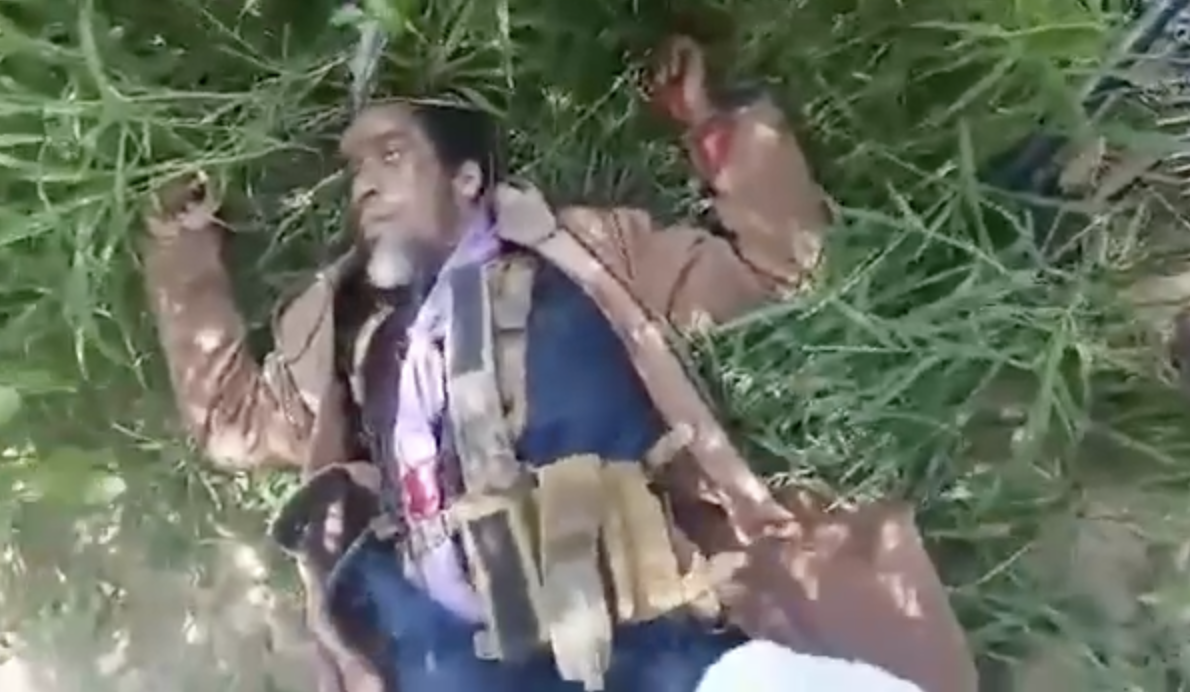
A senior commander in the Islamic State Sahel Province, known as “Abou Zeid al-Burkinabe,” has been killed in clashes with fighters from Jama’at Nusrat al-Islam wal-Muslimin (JNIM) in northeastern Burkina Faso, according to information obtained by Vues d’Afrique from a source close to the armed groups who tracks their movements in the region.
The source said Abou Zeid was killed on Monday, August 17, when a JNIM force attacked Islamic State positions in the Bankao and Dorkouy areas of Séno province, adding that the clashes also killed a number of the group’s fighters.
Burkinabe authorities have issued no official statement on the fighting, and the Islamic State has not confirmed the commander’s death. JNIM, however, released images and footage it said documented part of the operation and its aftermath. One clip shows a body believed to be Abou Zeid’s, with fighters heard repeating his name after identifying him before shouting “Allahu Akbar.” Vues d’Afrique could not independently verify the identity of the dead man or determine the overall toll from the clashes.
Not the Group’s Overall Leader
Initial reports circulating had described Abou Zeid as the “emir” of Islamic State Sahel Province, but the source said this characterisation was inaccurate, stressing he was not the overall commander of the group’s Sahel branch. According to the source, Abou Zeid held a senior leadership and religious authority role within the Islamic State in Burkina Faso, serving as deputy to the branch’s top command, which the source said remains held by a Moroccan commander.
The source added that the slain commander, a Burkinabe of Fulani ethnicity, was one of the group’s most influential figures among Fulani fighters in Burkina Faso and Mali, combining religious authority with genuine influence within the group’s operational structure. Abou Zeid was known for audio lectures in Fulfulde calling for the overthrow of regional governments, and devoted part of his rhetoric to attacking JNIM, the Islamic State’s chief rival across the tri-border area spanning Mali, Niger and Burkina Faso.
A Blow That Outweighs His Rank
The significance of Abou Zeid’s death stems more from his religious and social influence than from his position in the command hierarchy. His command of Fulfulde gave him a unique ability to speak directly to local communities and frame the group’s message in a language understood by fighters and potential recruits across large parts of the Sahel. That may make his role harder to replace than that of an ordinary field commander, particularly amid the ongoing rivalry between the Islamic State and al-Qaeda affiliates over recruiting fighters and building networks of influence within rural communities.
His death, however, does not mean the collapse of the Islamic State’s structure in Burkina Faso. The Sahel branch operates through interconnected cells and local commanders spanning the border region, and does not depend on any single figure to run its military and ideological activities.
A War Within the War
The clashes in Bankao and Dorkouy reflect another dimension of the Sahel’s security crisis. Alongside the war armed groups are waging against regional armies, a long-running struggle plays out between them over territory, fighters, supply routes and influence over local populations.
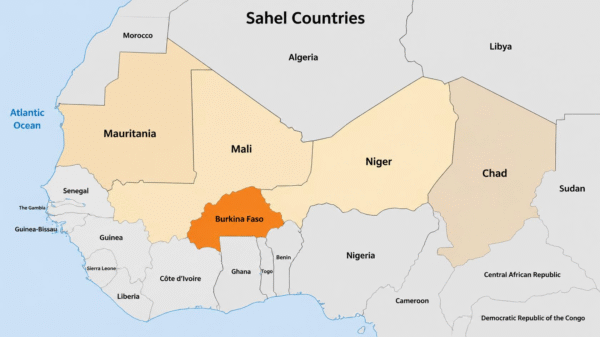
JNIM is affiliated with al-Qaeda, while Islamic State Sahel Province is the regional branch of the Islamic State group. Despite their shared goal of fighting regional governments, doctrinal disputes and competition over areas of control have repeatedly turned into deadly confrontations, particularly in the border region between Mali, Niger and Burkina Faso.
The killing of a figure of Abou Zeid’s standing may hand JNIM a propaganda win, but it could also open the door to retaliatory attacks by the Islamic State — in a region where civilians typically bear the heaviest cost of every shift in the balance of power between armed groups.