







The northern Malian city of Timbuktu is facing a deepening humanitarian crisis as prolonged shortages of fuel, electricity and drinking water continue to affect residents amid ongoing disruptions to supply routes into the city.
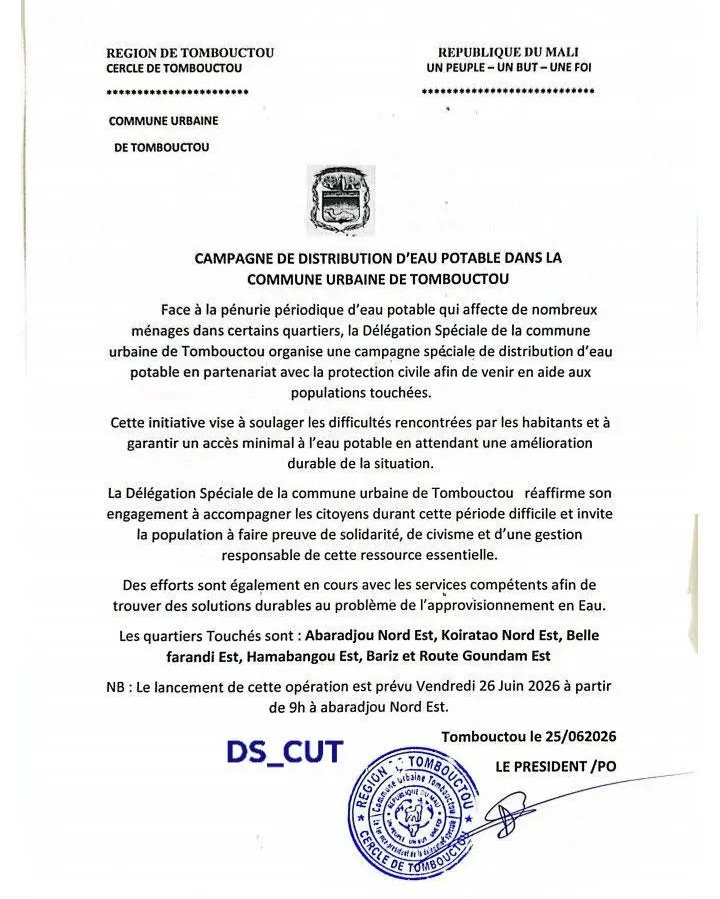
In an official statement issued on 25 June, the Urban Municipality of Timbuktu announced an emergency drinking water distribution campaign in cooperation with the Civil Protection Service to assist neighborhoods most affected by water shortages. The operation is scheduled to begin on Friday, 26 June, while authorities say efforts are continuing to find a long-term solution to the city’s water supply crisis.
Meanwhile, local activists and officials reported that Timbuktu has been without electricity and fuel for three consecutive days, during an intense heatwave. The shortages have disrupted transportation, forced bakeries to halt production, and caused severe shortages of food, meat and fish in local markets.
Local activist Mahmoud Vieux Gassamba wrote that “Timbuktu has spent three days without water, electricity or fuel during the peak of the hot season.” Another local official, Tandina Elhadj Beytallah, said that “without fuel there is no water and no electricity. There is no bread, transport has stopped, and women returned from the market with empty baskets because food supplies have run out.”
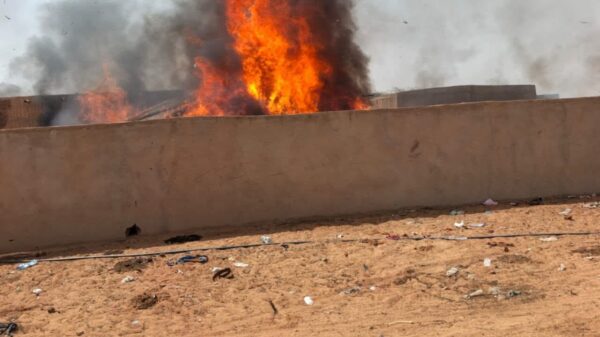
The crisis comes as Jama’at Nusrat al-Islam wal-Muslimin (JNIM) has intensified attacks across northern and central Mali, increasingly targeting fuel convoys and major supply routes as part of a strategy aimed at isolating cities and weakening the state’s ability to provide essential services.
Observers say the situation in Timbuktu illustrates how the conflict is increasingly affecting civilians, with fears that humanitarian conditions will deteriorate further if supply disruptions continue.